
Beijing doesn’t just feed its people; it defines them. For centuries, the capital has turned dining into an art form — from imperial banquets of silk-clad courtiers to the smoky stalls that keep the city fuelled at dawn.
Its cuisine isn’t just about taste; it’s about rhythm, ritual, and belonging. To walk its streets hungry is to discover that food here is both memory and movement, woven through daily life like breath.
A Capital of Layered Flavours
The best way to understand Beijing is to eat your way through it. Food reveals what history conceals. Every district, every alleyway, holds a piece of the city’s evolution — from the opulent banquets of emperors to the communal warmth of noodle shops.
Imperial kitchens once dictated trends that spread across the nation. Dishes like Peking duck, roasted to a glassy sheen and sliced with ceremony, began as royal indulgence but became a shared symbol of national pride. In contrast, the dumpling stalls near residential courtyards keep tradition close to home, serving simple comfort without pretense.
Today, many China travel packages spotlight food as the lens through which travellers can understand the country. And rightly so. In Beijing, every meal feels like a story told across centuries — a conversation between past and present carried in steam and spice.
The Hutongs: Where Memory Lives
Step away from the boulevards and skyscrapers, and you’ll find the hutongs — narrow alleyways that hum with daily life. These neighbourhoods are Beijing’s heartbeat, their courtyards echoing with the clatter of bowls and the hiss of woks.
It’s here, in small, family-run eateries, that the city’s culinary soul comes alive. Dumplings — jiaozi — are handmade in front of you, folded with practiced hands, then steamed until the skins turn translucent. Noodles slap rhythmically against wooden counters as chefs pull and twist them into perfect strands.
Eating in a hutong isn’t just a meal; it’s an exchange of warmth. Strangers share tables, stories, and sometimes the same dipping sauce. It’s noisy, imperfect, but profoundly human — the kind of dining that lingers longer than any fine restaurant could.
Beijing’s younger chefs are starting to return to these same neighbourhoods, opening small kitchens that blend nostalgia with innovation. You’ll find traditional dishes refined with subtle artistry — sesame noodles served with smoked tofu, or sweet red bean buns reimagined with modern fillings. It’s proof that the old and new can coexist on the same plate, without losing their soul.
Rituals Around the Table
Meals in Beijing carry a sense of ceremony, no matter the setting. In homes and restaurants alike, eating is communal — a shared act that reinforces togetherness. Lazy Susans spin gently, passing dishes from one hand to another, ensuring everyone gets a taste of everything.
Hotpot remains a favourite gathering ritual. The bubbling broth in the centre, the dipping sauces mixed to personal taste, and the steam that blurs laughter into the air — it’s dining as theatre, and belonging rolled into one.
Visitors joining tours to Beijing quickly notice how seamlessly food becomes part of daily rhythm. From street breakfasts eaten standing up to elaborate family feasts, the act of sharing is constant — and quietly sacred.
Street Food & Night Markets
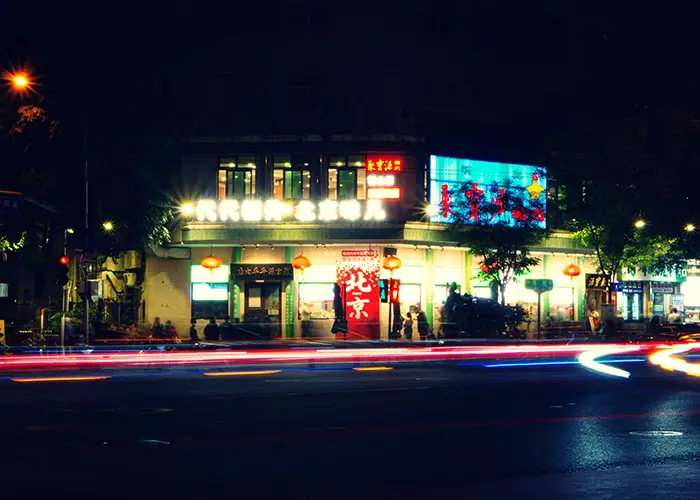
By nightfall, Beijing transforms. Lanterns glow red above narrow lanes, smoke curls from open grills, and the city’s appetite awakens again. Wangfujing Snack Street is a sensory adventure: skewers sizzling over charcoal, dumplings frying in oil, and syrupy fruits hardening into amber under cool air.
The air is alive with contradiction — spice and sweetness, noise and laughter. You can try the daring dishes (scorpion, snake, silkworm) or stick to the comforting ones: skewered lamb, roasted corn, crisp pancakes rolled around shredded vegetables and spice.
This is Beijing without ceremony — fast, fragrant, and full of character. There’s freedom in it. You eat with your hands, wipe your face with a paper napkin, and keep walking. It’s not about refinement; it’s about feeling connected to the city around you.
A New Generation of Taste
Beijing’s culinary scene is constantly evolving. Young chefs trained abroad are returning home, bringing with them ideas that bridge continents. In trendy districts like Sanlitun and 798, traditional flavours are being reimagined — Peking duck paired with citrus glaze, lotus root served as a crisp chip over jasmine-infused sauces.
This isn’t rebellion; it’s conversation. Innovation and heritage sit comfortably side by side, both guided by the same respect for balance — the principle that underlies Chinese cooking itself. These restaurants prove that Beijing’s food culture isn’t preserved in glass; it’s alive, learning, and willing to surprise.
The Tea Houses and the Pause
And when you’re full, there’s tea.
In Shichahai’s old teahouses, men read newspapers as the pot warms between them. In modern cafés, students sip matcha lattes while tapping on laptops. The setting may change, but the ritual doesn’t. Tea remains Beijing’s punctuation mark — a pause between rushes, a reminder that even in a city this vast, stillness can be found.
You realise then that food here isn’t just about flavour. It’s about time — how it stretches and slows when people come together.
Conclusion: A City That Feeds the Soul
To eat in Beijing is to engage with its essence. It’s not a place that separates life from dining — they’re one and the same. The flavours stay with you: the crisp crackle of duck skin, the spice of sesame, the soft sweetness of red bean. But so do the sounds — the laughter, the clink of chopsticks, the rhythm of conversation that never truly ends.
The city’s food culture isn’t about extravagance. It’s about connection. About sitting at a table — any table — and feeling part of something enduring.
Beijing doesn’t just fill your stomach; it fills your understanding. Long after you leave, you’ll remember the warmth that comes not only from the food, but from the people who share it — proof that the truest taste of a place is always found in its heart.