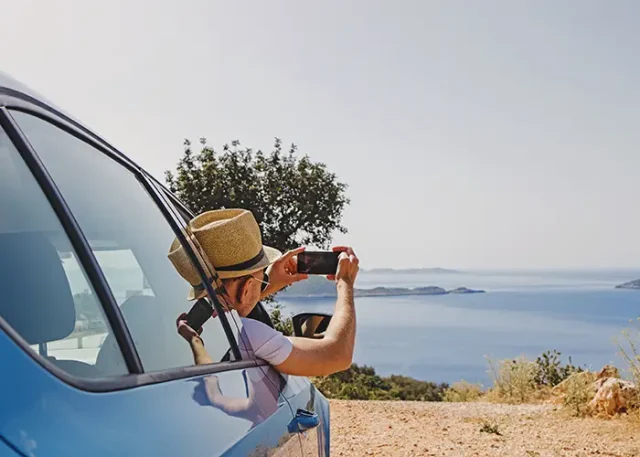
Most of us discover new places from behind a windscreen. Airport exits, coastal roads, mountain passes, long empty highways between small towns. The car you pick shapes every part of that experience. It decides how far you feel like driving, how relaxed you are when you arrive, and whether a scenic detour sounds fun or exhausting.
If you love to travel, your next car should serve the way you explore, not just get you from hotel to airport. The good news is that you can plan this in a calm, structured way instead of hoping the rental counter has something decent left. With a bit of preparation and smart use of tools like AutosToday, you can choose a car that fits your routes, your budget, and your style of travel.
Start with the trips you actually take
Before you think about brands or engines, think about your last year of travel.
● How often do you drive on your trips instead of using public transport
● Are your journeys mostly weekend breaks a few hours from home, or long cross country itineraries
● Do you stick to paved roads, or do you sometimes follow that rough track to a hidden beach
● Do you travel solo, as a couple, or with friends and kids
If your travel life is built around compact European cities, you need something narrow, easy to park, and simple to maneuver in tight streets. If you chase mountain passes and open highways, stability and power matter more than absolute compactness.
Write this down. It becomes your travel brief. Every car you consider should support it.
Space and layout for real luggage, not brochure luggage
Travel looks glamorous in photos, but in the boot it is all backpacks, suitcases, camera bags, snacks, and sometimes bulky sports gear.
When you look at cars, ignore the marketing line about “generous trunk space” and test it with your own reality. Can you lay two carry on suitcases flat. Is there room left for a daypack and a small cooler. Do the rear seats fold easily if you need to stash larger bags or a folding bike.
If you often stay in one place for a week, a long, flat cargo area is more valuable than a tiny extra row of seats you never use. If you move every night, a wide tailgate and low loading lip save your back when you are tired and unloading in the dark.
Why a used travel car often makes sense
For many travellers, a well chosen used car is more practical than a brand new one. You are less worried about the first scratch on a narrow lane, and you avoid the steepest part of depreciation.
Instead of guessing what is out there, treat the internet like a calm showroom. On the Porsche side of things, for example, you can look at dedicated used Porsche listings on AutosToday to see real numbers for 911s, Caymans, Macans and more. A quick scan shows you how mileage, age and price connect, so you can tell the difference between a realistic grand touring machine and a car that will soak up your entire budget before you even leave town.
You do not have to buy a Porsche, of course. The same process works for any brand. The point is to see the market clearly before you make any decisions.
Comfort and noise on real roads
A travel car spends hours in motion. Comfort is not a luxury here, it is the whole game.
On a test drive, do not stay only on smooth city streets. If you can, find a bit of motorway, a rough section of road, and some gentle curves. Notice how the seats feel after fifteen or twenty minutes, not just the first five. Listen for wind and tyre noise at 100 km/h.
Think about small practical things too. Are there enough cup holders. Can you adjust the steering wheel and seat to a position you could hold for three hours. Can your passenger stretch their legs a little. If you travel with friends, sit in the back yourself and see how that feels.
Tech that actually helps when you travel
Modern cars come loaded with technology, but only some features really matter on the road.
For travel, useful features include:
● Reliable phone mirroring so you can use your preferred navigation app
● Cruise control or adaptive cruise for long highway stretches
● Multiple USB ports so nobody’s phone dies halfway to the next stop
● A clear reversing camera for tight hotel car parks and unfamiliar streets
You do not need every gadget. You need the ones that let you stay focused on the journey instead of fighting with menus.
Plan your “first travel year”, not just the purchase
When you calculate the cost of a car, include the first year of trips you are dreaming about.
Add a realistic budget for:
● A full service so you start from a clean baseline
● Fresh tyres if the current set is old or mismatched
● Basics like a boot liner, phone mount and proper charging cables
● Fuel or charging costs for the kind of distances you plan to cover
These things turn a car into a ready travel tool instead of a project that delays your plans.
Test it with your own gear and habits
If the seller allows it, bring one suitcase and your usual daypack to the viewing. Put them in the boot, try a couple of configurations, and see how much space remains. Adjust the seats to your normal driving position and have someone sit behind you.
Imagine a real scenario: arriving late at a guesthouse in a new city, parallel parking on a narrow street, unloading bags in light rain, then heading out again for dinner. If the car feels like an ally in that picture, you are getting close to the right choice.
Let the car open more roads, not close them
The best travel cars are not always the most powerful or the most expensive. They are the ones that make you say “let’s go a bit further” instead of “that is enough driving for today”.
Using a site like AutosToday as your map of what is possible, then testing a few well chosen cars with your real trips in mind, is how you find that balance. The result is simple. More roads you are happy to drive, more places you can reach without stress, and more memories that start with turning the key and pointing the nose toward somewhere new.