
For anyone interested in Modena Italy travel, the surprise comes quickly. This is the birthplace of Luciano Pavarotti and Enzo Ferrari, home to world-class cuisine, and guardian of a UNESCO-listed historic core you can actually enjoy without jostling for space. Among underrated Italian cities, Modena punches far above its size.
A Small City With Serious Culinary Authority
If Italy had a culinary command center, Modena would be a strong candidate. The city sits at the heart of Emilia-Romagna’s so-called Food Valley, producing an unusually high concentration of PDO and PGI-certified products. This is not branding. It is regulation, tradition, and stubborn consistency.
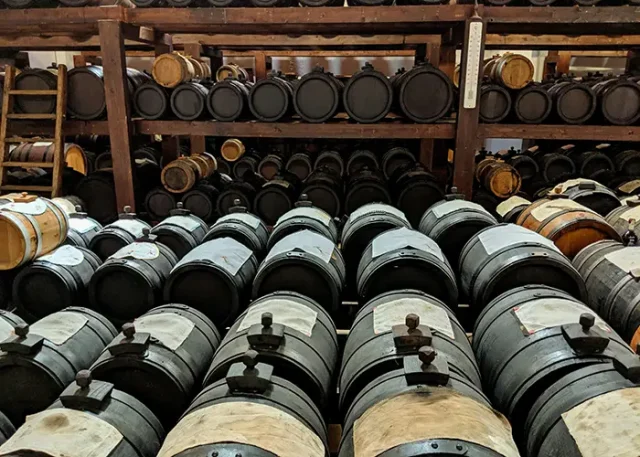
Take traditional balsamic vinegar. Real Aceto Balsamico Tradizionale di Modena DOP is aged for a minimum of 12 years, often much longer, in a sequence of wooden barrels. What comes out at the end is not salad dressing. It is closer to a seasoning you would use drop by drop. A single small bottle can cost as much as a good restaurant meal, and after tasting it, the price suddenly makes sense.
To see how locals actually eat, start at Mercato Albinelli. Open since 1931, it is compact, loud, and unapologetically practical. You will find Parmigiano-Reggiano with a crystalline texture, fresh pasta being shaped by hand, and butchers who still expect you to know what cut you want. This is not a performance for tourists. It is daily life.
Classic dishes like tortellini in broth may sound simple, but the execution is precise. Pair them with Lambrusco, the local sparkling red wine, which cuts through richness better than any still red could. It is one of those combinations that feels obvious only after you have tried it.
Those chasing culinary prestige will inevitably mention Osteria Francescana. Massimo Bottura’s three-Michelin-starred restaurant is rightly famous, but it is not the only place worth eating. Modena’s strength lies in its family-run trattorias, where tradition is not reinvented. It is respected.
History Without the Velvet Rope
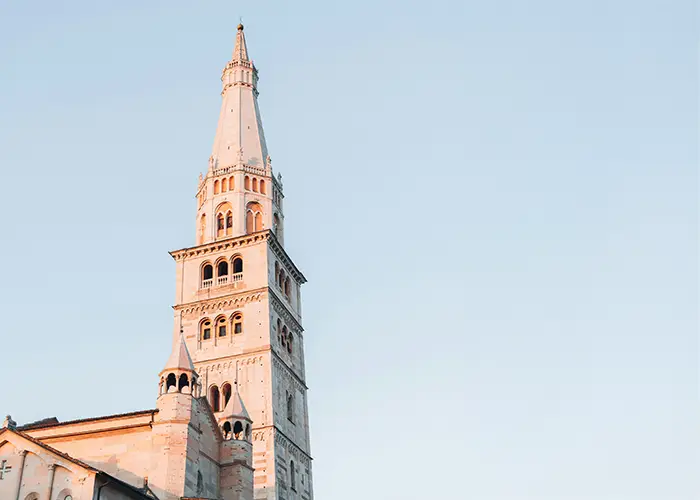
Modena’s historic center does not announce itself loudly. Piazza Grande, the Duomo, and the Ghirlandina Tower sit at the city’s core, quietly forming a Modena UNESCO site that has anchored local life since the 12th century. Listed together in 1997, they offer a rare chance to experience UNESCO heritage without the sense of being herded through it.
The cathedral’s Romanesque façade and Wiligelmo’s sculpted reliefs feel remarkably immediate for works nearly a thousand years old. The scenes are expressive, human, and surprisingly readable even without deep art-historical knowledge. Climbing the Ghirlandina’s 86 meters rewards you with a view that puts Modena’s scale into perspective. Dense, walkable, and surrounded by flat countryside stretching toward the Apennines.
Art lovers should make time for the Galleria Estense, housed in the Palazzo dei Musei. The collection reflects centuries of Este family patronage, featuring works by Correggio, Tintoretto, and Velázquez. It is a reminder that Modena was not a provincial backwater. It was a serious cultural power.
What stands out most is how seamlessly history blends into everyday routines. Coffee bars sit under Renaissance porticoes. Students cut across medieval squares on their way to class. The Teatro Comunale Luciano Pavarotti continues the city’s musical legacy without turning it into a museum piece.
Engines, Adrenaline, and an Unexpected Sense of Calm
Modena’s automotive reputation is no footnote. The Enzo Ferrari Museum, with its bold yellow roofline, tells the brand’s story through design, innovation, and unapologetic ambition. A combined ticket with Maranello, just 18 kilometers away, adds depth, tracing Ferrari from workshop to global icon.
For those who want more than glass cases, test-drive experiences in Maranello offer something unforgettable. Sitting behind the wheel of a Ferrari on its home roads reframes the brand entirely. Numbers on paper such as horsepower, acceleration, and torque suddenly become physical sensations.
After that intensity, Modena’s quieter side becomes more noticeable. Parco Novi Sad, near the center, provides a low-key place to reset. It is not a landmark, just a functional green space used by runners, families, and anyone needing a pause. That balance between global prestige and ordinary rhythm defines the city.
Planning Your Visit: A Practical Modena Travel Guide for Curious Travelers
If you are mapping out things to do in Modena and want a structured approach rather than guesswork, a detailed resource can help you prioritize without overplanning. This in-depth overview of things to do in Modena for first-time visitors and slow travelers alike covers key sights, food experiences, and smart ways to explore without rushing.
Why Modena Stays With You
What makes Modena stand out among Italy hidden gems is not a single attraction. It is coherence. Food, history, music, and engineering do not compete here. They reinforce each other. The city does not ask for your attention. It earns it quietly.
You can see the highlights in a couple of days, but Modena rewards a slower pace. Taste the vinegar properly. Notice the stonework. Sit in the piazza long enough to see routines repeat. In a country overflowing with destinations, Modena does not try to be everything. It simply does what it does extremely well, and that is exactly why it belongs on your list.