

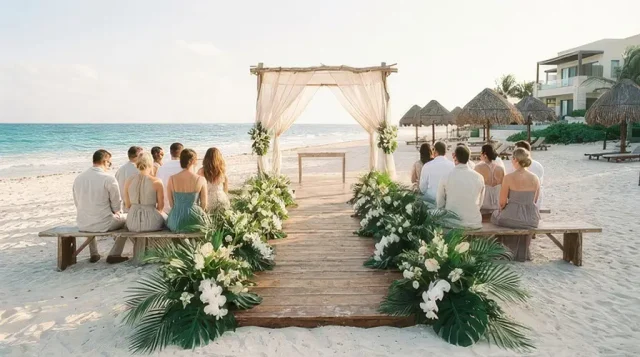
Thinking about trading a ballroom for a beach? You’re not alone—and for U.S. couples, Mexico is one of the easiest places in the world to plan a stress-free destination wedding. Nearly one-quarter of U.S. weddings now take place in a destination setting, and couples consistently report lower stress levels during planning and on the wedding day itself.
Mexico’s appeal lies in its simplicity. All-inclusive resorts streamline the entire experience by bundling the venue, catering, décor essentials, drinks, and an on-site wedding coordinator into one predictable price. Fewer vendors, fewer contracts, fewer surprises. This guide walks you through nine practical checkpoints designed to eliminate stress when planning a destination wedding in Mexico, followed by a regional comparison to help you book with confidence and clarity.
Checkpoint 1 — Clarify your total party size and spend ceiling
Locking these two numbers early prevents the most common source of destination-wedding stress: budget surprises and last-minute guest chaos.
Your guest count and true budget ceiling set every other domino in motion—lock them first.
Before we talk about palm trees or playlists, pin down two numbers: (1) how many people are likely to show up and (2) the absolute dollar figure you’re comfortable spending.
Start with an evidence-based headcount. Destination weddings average 60–70 percent attendance, so inviting 100 people usually means 60–70 travelers, according to Destify. Build a best-case A-list, then add a 5–10 percent cushion for late “yes” RSVPs or unexpected plus-ones. Resorts quote in tidy tiers—often blocks of ten guests—so inviting 25 still places you in the 30-guest bracket.
Next, translate that headcount into a single, non-negotiable line item. Treat the celebration and the vacation as one ledger:
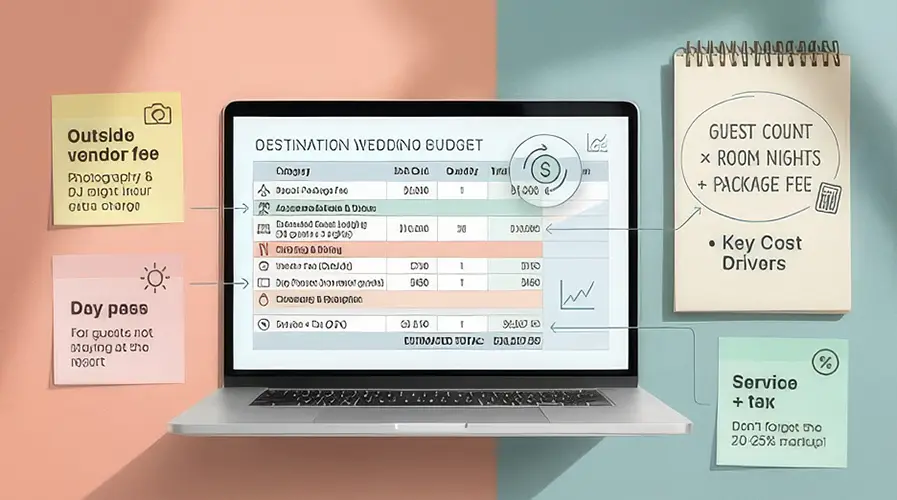
maximum room-night spend × projected rooms + wedding-package fee = true ceiling
Seeing the full figure in print keeps last-minute upgrades (hello, lobster station) from creeping past comfort.
Use published starter packages as a gut-check. In Riviera Maya, for example, a starter Wedding in Paradise bundle averages US $1,149 for ten guests and scales predictably for larger groups, according to Destination Weddings. Plugging numbers like these into your formula shows instantly whether the guest list or the dream resort needs the first trim.
Dialing in party size and spend now shields you from falling for a venue that looks perfect online yet punches well above budget once the fine print arrives. With these two cornerstones set, you’re ready to map the softer priorities that shape your short list.
Checkpoint 2 — List your non-negotiables before the Pinterest scroll
Writing down non-negotiables keeps decision fatigue and impulse upgrades from quietly inflating both stress and cost.
A short must-have list guards your budget from impulse upgrades.
With the math locked, shift to vision. Write down the two or three elements you simply won’t trade for a discount—think a barefoot beach altar at sunset, a Catholic mass, or a child-free resort so everyone can actually relax.
Why capture it in writing? Nearly half of couples—48.5 percent—later say certain add-ons such as a planner or videographer weren’t worth the money, according to CNBC. Your non-negotiable list keeps you from splurging on shiny extras that look great online but add little in real life.
Share the list with anyone contributing funds. Early alignment prevents awkward renegotiations when Mom learns the on-site chapel seats only twenty. Once every stakeholder signs off, file the list beside your budget worksheet. Together they form a fast litmus test you’ll apply to every package from here on out.
Checkpoint 3 — Audit the price floor and spot the sneaky add-ons
Reviewing Mexico’s all-inclusive packages line by line now protects you from invoice shock later.
Price the “all-inclusive” line by line before you sign.
A resort’s sticker price feels reassuring until the commas creep in. Start with the base fee. In Mexico, you can still find Wedding in Paradise–style starter bundles for about US $1,249 for ten guests, with similar pricing appearing across select Caribbean resorts, according to Paradise Weddings. Treat that figure as your reference point.
Next, circle every exclusion hiding in the margins:
- Outside-vendor surcharge: Most resorts charge US $500–US $1,500 per service unless the vendor books a room on-site, reports Paradise Weddings.
- Off-site-guest day pass: Plan on about US $100 per person for friends who stay elsewhere but attend the ceremony—Sandals lists a US $100 “Wedding Day Pass.”
- Service and tax layers: Properties like Hyatt Ziva Cap Cana add a 15–20 percent service charge plus 18 percent tax on published rates, according to Sertuine Events.
Run a quick stress test: add likely extras (live band, private bar, outside photographer). If the revised total climbs more than 15 percent above the published package, mark it as a budget red flag and keep shopping.
Finally, confirm the invoice currency and get “all taxes and service included” in writing. Many resorts quote in U.S. dollars but settle in local currency, and exchange swings can wipe out savings.
Complete this audit now and the numbers you carry into short-listing will be reliable, not optimistic.
Checkpoint 4 — Test the resort’s flexibility on outside talent
Clear vendor rules upfront prevent last-minute creative compromises and unexpected four-figure fees.
Vendor rules can swing your budget by four figures, so get them early and in writing.
Great photos, live music, or a beloved officiant often travel with you, not with the package. The question is whether the resort will welcome them or keep them out.
Start by emailing the coordinator a single, direct question: “What is the outside-vendor fee per service?” Get the number in writing. Fees vary widely—from US $300 at Secrets Akumal to US $1,500 at Hard Rock Riviera Maya—and some properties block external vendors altogether, according to In Search of Sarah.
If the quote feels steep, ask whether your vendor can register as a guest. Resorts such as Sandos Hotels waive the US $500 vendor fee if the professional books a three-night stay, turning a US $1,000 surcharge into a US $100 day pass or a discounted room rate instead, notes Destify.
Confirm logistics, too. A string quartet needs shade and a power drop; a makeup artist needs bright, indoor prep space. If the coordinator cannot guarantee those basics, talent quality drops no matter what you pay.
Finally, read the exclusivity clause. Some studios retain copyright, making you wait weeks—or pay extra—for high-resolution files. If that is a deal-breaker, you will need the freedom to bring your own shooter.
Set clear vendor boundaries now and you will keep creative control, and your budget, intact.
Checkpoint 5 — Confirm the one-wedding-a-day promise (or make peace with sharing)
Knowing how many weddings your resort hosts at once avoids timing conflicts that can quickly derail an otherwise calm day.
Venue exclusivity affects privacy, photos and stress level—ask before you book.
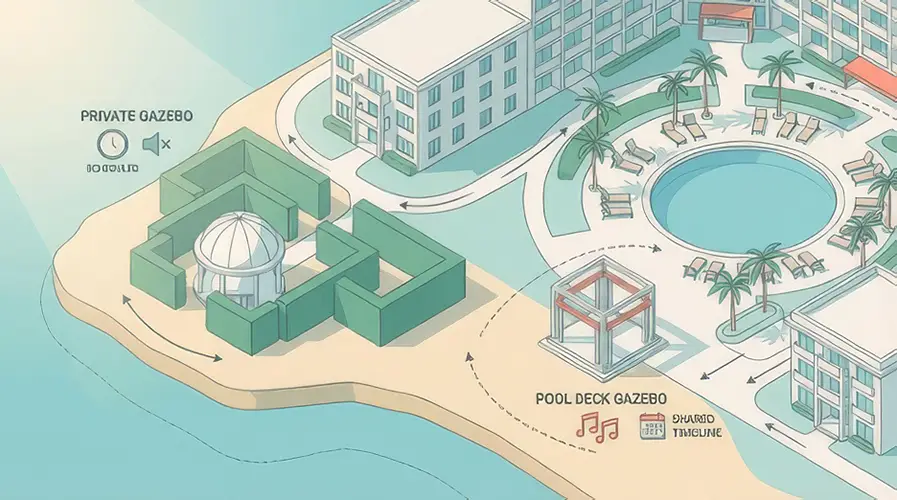
A sunset aisle feels less magical when another couple’s rehearsal wraps up behind you. Start with one direct question: “How many weddings do you schedule per day, and how do you separate them?”
Answers vary widely. Sandals Resorts spaces events so each celebration feels personal, often hosting one wedding per day. Large complexes such as Barceló Maya have reported five to six weddings in a single weekend, with time slots shuffled at the last minute, according to TripAdvisor reviews.
Request the run-of-show: ceremony start, cocktail hour, reception and the buffer for décor flips. If you spot even a 30-minute overlap on the beachfront terrace, negotiate extra exclusivity or an alternate venue in writing.
Noise bleed is another threat. A DJ two gazebos away or fireworks from the 8 pm reception can crash your vows if venues sit too close. Use a quick satellite check in Google Earth to spot hedges, indoor corridors or elevation changes that muffle sound.
Finally, ask who enforces the schedule. A strong on-site coordinator acts like a stage manager, cueing each party so no one steps on another’s petals. If that answer feels vague, assume staff rely on availability, not a stopwatch, and your “private” moment may not stay private.
Checkpoint 6 — Master the marriage paperwork before you pay deposits
Handling Mexico’s legal requirements early removes one of the biggest sources of destination-wedding anxiety.
No license, no wedding—sort your documents first and avoid a costly redo.
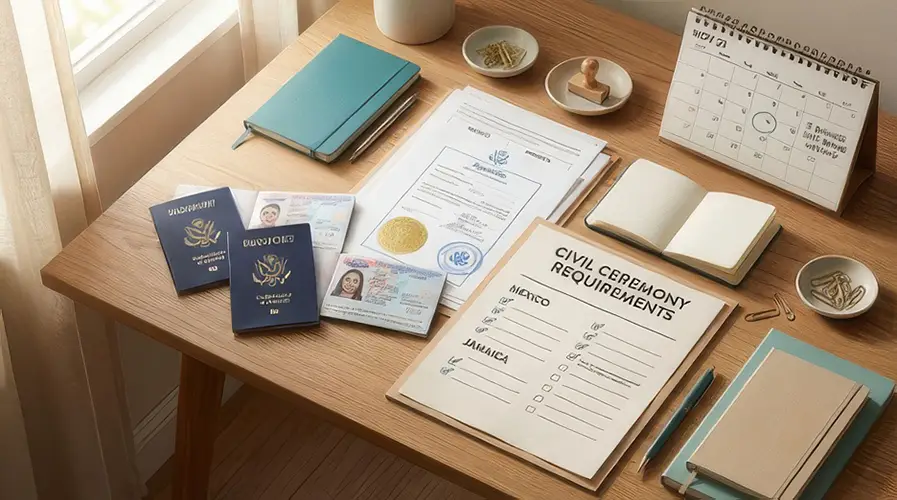
A ceremony without a license is just an expensive photo shoot. Each country sets its own rules, and they tighten often, so tackle the legal checklist as soon as a resort hits your short list.
- Check residency rules.
- Mexico asks foreign couples to be in the country three business days before a civil ceremony and to complete a brief blood test—a requirement highlighted in Paradise Weddings guide on how to plan your destination wedding in Mexico and confirmed by the Baja civil registry.
- Jamaica is simpler: arrive 24 hours in advance if documents were submitted at least two weeks prior, per the island’s Registrar General’s Department.
- Gather and apostille documents. Birth certificates, passports and divorce decrees (if relevant) usually need an apostille seal. Many U.S. states handle apostilles by mail in two to four weeks; add courier time if you live abroad.
- Budget for translations and lab work.
- Spanish translations in Mexico average US $25 per page and are often required for each document.
- Blood-test results take one business day and cost about US $70 per couple in Baja California Sur.
If any rule feels like a deal-breaker, pivot to a symbolic ceremony: marry legally at home, then hold the beach celebration without paperwork stress. Resorts handle symbolic setups daily, and guests rarely notice the difference.
With the legal pathway mapped, you are ready to lock the calendar and reserve the best rooms before someone else claims your sunset slot.
Checkpoint 7 — Book early and lock a room block that works for everyone
Early booking reduces stress by securing your date, your rate, and your guest accommodations before availability tightens.
Your date and your rate improve the earlier you sign.
Dates disappear quickly at high-volume resorts, especially Saturday sunsets from December to April. Destination-wedding specialists recommend reserving your venue and room block 10–12 months in advance—or up to 18 months if you want a peak-season Saturday.
Free destination-wedding travel agency Paradise Weddings tracks contract trends across Mexico and the Caribbean and notes that popular resorts such as Atelier, Xcaret, Sandos, and several Tafer properties will not confirm a wedding date until a room-block agreement is signed.
Your main negotiation lever is the group block. Resorts usually quote three numbers:
- Minimum rooms you guarantee (match it to your A-list headcount)
- Complimentary perks you earn after hitting room-night thresholds—think a free welcome cocktail after 25 room-nights or a day-after brunch at 40 room-nights
- Drop date when unused rooms release back to the hotel
Push for a modest guarantee and add a wait-list clause so late deciders can join without risking your wallet. Roughly 80 percent of invited guests need accommodations at destination weddings, according to consultants at The Knot.
Once contracts are signed, post the block code on your wedding website. Early visibility lets guests book before flight prices climb and signals that the plan is real.
Set calendar reminders for both deposit and release dates. Missing either can wipe out hard-won savings faster than any pool-bar margarita.
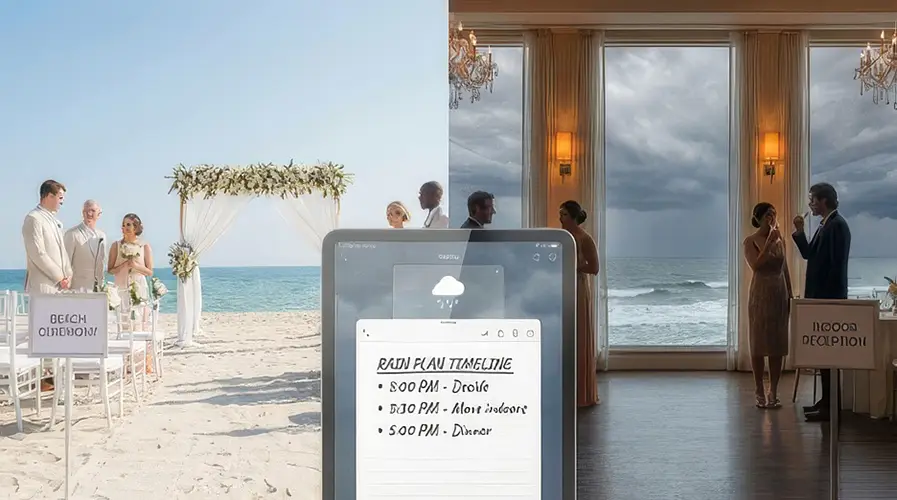
Checkpoint 8 — Build a weather-proof timeline and back-up plan
A written weather plan turns unpredictable conditions into a manageable contingency instead of a day-of crisis.
Mother Nature ignores save-the-dates, so weave flexibility into every hour of the celebration.
- Know the climate clock.
- The Atlantic hurricane season runs June 1 – November 30, peaking in August through October, according to NOAA.
- Riviera Maya sees high humidity and frequent afternoon showers starting in May; April is its driest month.
- Hawaiʻi’s wettest stretch is November – March, but winter squalls tend to be brief and localised.
- Get the rain protocol in writing. Ask for the indoor space reserved only for your party, the wind or rain thresholds that trigger a move (for example “more than 20 knots by 10 am”) and who makes the final call.
- Lock a photo workaround. If clouds roll in, will the photographer return at sunrise for portraits, or will that cost extra? Decide now, not while steam fogs the lens.
- Protect the travel side. Nearly one in five destination weddings costs more than US $35,000, and insurers such as Allianz list hurricanes as a covered reason for trip cancellation. Urge guests to buy a policy—or share the resort’s bundled option—before any named storm appears on the map.
With a weather-smart script in place, you are ready for the final checkpoint: arriving early and enjoying the perks you earned.
Checkpoint 9 — Arrive early, delegate the details and soak up the perks
Arriving early gives you breathing room so paperwork, walkthroughs, and final tweaks happen without pressure.
A two-day buffer turns paperwork chaos into pool time.
Touch down at least two to three days before your vows. Cabo’s civil-ceremony rules alone require couples to be on site three business days for blood tests and paperwork, the local registry notes. Those extra days let jet lag fade, documents get stamped and last-minute tweaks happen without a stopwatch.
Day 1: align with the coordinator. Walk the ceremony route, taste the menu if the kitchen allows and confirm the rain back-up space you negotiated in Checkpoint 8. Hearing “yes, your peonies are chilling” in real time erases weeks of email anxiety.
Day 2: run the creative checks. Hair-and-makeup trials, sunset-light scouting, mic tests. Small adjustments now prevent frantic fixes later. Use downtime to greet early guests; a poolside hello sets a relaxed tone and thins the welcome-party crowd.
Day 3: flip to vacation mode. Cash in the spa credit many resorts offer once groups hit 20–25 room-nights (usually US $100–US $200 per couple). Join the snorkel outing for meeting that threshold. Guests will mirror your calm.
Finally, remember why you booked all-inclusive: someone else is refilling the glasses and cueing the playlist. Hand the coordinator your phone, breathe in the salt air and walk toward the aisle knowing every checkpoint led you here, stress-free.
How Mexico Compares: All-Inclusive Destination Wedding Costs by Region
Mexico sets the benchmark for affordability and planning ease—here’s how other popular destination-wedding regions compare.
Scan this grid first to see if a resort’s baseline math fits your must-haves.
Below is a snapshot of entry-level packages for roughly 30 guests, current for the 2025 booking season. Use it as a fast filter before diving into resort brochures.
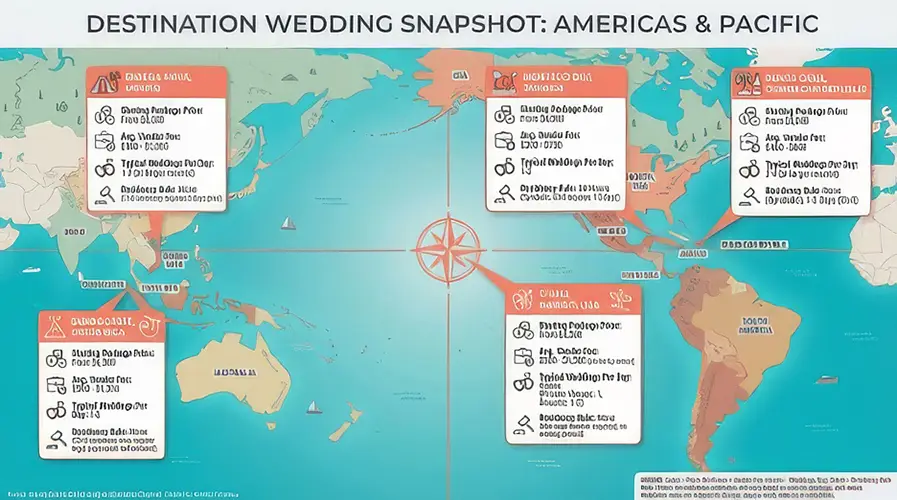
| Region | Starter package price | Outside-vendor fee (avg) | Weddings per day (typ) | Legal residency rule |
| Mexico (Riviera Maya) | US $2,750 — “Mint Breeze,” Barceló Maya Palace | US $500–US $1,500 per vendor (waived if vendor stays) | Up to 3 venues run concurrently | 3 business days on site |
| Jamaica (Montego Bay) | US $4,599 — “Refined Wedding,” Royalton Blue Waters (30 guests) | US $400–US $600 (photographer or DJ) | 2 | 24 hours with pre-filed docs |
| Dominican Republic (Punta Cana) | US $2,690 — “Waves of Love,” Royalton Punta Cana (25 guests) | US $300–US $700 | 3 | No residency; docs pre-translated |
| Hawaiʻi (Oʻahu) | From US $4,500 — ceremony and coordination only | Open vendor market — no resort surcharge | 1 | No residency; license issued in person |
| Costa Rica (Guanacaste) | US $3,200 — typical “Eternal Romance” package for 30 guests | About US $350 | 2 | No residency; passport and affidavit |
Prices are base rates; taxes, service and extra décor may apply.
Key takeaways:
- Mexico still wins on entry price but charges the steepest vendor surcharge, so budget extra if photos or live music top your list.
- Hawaiʻi offers full vendor freedom and one wedding per day, yet food and drink are à la carte, so “all-inclusive” there often covers only the venue and coordination.
- Among U.S. couples, Mexico, Hawaiʻi and the wider Caribbean remain the top three destination picks, mirroring recent booking data from Condor Ferries (34 percent Mexico, 25 percent Caribbean, 15 percent Hawaiʻi).
Conclusion
An all-inclusive destination wedding can be as seamless as it is scenic—if you evaluate the details before signing a contract. By clarifying your guest count and budget early, auditing fees, confirming vendor flexibility, and protecting your timeline against paperwork and weather surprises, you remove the friction that causes most planning stress.
With experienced resort coordinators, transparent pricing, and a hospitality infrastructure built for weddings, Mexico remains one of the least stressful—and most rewarding—places in the world to get married abroad. Follow the checkpoints above, compare regions with intention, and you’ll trade traditional wedding pressure for a celebration that feels effortless from arrival to last dance.
Frequently Asked Questions
1. What does Paradise Weddings do?
Paradise Weddings is a free destination wedding agency that helps you pick and book all-inclusive resorts in Mexico and the Caribbean, using real pricing and contract data.
2. How does Paradise Weddings help with my budget?
They compare resort packages line-by-line, flag hidden fees (vendor costs, taxes, day passes) and make sure you know your real “all-in” price before you sign.
3. Can Paradise Weddings help with the legal marriage process in Mexico?
Yes. They guide you through residency days, blood tests, apostilles, translations, and can also suggest doing a legal ceremony at home plus a symbolic one in Mexico.
4. When should I contact Paradise Weddings to book my resort?
Ideally 10–12 months before your date (up to 18 months for peak-season Saturdays) so you can secure your preferred resort, time, and room block perks.
5. Why use Paradise Weddings instead of booking a resort myself?
You get expert help with contracts, vendor rules, fees, legalities, and weather/back-up plans—at no extra cost—because the resorts pay their commission, not you.