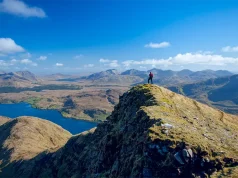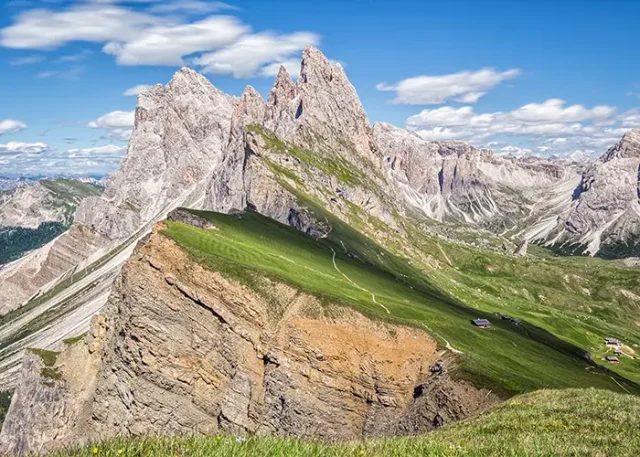
The Dolomites look like a place that should overwhelm hikers. The rock rises sharply, the faces look severe, and the peaks appear to close in from every direction. From photos alone, it is easy to assume that walking here requires constant nerve and technical confidence. Yet once you start hiking, that sense of threat fades quickly. The Dolomites remain dramatic, but they rarely feel oppressive. That balance is not accidental. It comes from how the terrain, trails, and culture work together to keep intensity contained even when the scenery suggests otherwise.
Exposure Is Visually High but Physically Limited
One of the most important reasons the Dolomites do not feel overwhelming is that exposure is usually visual rather than physical. You see steep walls, towers, and drops, but you are rarely asked to move directly through them. Trails keep a respectful distance from the most severe terrain.
The rock dominates the view, not the footing. This separation allows hikers to experience scale without absorbing constant risk. You can feel small without feeling threatened, which changes how the mountains register psychologically.
Trails Follow Natural Lines Through the Landscape
Dolomite trails tend to follow ledges, shelves, and broad slopes rather than cutting aggressively upward. Switchbacks soften climbs. Traverses replace vertical pushes. The routes feel negotiated rather than forced.
Because the trail logic is clear, the terrain feels readable even when it looks extreme. You understand where you are going and how you will get there. That clarity reduces mental load, which is often what makes mountain environments feel overwhelming.
Vertical Drama Stays Above the Walker
Much of the Dolomites’ drama exists above eye level. Towers and walls rise sharply, but the walking surface remains relatively stable. You are moving below the spectacle rather than inside it.
This creates a sense of containment. The mountains loom, but they do not close in. You are aware of height and scale, but not trapped by them. The verticality remains something you observe rather than confront.
Rifugios Break Intensity Without Breaking Flow
Mountain huts in the Dolomites are positioned where effort naturally peaks. They appear after sustained climbs or near transitions between valleys. Their presence interrupts intensity before it accumulates too far.
This does not turn the hiking into a series of stops. It simply prevents escalation. Knowing that a rest point exists ahead allows you to approach harder sections calmly instead of defensively. The day feels structured rather than relentless.
Distances Are Calibrated to the Terrain
Routes in the Dolomites are rarely extreme in distance relative to elevation. Long days exist, but most hikes balance ascent, traverse, and descent within a reasonable frame. You are not asked to stack difficulty in multiple dimensions at once.
This calibration matters. Overwhelming experiences often come from compounding factors. Steep climbs combined with long distances and technical footing. The Dolomites usually isolate these challenges rather than layering them.
Weather Adds Atmosphere More Than Threat
Weather in the Dolomites can change quickly, but common hiking routes remain forgiving. Trails stay clear in cloud cover. Escape options exist through valleys and lifts. Afternoon storms are part of the rhythm, not a destabilizing force.
Because weather modifies comfort more than safety on standard routes, it adds texture without adding fear. You adapt, but you are rarely forced into urgent decisions.
Infrastructure Absorbs Consequence
Cable cars, buses, and valley connections reduce commitment pressure. If a day feels longer than expected or conditions shift, alternatives exist. You are rarely locked into a single outcome.
This safety net does not remove effort, but it absorbs consequence. Knowing that adjustment is possible lowers anxiety and keeps the experience manageable.
The Culture Encourages Measured Choices
The Dolomites have a long tradition of mountain use that values judgment over bravado. Most hikers choose routes that match their ability. Via ferrata routes are clearly separated from walking paths, not blended into them.
This cultural clarity helps visitors self-select appropriately. You are not surprised by difficulty. You know when you are stepping into something more serious and when you are not.
Repetition Builds Familiarity Quickly
After a day or two, the Dolomites stop feeling chaotic. You recognize the rhythm of valleys, passes, and huts. The visual intensity remains, but the pattern becomes familiar.
Familiarity reduces overwhelm even when scenery stays bold. You are no longer processing everything as new. The mountains feel large but legible.
Why This Balance Is Easy to Misread
Many people mistake visual severity for experiential difficulty. In the Dolomites, the two are deliberately separated. The mountains present themselves forcefully, but the walking experience remains moderated.
This can lead to misunderstanding. Some expect constant intensity and find the hiking gentler than anticipated. Others underestimate effort because the system works so smoothly. Both reactions come from the same source. The Dolomites manage perception carefully.
Where Guided Options Fit
For hikers who want planning support layered onto this environment, Dolomites hiking tours add structure without changing the core experience. The terrain still looks bold. The walking still requires effort. The containment remains.
What Ultimately Keeps the Dolomites Manageable
The Dolomites do not overwhelm because they separate drama from danger. They allow hikers to experience scale without absorbing constant risk, to move through big terrain without being consumed by it.
The mountains remain sharp, vertical, and unmistakable. But the paths beneath them are thoughtful, measured, and forgiving. That balance is what keeps the Dolomites from feeling overwhelming, even when everything about them looks like it should.