
The Camino de Santiago is often described as a life-changing journey, but that description usually comes from people looking backward, not from people actually walking it. On the trail itself, the Camino feels surprisingly ordinary. Days blend together. Scenery repeats. Conversations loop. At some point, the walk stops feeling special at all. That is exactly when it begins to work.
This shift confuses many first-time walkers. They expect meaning to arrive early, clearly, and with some emotional force. Instead, they encounter repetition, routine, and a growing sense of neutrality. What most people don’t realize is that this flattening of experience is not a failure of the Camino. It is the mechanism.
The Camino Removes Novelty on Purpose
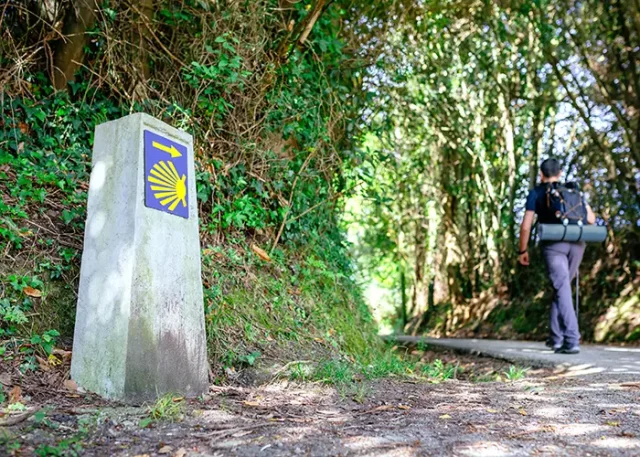
At the start, everything feels new. The first stamps in the pilgrim passport. The first albergue. The first shared meal. That novelty carries people for a while. Then it fades. The villages start to resemble each other. The trail markings become background noise. Even the conversations start sounding familiar.
Unlike many travel experiences, the Camino does not replace novelty with something else. It simply lets it disappear. There is no escalation. No reward system. No increasing drama. This absence is deliberate. When novelty is gone, attention has nowhere to hide.
Routine Takes Over Before Reflection Does
Many people expect reflection to be the core of the Camino. In reality, routine arrives first. You wake up. You walk. You stop. You eat. You sleep. The order rarely changes. This routine is not inspiring, and that is the point.
Routine strips away performance. You are no longer reacting to new stimuli or explaining your presence to yourself. You are just moving through days. Only after that settles in does reflection sometimes appear, and when it does, it is quieter and less dramatic than expected.
The Walk Becomes About Management, Not Meaning
After a few days, most walkers stop thinking about why they are there. The focus shifts to practical management. Feet. Pace. Blisters. Food. Sleep. This can feel disappointing if you arrived expecting emotional insight.
But this focus is what makes the Camino sustainable. You learn how little you actually need to keep moving. You stop framing the walk as a personal project and start treating it as a sequence of manageable days. That shift removes pressure and lowers resistance.
Repetition Forces Honesty
The Camino repeats itself relentlessly. The same types of paths. The same morning starts. Allowing this repetition exposes patterns in how people react to discomfort, boredom, and fatigue. There is no distraction large enough to override those reactions.
In more dramatic landscapes, scenery masks internal states. On the Camino, there is nothing to mask them with. If you are impatient, you notice it. If you rush, you feel it later. If you resist the routine, the days feel longer. The Camino does not correct you. It just keeps going.
Social Interaction Becomes Optional, Not Central
Early on, people talk a lot. Later, less so. Groups thin out naturally. Walking alone stops feeling awkward. Silence becomes normal. The Camino does not push solitude or community. It allows both, but neither is emphasized.
This balance removes social pressure. You are not required to bond, confess, or connect deeply. Conversations happen if they make sense. If they don’t, they end cleanly. The experience becomes less about others and more about how you handle your own presence.
The Landscape Stops Performing
The Camino’s scenery is pleasant but rarely demanding. Fields, villages, dirt tracks, and quiet roads repeat. Over time, the landscape fades into context rather than content. You stop evaluating it.
This lack of visual escalation is intentional. The Camino does not compete for your attention. It creates space where walking itself becomes the dominant activity. When nothing is trying to impress you, effort becomes more visible.
Progress Is Felt, Not Celebrated
There are milestones on the Camino, but they are understated. Distance accumulates quietly. There is no obvious moment where you feel transformed. Progress shows up physically before it shows up emotionally.
You walk longer without thinking about it. You manage discomfort better. You recover faster. These changes happen without ceremony. The Camino rewards persistence, not revelation.
Expectation Is the First Thing That Disappears
Most people who struggle on the Camino are not struggling physically. They are struggling because reality does not match expectation. They want something to happen. The Camino refuses.
Once expectation drops, resistance drops with it. The walk becomes simpler. Less demanding emotionally. Less disappointing. This is when many people realize that the Camino does not give you something. It takes things away.
Why Structure Matters More Than Freedom
The Camino works because it is structured. Clear routes. Frequent villages. Predictable distances. That structure reduces decision fatigue and keeps people moving even when motivation fades.
This is why Camino de Santiago tours do not fundamentally change the experience. The route already carries you. Guidance just removes logistical noise. The core dynamic stays the same.
What the Camino Actually Leaves You With
By the end, most people cannot point to a single moment that explains the Camino. What they carry away is subtler. A tolerance for repetition. A clearer relationship with effort. A reduced need for stimulation.
The Camino stops feeling special long before it starts working. When it does work, it does so quietly, without drama, and without asking for belief.
That is not a weakness. It is why the Camino has endured.