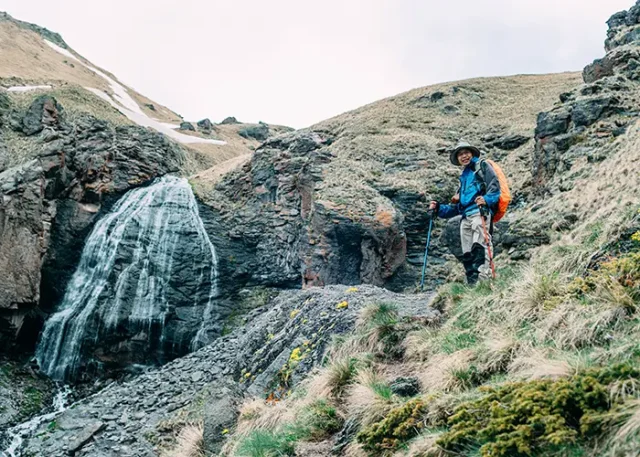
Hut to hut hiking in Iceland strips the experience down to its essentials. There are no villages to soften the days, no forests to buffer the wind, and no background infrastructure quietly managing comfort. What remains is a simple structure moving from shelter to shelter across open land. This simplicity does not make the experience easy, but it does make it focused. Iceland’s hut system supports movement without insulating you from the environment, and that balance defines what the walk feels like.
The Huts Create Structure Without Comfort
Icelandic huts exist to provide shelter, not relief. They are practical spaces meant to protect you from weather and nothing more. You arrive to escape wind, rain, or cold, not to recover in comfort or linger longer than necessary.
This shapes the rhythm of the walk. Days are planned around distance and exposure, not amenities. The hut marks the end of effort, not a reward for it. That distinction keeps attention on the walking rather than the destination.
The Landscape Never Disappears Between Stops
In many hut to hut systems, the huts punctuate the landscape and give the day emotional structure. In Iceland, the landscape dominates everything between shelters. The ground is open, the sky is wide, and there is very little variation to distract you.
Because nothing interrupts the space, distance feels honest. You are aware of how far you still need to walk. Progress is felt physically rather than visually. The huts do not break the experience into segments. They simply make it possible to continue.
Exposure Replaces Difficulty
Iceland’s hut routes are rarely technical. The challenge does not come from steep climbs or complex navigation. It comes from exposure. Wind, temperature, and footing demand constant attention. There is nowhere to hide from conditions.
This exposure keeps the experience serious even when the terrain is straightforward. You manage yourself continuously rather than preparing for isolated hard sections. Effort is steady, not dramatic.
Weather Shapes the Day More Than the Route
On Icelandic hut routes, weather often matters more than the path itself. Visibility, wind strength, and precipitation influence pace and decision-making hour by hour.
Because shelters are spaced far apart, you commit to the day early. You don’t walk waiting for conditions to improve. You adapt as you go. This creates a strong sense of presence. You are always aware of where you are and what the environment is doing.
Silence Becomes a Working Condition
Between huts, sound is minimal. Wind and footsteps dominate. There are no towns, roads, or casual interruptions. This silence does not feel peaceful in a decorative sense. It feels functional.
Without distraction, your focus narrows. You notice fatigue sooner. You become more efficient with movement. The walk becomes less about scenery and more about staying steady.
Fatigue Accumulates Without Disguise
Because the terrain is repetitive and the environment offers little variation, fatigue accumulates clearly. You cannot rely on novelty to carry you through a long day. You manage energy because you have to, not because a system encourages it.
This clarity can feel demanding, but it is also honest. You know exactly how the day affected you. Nothing masks cause and effect.
Navigation Is Simple but Requires Attention
Routes between huts are generally marked, but markings are not constant. You are expected to stay aware, especially in poor visibility. The land does not funnel you along a narrow corridor.
This keeps the walk active. You are not solving complex problems, but you are engaged. Attention never fully drops, which reinforces the sense of exposure.
Completion Feels Quiet, Not Triumphant
Arriving at a hut rarely feels celebratory. You arrive because you needed shelter, not because you reached a milestone. The satisfaction comes later, when you realize you managed the day well.
This quiet completion defines the experience. You don’t accumulate achievements. You accumulate days.
Why the System Works Despite Its Limits
The hut system in Iceland works because it does not pretend to offer more than it does. It provides safety without comfort and structure without distraction. It supports continuation, not indulgence.
This is why Iceland hut to hut hiking feels intense without being extreme. The system does not soften the environment. It simply makes sustained walking possible within it.
What the Experience Leaves You With
Most people leave Iceland’s hut routes without a single defining moment. What stays is a heightened awareness of effort, weather, and space. The walk feels pared back, direct, and difficult to romanticize.
That restraint is the point. Iceland does not try to entertain or impress. It offers focus instead. And for hikers willing to accept that trade, hut to hut hiking here becomes less about where you went and more about how you stayed present while moving through it.