As overtourism continues to reshape many of the world’s most popular destinations, a growing number of travelers are seeking places where the pace is slower, the landscapes feel untouched, and encounters still feel genuine. Tucked into the northeastern Himalayas, the Indian state of Sikkim offers exactly that—a rare sense of quiet discovery, particularly in spring.
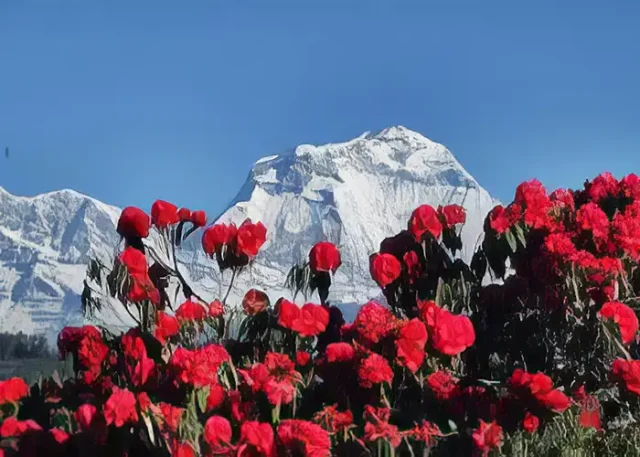
From late March through April, Sikkim enters one of its most captivating seasons. Rhododendrons bloom across hillsides and forest trails, transforming the Eastern Himalayas into a living tapestry of deep crimson, pale pink, and soft white. It’s a fleeting moment, brief and beautiful, rewarding those who travel beyond peak seasons and well-worn routes.
Once a restricted Himalayan kingdom, Sikkim remains one of India’s least-explored regions. While spring crowds gravitate toward Japan’s cherry blossom avenues or Europe’s festival capitals, Sikkim offers an alternative: a place where nature, culture, and spirituality unfold without congestion or spectacle.
Walking the Eastern Himalayas
Shakti Sikkim curates guided walking journeys through some of the region’s most culturally rich and visually striking landscapes. These foot-based explorations move between remote villages, mist-covered forests, and centuries-old monasteries, revealing a side of the Himalayas rarely seen by mainstream travelers.
Each journey is led by knowledgeable local guides who bring depth and context to the terrain—introducing guests to native plant species, explaining Sikkim’s layered history, and sharing insight into its identity as India’s first fully organic state. Walking becomes more than transportation; it becomes a way to understand how landscape and culture are inseparable here.
Unhurried Encounters and Living Traditions
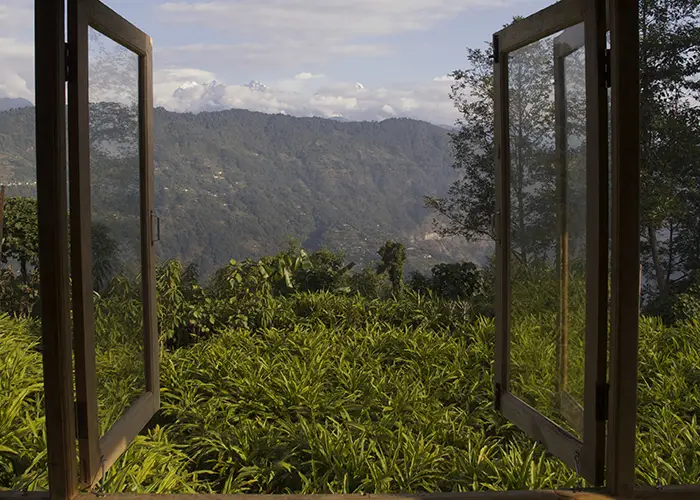
Life in Sikkim follows a measured rhythm, and Shakti’s journeys are designed to honor that pace. Days are shaped by unplanned moments: conversations with monks in working monasteries, wilderness lunches in wildflower meadows, and quiet participation in sacred rituals that reflect the region’s spiritual traditions.
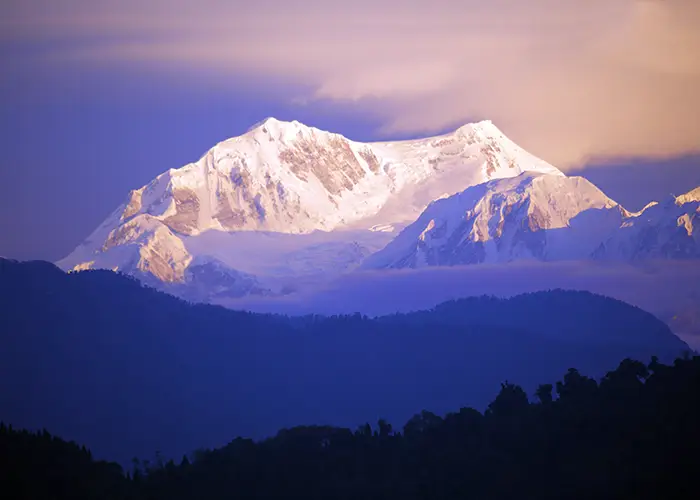
Anchoring the horizon is Mount Kanchenjunga, the world’s third-highest peak and a constant presence throughout the journey. More than a dramatic backdrop, the mountain embodies Sikkim’s deep-rooted connection to land, heritage, and continuity.
Staying with the Landscape
Accommodation is an integral part of the experience. Guests stay in restored planter homes and traditional village houses, operated in partnership with local Lepcha, Nepali, and Bhutia families. This community-led model ensures tourism supports living cultures rather than overwhelming them, creating meaningful economic benefits while preserving local ways of life.
In a world increasingly shaped by crowds and overexposure, Sikkim remains refreshingly restrained. Through Shakti Sikkim’s thoughtfully crafted journeys, travelers are invited to experience the Himalayas not as a checklist of sights, but as a place of presence—where spring blooms briefly, footsteps are light, and the journey matters as much as the destination.