

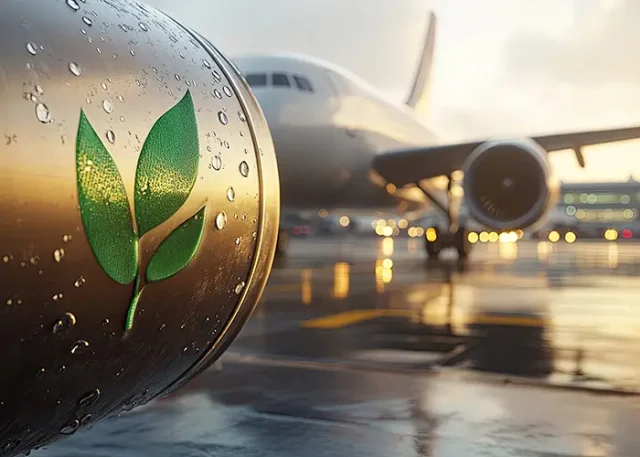
Aviation plays a crucial role in global connectivity, enabling tourism, trade, and international collaboration. However, it also presents a significant environmental challenge. The aviation sector currently accounts for about 2.5% of global CO₂ emissions, producing nearly 900–950 million tons of CO₂ annually as air travel demand continues to recover and grow worldwide.
At the same time, passenger numbers are rising rapidly, with global aviation emissions expected to surpass pre-pandemic levels by 2025, highlighting the urgency of decarbonizing the sector. Governments, regulators, and travelers are increasingly demanding more responsible practices, as the concept of sustainable travel becomes a key factor influencing travel choices and corporate sustainability strategies.
In response, the aviation industry is investing heavily in solutions such as sustainable aviation fuels (SAF), more efficient aircraft, and carbon-reduction programs. Many airlines have committed to achieving net-zero carbon emissions by 2050, while governments introduce policies and incentives to accelerate greener aviation technologies and operational improvements.
Sustainable Aviation Fuel (SAF): The Key to Lower Emissions
Sustainable aviation fuel (SAF) is widely considered one of the most practical solutions for reducing aviation’s environmental impact without requiring a complete redesign of aircraft or infrastructure. Unlike conventional jet fuel, which is produced from fossil-based crude oil, SAF is made from renewable or waste-based materials. Because it relies on alternative feedstocks and cleaner production pathways, it can significantly reduce the overall carbon footprint of air travel while maintaining similar performance characteristics to traditional fuel.
SAF can be produced from several types of sources. One common method uses waste oils and fats, such as used cooking oil or animal fats, which are processed into aviation-grade fuel through refining technologies. Another pathway relies on biomass, including agricultural residues, forestry waste, or specially grown energy crops. A more advanced approach involves synthetic fuels, sometimes called e-fuels, created using captured carbon dioxide combined with renewable electricity and hydrogen. These different production methods aim to create fuel that can replace or blend with conventional jet fuel while lowering lifecycle emissions.
One of the key advantages of SAF is its potential to reduce lifecycle carbon emissions by up to 80% compared with traditional jet fuel, depending on the feedstock and production process. Importantly, SAF is designed as a “drop-in” fuel, meaning it can be blended with conventional aviation fuel and used in existing aircraft engines, airport fueling systems, and logistics infrastructure. This compatibility makes it an attractive short-term decarbonization strategy because airlines can adopt it without replacing their fleets.
Despite its promise, the widespread adoption of SAF still faces several challenges. Production volumes remain limited, and current supply represents well below 1% of global aviation fuel demand. In addition, SAF is typically two to five times more expensive than conventional jet fuel, making large-scale adoption difficult without policy incentives, subsidies, or carbon pricing mechanisms. Expanding production capacity and reducing costs will therefore be critical steps in making SAF a mainstream solution for greener aviation.
Carbon Offsetting and Climate Responsibility
As the aviation industry works toward long-term decarbonization, carbon offset programs have become a short-term tool for addressing the environmental impact of air travel. These programs allow airlines and passengers to compensate for the emissions generated by flights by investing in projects that reduce or remove greenhouse gases elsewhere. While offsets do not eliminate aviation emissions directly, they help balance the overall climate impact while cleaner technologies and fuels continue to develop.
Carbon offset programs typically work by calculating the amount of CO₂ produced during a flight based on factors such as distance, aircraft type, and fuel consumption. Airlines or passengers can then contribute to certified environmental projects that reduce emissions by an equivalent amount. These projects generate carbon credits, which are purchased to offset the emissions associated with the flight.
Funds from carbon offset programs are used to support a variety of environmental initiatives. Common examples include:
- Reforestation and forest conservation projects that absorb carbon from the atmosphere
- Renewable energy developments, such as wind or solar power installations
- Methane capture programs at landfills or agricultural facilities
- Community projects that promote energy-efficient technologies in developing regions
As awareness of climate issues grows, travelers, businesses, and regulators increasingly demand transparent and verified carbon offset programs. Independent certification standards, such as those provided by organizations like the Gold Standard Foundation and Verified Carbon Standard, help ensure that funded projects deliver measurable and credible emissions reductions.
However, carbon offsets are not considered a complete long-term solution for aviation sustainability. Critics argue that offsets can sometimes delay bigger changes by allowing companies to compensate for emissions instead of reducing them at the source. In addition, the effectiveness of some projects may vary depending on how well they are managed and verified. For this reason, many experts view carbon offsetting as a temporary support mechanism, while the industry focuses on structural solutions such as sustainable aviation fuels, improved aircraft efficiency, and new propulsion technologies.
Next-Generation Aircraft and Smarter Flight Operations
Technological innovation in aircraft design and flight operations plays an important role in reducing aviation’s environmental impact. While sustainable fuels and carbon programs address emissions from the fuel side, improvements in aircraft engineering and digital technologies help airlines reduce fuel consumption during everyday operations. Modern aircraft are being designed with efficiency as a core priority, allowing airlines to lower operating costs while also decreasing carbon emissions.
One major area of progress is the use of lighter materials and improved aerodynamics. Aircraft manufacturers increasingly rely on advanced composite materials, such as carbon fiber, which are significantly lighter than traditional aluminum structures. These materials reduce aircraft weight, enabling planes to burn less fuel during flights. At the same time, aerodynamic enhancements—such as redesigned wings, winglets, and more efficient fuselage shapes—help minimize air resistance and improve fuel efficiency.
Another key factor is the development of more fuel-efficient engines and aircraft designs. New-generation engines use advanced turbofan technology that improves propulsion efficiency and reduces fuel consumption compared to previous models. Combined with optimized aircraft designs, these innovations allow some modern aircraft to consume 15–25% less fuel than earlier generations operating on the same routes.
Digital technologies also contribute to efficiency through AI-powered route optimization and operational planning. Airlines increasingly rely on data analytics and machine learning tools to calculate the most efficient flight paths, reduce unnecessary fuel burn, and optimize altitude and speed throughout a journey. These systems can also help airlines manage air traffic congestion, improve fleet scheduling, and minimize delays, all of which contribute to lower emissions.
Travel technology companies such as COAX Software support this transformation by developing custom travel software solutions for airlines and travel platforms. These tools can integrate flight data, booking systems, and operational analytics to help airlines make smarter operational decisions. By improving route planning, resource management, and data visibility, such technologies help airlines increase efficiency while also reducing the environmental impact of their operations.
Toward a Greener Future for Air Travel
The aviation industry is gradually moving toward a more sustainable future through a combination of technological innovation and environmental responsibility. Solutions such as sustainable aviation fuels, carbon offset programs, and next-generation aircraft designs are helping reduce the sector’s environmental footprint while maintaining the global connectivity that air travel provides. Together, these approaches represent a practical pathway for lowering emissions while longer-term breakthroughs continue to develop.
At the same time, digital technologies and smarter operational strategies are helping airlines improve efficiency and reduce unnecessary fuel consumption. From optimized flight routes to more efficient aircraft systems, these innovations demonstrate that meaningful progress can come from both engineering advances and data-driven decision-making.
However, achieving truly sustainable aviation will require strong collaboration across the entire ecosystem. Airlines, aircraft manufacturers, technology providers, fuel producers, and regulators must work together to scale sustainable solutions, expand clean fuel production, and create supportive policies. Through coordinated efforts and continued investment in innovation, the aviation industry can move closer to making greener air travel a practical and lasting reality.