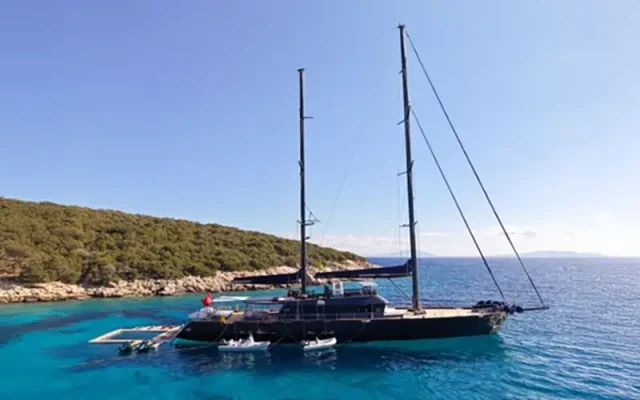
There is a stretch of Turkish coastline between Marmaris and the tip of the Bozburun Peninsula that manages to feel both ancient and untouched. Pine forests grow down to the waterline. Fishing villages sit in protected harbours that haven’t changed much in decades. The bays between the villages are empty, clear, and warm enough to swim in from May through October.
I sailed this route over seven days on a crewed gulet arranged through Blue More Yachting, a charter operator based in Fethiye that manages over 240 vessels along Turkey’s southwestern coast. What follows is a practical account of the route, the stops, and what to expect.
Day 1-2: Marmaris and the southern coast
We departed from Marmaris marina in the late morning. The harbour itself is worth arriving a day early for: the restored castle on the hill, the bazaar behind the waterfront, and a fish market that operates as an open-air restaurant in the evenings.
A gulet charter from Marmaris from here heads south into the Hisaronu Gulf, where the coastline becomes immediately quieter. Our first anchorage was a bay called Boncuk, known for its clear water and a small sandy beach at the back. We swam, ate lunch on deck, and reached Selimiye by late afternoon. Selimiye is a fishing village with a handful of waterside restaurants. We moored stern-to at the quay, walked fifty metres, and had the freshest grilled sea bass I’ve eaten anywhere.
Day two took us around the peninsula’s southern tip. The sailing was open for about an hour, with views of the Greek island of Symi to the south. We anchored for lunch in a bay with no name on any map I could find, where the pine trees came right to the water’s edge and the only sound was the occasional clatter of a woodpecker.
Day 3-4: Bozburun and the quiet anchorages
Bozburun is a boatbuilding town at the peninsula’s tip. The yards where wooden gulets are still built by hand are visible from the harbour. The town has a few restaurants, a couple of provisions shops, and a pace of life that makes Selimiye look busy.
From Bozburun we sailed north into the Gokova Gulf, which is where the trip changed character. The southern anchorages had been beautiful but accessible. The Gokova Gulf felt genuinely remote. English Harbour, our stop on day three, is a long narrow inlet surrounded by forest. We anchored at the far end, swam in water that was 23 degrees, and didn’t see another vessel until mid-afternoon.
Day four was similar: a morning sail to a new anchorage, lunch at a different bay, an afternoon of swimming and reading. The captain knew these waters intimately. He chose spots based on wind direction, time of day, and what he thought we’d enjoy. He was right every time.
Day 5-7: East toward Bodrum
The second half of the week took us east along the Gokova Gulf toward yacht charter destinations near Bodrum. The coastline here is dramatic: steep hillsides dropping to narrow coves, occasional ruins on headlands, and water that shifts between deep blue and pale turquoise depending on the depth and the bottom.
Bodrum itself appeared on day six. The Castle of St. Peter is the first thing you see, sitting on the promontory that divides the harbour. We moored in the marina, walked through the town, visited the ancient amphitheatre on the hillside above, and had dinner ashore. Bodrum has energy that the quieter stops don’t: restaurants, bars, a nightlife scene that runs late.
Day seven was a return sail west, with stops at two final bays that the captain had been saving. We arrived back in Marmaris by late afternoon, sunburned and reluctant to leave.
The food diary
The chef on our vessel deserves a section of his own. He provisioned at the Marmaris fish market and vegetable bazaar before dawn each morning. What arrived on the table at lunch was whatever had been freshest that day.
Day one: grilled octopus with lemon, six meze dishes, a green salad with Aegean olive oil, fresh bread. Day three: sea bass baked in a salt crust, borek with white cheese and herbs, grilled aubergine with tahini. Day five: a slow-cooked lamb stew with root vegetables that the captain said was the chef’s signature dish. He wasn’t wrong.
The traditional Turkish breakfast appeared every morning and became the meal I looked forward to most. Fresh white cheese, olives in several preparations, vine-ripened tomatoes, local honey, eggs to order, and bread baked on board. It lasted 45 minutes and set the pace for the entire day. Nobody rushed. There was nowhere to rush to.
Dinners at anchor were the most atmospheric. The deck table set with lanterns, the coast dark and quiet around us, the stars out in a density that city dwellers forget is possible. Five courses, regional wine, conversation that ran until midnight.
What you need to know
Blue More Yachting’s crewed charters include the vessel, captain, chef, deckhand, all meals, fuel, and water sports equipment. The chef shops at local markets daily. Dietary requirements are handled during the planning stage, which starts several months before departure.
Dalaman airport serves Marmaris with direct flights from Europe and connections through Istanbul. The transfer takes about 90 minutes. Milas-Bodrum airport is closer to Bodrum itself.
The ideal months for this route are May, June, September, and October. The water is warm enough for comfortable swimming, the winds are manageable, and the anchorages are uncrowded. July and August are hotter and busier but still excellent.
Pack light. You’ll live in swimwear and a cover-up during the day. Evenings are casual. Bring a good book and a second one as backup. You’ll have more reading time than you expect, and the afternoons at anchor are the kind of quiet that makes a good novel feel immersive in a way it hasn’t since you were young.