

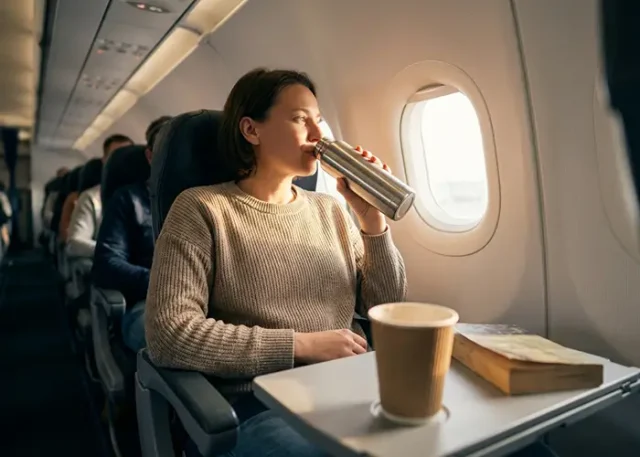
The most luxurious travel upgrade is waking up rested and comfortable, whether you are flying overnight or hopping time zones.
Achieving better sleep while traveling requires more than just a standard neck pillow.
It demands a proactive approach to managing your physical environment and addressing your unique biology before departure.
These five low-effort adjustments ensure you wake up genuinely refreshed upon arrival.
Specialized medical and personal care logistics often dictate how well you rest on the road. For instance, travelers managing their menstrual cycle might pack reusable underwear alongside nixit’s medical-grade menstrual disc.
Similarly, those treating sleep apnea frequently rely on customized oral appliances or a portable machine like RespShop’s portable travel CPAP.
Securing these vital health foundations early makes the rest of your travel wellness checklist much more effective.
Anticipating physical stressors eliminates the specific kind of exhaustion that ruins the first day of a trip.
The following strategies represent the core of an effective and highly practical travel routine.
1. Time Your Flight Around Your Body Clock

One of the simplest long-haul flight essentials is a booking decision you make before you ever leave home.
Your body runs on a circadian rhythm, which is a roughly 24-hour internal clock that regulates when you feel alert and when you wind down.
Fighting that natural rhythm mid-flight makes restorative rest significantly harder to achieve.
When crossing multiple time zones, overnight flights tend to align with your body’s natural rest window. This gives you the best physiological chance of actually sleeping on board.
If your flight times are fixed, try shifting your rest schedule by one to two hours in the days leading up to departure.
Small adjustments in timing create noticeably better sleep while traveling before you have even boarded the plane.
2. Pack a Small Comfort Kit
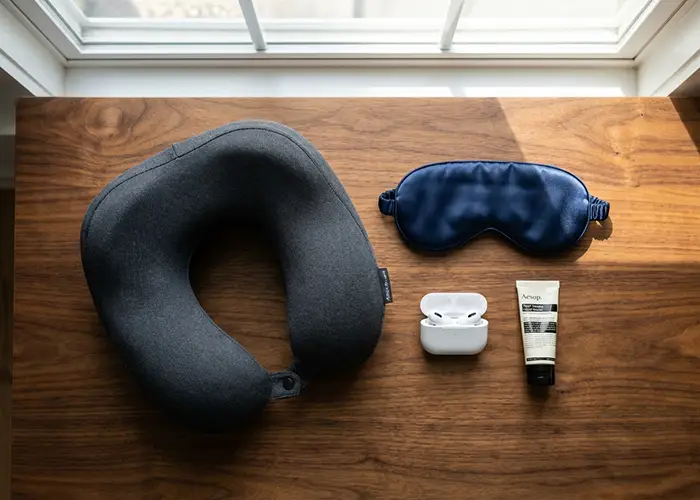
Sensory comfort matters far more than most travelers realize during a long journey. A noisy, bright, and temperature-inconsistent cabin is not a sleep-friendly environment by default.
However, packing a few compact and strategic items can effectively change that reality.
A solid comfort kit focuses on familiar cues and includes items like a contoured pillow for proper neck support.
You should also pack a lightweight mask to block overhead cabin lighting and noise-canceling earbuds to dull loud engine hums.
The goal is to recreate familiar sensory elements from home that signal to your brain it is time to rest.
You should also include a warm layer and a travel-sized moisturizer. Aircraft environments are notoriously arid, with exceptionally low cabin humidity levels.
This lack of moisture can easily irritate the upper airway and eyes, making physical relaxation difficult. None of these items is bulky, yet they yield a high return every time you fly.
3. Manage Hydration and Caffeine Like a Pro
What you consume before and during your flight has a direct impact on your ability to rest. Clinical data show that healthy individuals process stimulants slowly, noting a roughly five-hour half-life of caffeine.
For optimal rest, you must cut coffee intake at least six hours before your intended sleep window. This rule applies whether you plan to sleep on the plane or immediately at your destination.
Consistent water intake throughout the flight also matters heavily for your overall physical state. Dehydration compounds fatigue and physical discomfort, making it much harder to fall and stay asleep.
Focusing on steady hydration is one of the most practical travel comfort tips available today. It requires zero extra space in your luggage while drastically improving your physical resilience.
| Important: Caffeine stays in your system for up to seven hours. To ensure your body is ready for sleep upon boarding, stop all caffeine consumption at least six hours before your scheduled rest period. |
4. Simplify Period Care Before You Board
For people who menstruate, traveling during a period adds a real logistical layer to an already demanding day.
Limited restroom access on flights and unpredictable transit schedules make managing traditional disposable items highly inconvenient.
Already-packed carry-on bags rarely have room for bulky supplies.
The practical answer is choosing an option that works around your travel day rather than against it.
When restroom access is limited, a high-capacity and low-maintenance alternative completely removes the stress of frequent changes.
Utilizing a reusable medical-grade silicone disc offers up to 12 hours of reliable protection.
This capacity is enough to cover most long transit routes seamlessly. Its suction-free design ensures comfortable and unnoticeable wear during long periods of sitting.
5. Keep Your Sleep Support Routine Intact
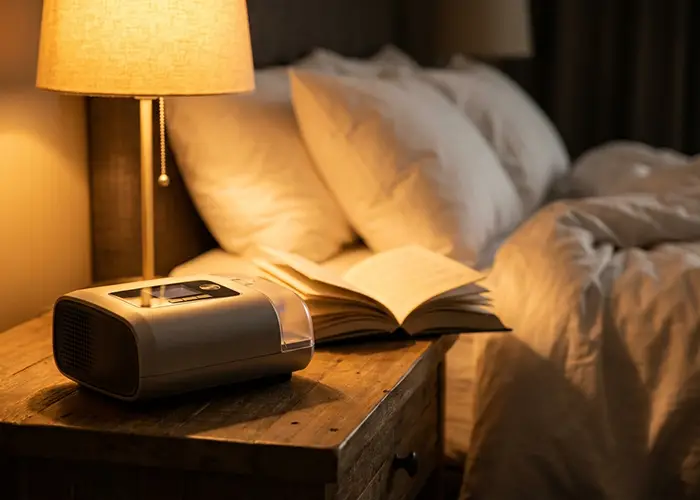
Consistency is one of the most effective tools for resting well away from home. Familiar routines signal to your nervous system that relaxation is coming, even in an unfamiliar hotel room.
Disrupting those established cues is one of the fastest ways to accumulate travel fatigue.
This reality is especially relevant for travelers who rely on continuous positive airway pressure therapy.
Skipping therapeutic care while traveling typically means arriving at your destination with fragmented energy.
It also leaves you dealing with the accumulated physical effects of untreated apnea events overnight.
Bringing a dedicated portable device designed specifically for travel ensures you never sacrifice quality care on the road.
| Key Insight: Travel fatigue is often caused by broken routines rather than the journey itself. Maintaining medical therapies like CPAP ensures your sleep quality remains consistent, preventing the exhaustion that ruins the first day of vacation. |
The Bottom Line
Travel is fundamentally more enjoyable when you arrive with vibrant energy rather than spending the first day recovering.
None of the strategies above requires significant effort to implement effectively. They are small and intentional choices that add up to noticeably better physical condition across the entire trip.
Whether you are preparing for personal care logistics mid-flight or maintaining a respiratory routine, the right preparation is essential.
Good planning ensures that your baseline comfort travels safely and seamlessly with you.