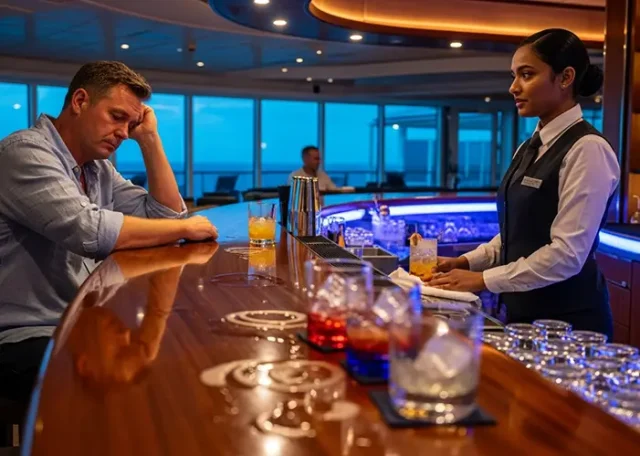
A Miami jury just ordered Carnival Corporation to pay $300,000 to a passenger who was over-served alcohol aboard the Carnival Radiance. The ruling puts a sharp focus on where corporate responsibility ends and personal accountability begins when you’re cruising the open ocean.
For anyone planning a cruise vacation, this case is worth paying attention to. It sheds light not just on this particular incident, but on broader questions of duty of care, all-inclusive drink packages, and the ever-evolving legal landscape at sea. To understand its significance, let’s explore what actually happened on board.
What Happened on the Carnival Radiance
The Incident
During a January 2024 voyage, 45-year-old passenger Diana Sanders was served at least 14 tequila shots over roughly eight and a half hours at various bars on the ship. She became heavily intoxicated, fell down a flight of stairs, and was found unconscious in a crew-only area.
The injuries were serious: a concussion, a possible traumatic brain injury, and severe back and tailbone damage, according to court documents.
How the Jury Split the Blame
Here’s where it gets interesting. The jury didn’t pin everything on one side. They found Carnival 60% liable, concluding the cruise line failed to monitor alcohol consumption and cut off a visibly intoxicated guest. But they also assigned 40% of the fault to Sanders herself, acknowledging her own role in the situation.
That split matters because it shows courts assess both the operator’s responsibilities and the passenger’s choices. In other words, the courts consider accountability on both sides.
What This Means for the Cruise Industry
Drink Packages Under the Microscope
If you’ve cruised recently, you’re probably familiar with all-inclusive beverage packages. Carnival’s “CHEERS!” program, for instance, caps daily alcoholic drinks at 15. That’s a lot of drinks.
The Sanders case raises an uncomfortable question: do these packages quietly encourage over-consumption? A key takeaway is that cruise lines may need to reevaluate how these programs are structured, since the verdict highlights industry pressure to prioritize passenger safety over maximizing beverage sales.
Duty of Care Beyond the Bar
Alcohol service isn’t the only area where cruise lines face liability questions. Other parts of these massive ships carry their own risks. Slippery pool decks, poorly maintained hot tubs, and malfunctioning equipment lead to common pool and spa injuries that frequently result in legal claims against operators.
Navigating these cases can be tricky, especially since cruise ticket contracts often aim to limit the operator’s liability. The core takeaway is that understanding your contract and consulting an experienced maritime attorney can significantly strengthen your position if you need to make a claim.
How to Protect Yourself on Your Next Cruise
Practical Safety Tips
You don’t need to skip the fun to stay safe. The key takeaway is that simple habits and awareness can reduce your risk. Here are strategies worth keeping in mind:
- Read the beverage package fine print. Before you buy, check the terms. Know the daily drink limits (Carnival’s is 15) and understand that the cruise line reserves the right to refuse service.
- Pace yourself and drink water. The vacation atmosphere makes it easy to lose track of time. Alternating cocktails with water helps you stay aware and hydrated. Sound obvious? You’d be surprised how often people forget.
- Document everything if something goes wrong. Use your phone to photograph the scene, note the time and location, and grab contact info from witnesses. This kind of evidence can be critical later.
- Report injuries and visit the medical center. Tell the ship’s staff to create an official record immediately. A visit to the onboard clinic gives you documentation that could strengthen any future claim.
- Know your cruise ticket contract. The fine print typically sets strict deadlines for filing claims (often just one year) and specifies where lawsuits must be filed (usually the U.S. District Court in Miami for major lines).
Shared Responsibilities at Sea
The verdict reinforces a crucial takeaway: safety on a cruise ship is a shared responsibility between operators and guests. Here is how those responsibilities break down:
| Area | Passenger’s Role | Cruise Line’s Duty |
|---|---|---|
| Alcohol consumption | Track your own intake and know your limits | Refuse service to visibly intoxicated guests; train staff to spot warning signs |
| Onboard environment | Use caution in risk areas like wet decks, stairs, and crowded lounges | Maintain safe conditions, clean spills quickly, and warn of known hazards |
| After an incident | Report injuries to staff immediately and seek medical care | Provide adequate medical facilities and document incidents accurately |
| Legal rights | Understand contract terms, especially filing deadlines and jurisdiction clauses | Operate within maritime law and honor all contractual and safety obligations |
The Broader Implications for the Maritime Industry
While this verdict is unlikely to impact cruise booking trends, it serves as a critical reminder that safety awareness must remain a priority, even in leisure environments. The legal framework is clear: cruise operators are mandated to mitigate foreseeable hazards, while passengers maintain a concurrent duty to exercise reasonable care for their own well-being.
Understanding this intersection of corporate responsibility and personal liability equips travelers to better protect their rights and interests.