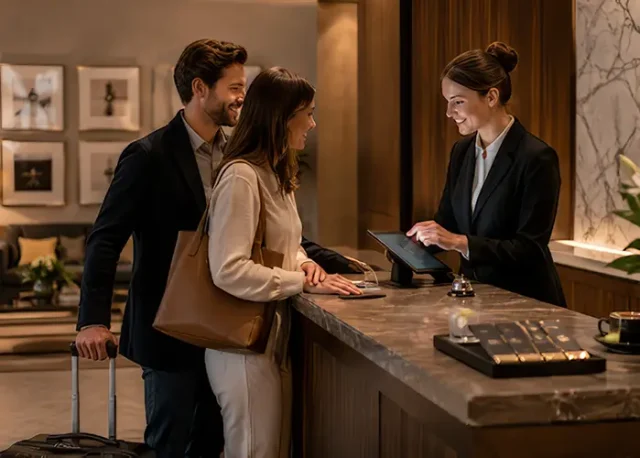
Every traveler has a story about a small hotel that simply understood them, the barista who remembered the oat milk. The room upgrade appeared after a delayed flight. The checkout took ninety seconds because everything was already settled. Travelers tend to credit charm, instinct, or luck. People who run hotels know better. Behind almost every one of those moments sits a property management system, the operational core that decides whether a property feels intuitive or improvised.
For independent hotels with a few dozen rooms, this software carries more weight than at any large chain. A resort with 500 keys has departments to absorb mistakes; a 25-room hideaway has a promise of personal attention and nowhere to hide when it breaks. That pressure explains why so many boutique operators have moved away from patched-together tools and toward unified platforms such as the Prostay complete hotel PMS system, built to handle reservations, front desk, housekeeping, and payments in one place for exactly this category of property. The logic is simple: when one system holds the whole picture, the staff can stop managing screens and start managing stays.
What a Property Management System Actually Does
Strip away the acronyms, and the job description is plain. A small hotel PMS is the single source of truth for three questions that every property answers hundreds of times a day: who is coming, what they need, and what they owe. Everything else builds on those answers.
In daily operations, that translates into:
- A live room inventory. Which rooms are clean, occupied, blocked for maintenance, or ready for an early arrival, updated in real time rather than on a whiteboard.
- One guest profile per person. Preferences, allergies, past visits, and special occasions are stored once and visible to every shift, so recognition never depends on memory.
- Automated billing. Room charges, minibar, spa, and city taxes flow into a single folio, which is why modern checkouts feel instant.
- Reporting to an owner can be trusted occupancy, average rate, and revenue per room pulled from real transactions instead of reconstructed spreadsheets.
The Booking Engine: Where the Guest Journey Begins
Long before check-in, the first handshake between guest and hotel happens online. A direct booking engine for hotels sits on the property’s own website and sells rooms without the 15 to 25 percent commission that online travel agencies charge. For a small property, the difference between a direct booking and an agency booking for a 300-euro stay is real money, repeated every night of the year.
A good engine does more than process cards. It mirrors live availability, honors rate rules, captures guest details straight into the profile, and lets the hotel attach offers a third-party site never could: a late checkout, a tasting menu, a bottle waiting in the room.
Integration: The Difference Between a Toolkit and a System
Ask experienced operators what causes most guest-facing failures, and the answer is rarely one bad product. It is two decent products that refuse to talk. The agency listing that does not know a room has just sold. The payment terminal does not match the night audit. The spa diary is living on a separate laptop near the pool.
This is why small-hotel PMS integration has become the deciding factor in software purchases, often ranked above price. The market judges a platform less by its own features and more by how cleanly it connects outward:
- Channel managers, so availability across Booking.com, Expedia, and the direct site updates in seconds, and double bookings stop being a seasonal tradition
- Payment gateways, so deposits and refunds move without anyone typing card numbers
- Smart locks and keyless entry, so a midnight arrival walks straight to the room
- Accounting software, so the month-end is a report, not an excavation
- Guest messaging tools, so pre-arrival notes and review requests send themselves
When the connections hold, the guest experiences one coherent hotel. When they fail, the guest experiences the seams, and at boutique prices, seams are unforgivable.
A Practical Test Before Signing Anything
Owners evaluating new software can run one simple exercise. Trace a real guest through the proposed setup: a returning couple books online, requests a late checkout, charges dinner to the room, and pays on departure. Count every moment a staff member must retype information by hand. Each manual touch is a future error in disguise. A well-chosen small hotel PMS should bring that count close to zero.
Why Travelers Should Care About Back-Office Software
It may seem odd for a travel audience to read about hotel operations, but the connection is direct. The qualities modern travelers praise in reviews, the anticipation, the flow, the sense of being known, all have an operational source. Anticipation requires stored data. Flow requires synchronized departments. Being known requires a system that remembers the first visit when the second one begins.
Understanding this changes how both sides behave. Owners stop treating software as an IT cost competing with linen budgets and start treating it as part of the guest experience, the part that succeeds by staying invisible. Travelers, in turn, can read the signals: a hotel that confirms instantly, recognizes a returning name, and checks out in moments is almost certainly running its operation on a single, connected platform rather than goodwill and sticky notes.
The Quiet Conclusion
Gadgets in the lobby will not decide the future of boutique hospitality. It will be decided by whether a property’s technology disappears so completely that all the guests perceive is grace. For independent hoteliers, the lesson holds steady: choose tools built for your scale, value deep connections over long feature lists, and measure every system by one standard. Does it give your people more time to be hospitable?
No guest has ever written a glowing review about a property management system. They write about the oat milk, the upgrade, and the ninety-second checkout. Having PMS for hotels explained matters only because it reveals where those moments really come from: a quiet engine in the back office, running well, asking for no applause.