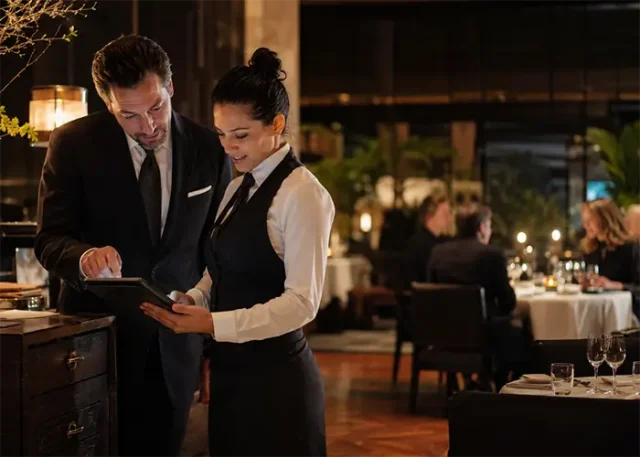
A luxury restaurant is remembered for many things: the lighting, the first greeting, the confidence of the wine service, the texture of a dish, and the way a table is handled when guests arrive early or stay longer than expected. Yet much of what makes that evening feel controlled happens away from the guest’s eye. The best service often feels natural, but it is rarely accidental. It depends on people, timing, training, and increasingly, the quality of the systems underneath the dining room.
For restaurant owners, hotel groups, and B2B hospitality software clients, the point of sale has moved far beyond the till. It now sits close to the emotional center of the restaurant. A well-chosen POS system for luxury restaurants can help a team remember guest preferences, read the flow of service, protect margins, support kitchen discipline, and keep managers informed without turning the dining room into a technical environment.
A phrase such as “TableView cloud-based restaurant POS system“ naturally belongs in this conversation because modern restaurant operators are looking for more than just payment processing. They are looking for clearer table visibility, better service coordination, and a practical way to connect guest experience with daily commercial control.
- Luxury dining depends on memory, timing, and restraint.
- Good systems support the guest experience without drawing attention to themselves.
- Restaurant technology should help staff act with more confidence, not less personality.
The Table Is No Longer Just a Table
In a premium restaurant, a table carries a story. It may be a birthday dinner, a client meeting, a proposal, a quiet lunch after a long flight, or a regular guest returning to a favorite corner. For DRIFT Travel readers, this distinction matters because destination dining is part of modern travel. Guests do not separate the restaurant from the journey. A meal can become the emotional highlight of a hotel stay or city break.
This is where table management software restaurant thinking becomes valuable. A table should not be treated only as a numbered space on a floor plan. It has timing, value, preferences, dietary notes, staff ownership, and a relationship with the kitchen. When that information is visible in the right way, service becomes more attentive without feeling forced.
Luxury Service Is Built on Small Acts of Recognition
A guest does not need to know that the system remembers their preferred sparkling water, their allergy note, or that they dislike being seated near the entrance. They only need to feel understood. That is the subtle power of well-managed restaurant information.
Many restaurants already have charming teams. What they often lack is consistency. One excellent server may remember everything, but what happens on that person’s day off? What happens when a guest moves from the bar to the dining room? What happens when a hotel guest eats breakfast, returns for lunch, and books dinner the following night?
- Guest notes should be useful, brief, and respectful.
- Table status should be clear enough for fast decisions.
- Managers should be able to see service pressure before it becomes visible to guests.
Why Hospitality POS Systems Should Be Judged by Behavior
Too many restaurant technology decisions are made from feature lists. Features matter, but they do not tell the full story. The better question is how the system behaves during a busy service. Does it help the team stay calm? Does it reduce repeated questions? Does it make the modifiers clear to the kitchen? Does it help staff recover quickly when a guest changes a dish, moves tables, or asks to split the bill?
Strong hospitality POS systems should support how restaurants actually operate. A hotel restaurant is different from a neighborhood bistro. A tasting menu venue is different from a beach club. A luxury resort with multiple outlets has different needs from a single city dining room. The system must fit the operating model, not force every team into the same pattern.
The Best Restaurant Software Protects the Human Moment
There is a risk in hospitality technology. If used badly, it can make the service colder. Staff stare at screens. Guests repeat information. Managers rely on reports but miss the mood of the room. That is not the goal.
Good restaurant software should strengthen the human side. It should remove confusion so staff can look up, listen properly, and notice details. It should help the kitchen receive clear information. It should help managers understand the commercial position without interrupting the flow of service. It should give owners a clearer view of performance while preserving the personality of the restaurant.
The Dining Room and the Kitchen Must Speak the Same Language
Guests experience one restaurant. Staff often operate in several separate worlds. The front of house manages the guests. The kitchen manages preparation and timing. Management studies revenue, labor, stock, and profit. If these worlds are disconnected, the guest eventually feels it.
This is why the connection between POS, table management, stock awareness, and reporting is so important. A restaurant can have beautiful interiors and talented people, yet still lose control through poor communication. A dish may be sold after it has run out. A dietary note may be missed. A server may not know that the kitchen is under pressure. A manager may only discover a problem after the guest has left.
- The kitchen needs clean, accurate order information.
- The front of house needs to understand timing and availability.
- Owners need data that explains both revenue and service quality.
Commercial Discipline Is Part of Hospitality
Luxury restaurants sometimes avoid discussing margins openly, as though commercial control might reduce romance. In reality, the opposite is true. A restaurant that understands its costs can protect quality with more confidence. It can price effectively, reduce waste, plan staffing more intelligently, and maintain standards when conditions change.
A thoughtful POS system for luxury restaurants can support this discipline without making the experience feel corporate. It can show which dishes perform well, which tables drive certain patterns of spend, which service periods need attention, and where the menu may be creating pressure. Used well, this information helps owners make better decisions without flattening the character of the restaurant.
What Travel Hospitality Can Teach Restaurant Owners
DRIFT Travel readers understand that hospitality is not only a transaction. The finest hotels, resorts, and destination restaurants build a sense of place. They create rhythm. They help guests feel that someone has thought through the experience before they arrive.
Restaurant owners can apply the same mindset to their systems. The POS should not be chosen only by the finance department or the T supplier. It should be considered by owners, managers, front-of-house leaders, chefs, and anyone responsible for the guest journey. A system that works for accounts but frustrates service is incomplete. A system that looks elegant but cannot support back-office control is also incomplete.
Questions Worth Asking Before Choosing a POS
The most useful evaluation starts with real service scenarios, not a product brochure. Owners should ask practical questions that reflect the restaurant’s actual pressure points.
- Can the team manage table changes quickly?
- Are guest notes easy to read and apply?
- Does the kitchen receive clear order information?
- Can managers view performance across different outlets?
- Does the system help staff move faster while staying personal?
- Will reporting help the business improve decisions, not just collect numbers?
These questions matter because hospitality technology should earn its place in the operation. It should reduce friction, clarify priorities, and support the restaurant’s identity.
The Future Belongs to Restaurants That Remember Well
The next stage of premium dining will not be defined only by better ingredients or more dramatic interiors. Those still matter, but they are easier to copy. What is harder to copy is a restaurant that remembers well, responds intelligently, and maintains steady standards across every service.
The strongest restaurants will use technology quietly. Guests may never mention the POS. They may never notice the floor plan, the order routing, the guest profile, or the reporting dashboard. They will simply feel that the restaurant knows what it is doing.
That is the real value of modern hospitality POS systems and thoughtful restaurant software. Not noise. Not novelty. Not technology for its own sake. Just a better foundation for service, memory, timing, and commercial clarity. For luxury restaurant owners, that foundation may be the difference between a meal that is merely well served and one that guests carry with them long after the trip is over.