

New nonstop flights can reshape a trip before you start packing. A city that once required a connection becomes a direct hop. A shoulder-season getaway may suddenly have better award space. A smaller airport near home might add a route that saves you an hour of driving. For late-2026 planning, the pace of change is worth watching. OAG reports 1,323 new routes for Summer 2026, split between 614 domestic and 709 international services, showing how quickly the global map is shifting.
That volume is useful, but it also means schedules can change fast. Before you book, it helps to scan the headlines, then confirm the details. For quick checks on breaking route news across airlines, aircraft, routes, and freight, many travelers browse aviation news hubs as background before checking airline press rooms for the official version. This guide walks through the route moves most likely to matter for U.S. leisure travelers and how to verify them before you commit.
Florida Focus: Fort Lauderdale as a Springboard
For weekend travelers and anyone chasing warm-weather escapes, JetBlue’s Fort Lauderdale buildout is one of the season’s more useful changes. Operating 125-plus daily departures to more than 55 nonstop destinations gives travelers more flexibility, and the plan to grow toward roughly 150 daily flights this winter should add more choices for holiday trips.
A larger schedule usually means more departure times per day, which makes it easier to find a flight that fits your plans. When you search, use flexible date tools to compare fares across a few days. If a schedule shifts after you book, having nearby Miami or Palm Beach airports as backup options can help protect the trip. If cabin comfort matters, check aircraft and seating details as the winter schedule firms up.
Transatlantic Watchlist for Fall and Winter
If Europe is on your list for the quieter shoulder season, several carriers are opening doors. United announced new Newark nonstops to Split, Bari, Glasgow, and Santiago de Compostela for Summer 2026, and the airline says it is the only U.S. carrier launching those four city pairs. Secondary-city routes like these are worth watching because they can unlock trips that once required a connection through a major European hub.
British Airways is expanding too, with a 9% winter increase in long-haul flying, two new long-haul destinations in Melbourne and Colombo, and stronger frequencies on select U.S. routes. More winter frequency can mean better award-seat availability and easier planning around holidays. ITA Airways adds to the transatlantic picture with its Rome to Houston service, starting at three weekly flights and rising to five weekly on an A330-900. For travelers who want a Rome gateway without backtracking, that direct link is a practical addition.
Because these are new services, treat published schedules as a starting point. Weekly frequencies and aircraft assignments can shift, so confirm the day-of-week schedule before you build connections around it.
West Coast Plays
The West Coast is gaining more nonstop options. San Diego International reached a record 87 nonstop destinations across spring and summer 2026, with nonstop flights up more than 10% year over year, which broadens options for travelers based in Southern California. Southwest scheduled an all-time high of 139 peak-day departures at SAN for August and September 2026, and it is adding Burbank to Honolulu on August 4, 2026, and Ontario to Honolulu on June 4, 2026. Those Hawaii routes are useful for travelers who would rather skip a coastal connection.
Alaska is also worth checking. The airline is returning Long Beach to Seattle service with two daily flights and adding three new routes from Santa Rosa, which it says will make it the only airline connecting Seattle to all five major Los Angeles Basin airports. For Southern California travelers, that can create smoother connections into the Pacific Northwest and onward to Hawaii.
Asia and the Middle East
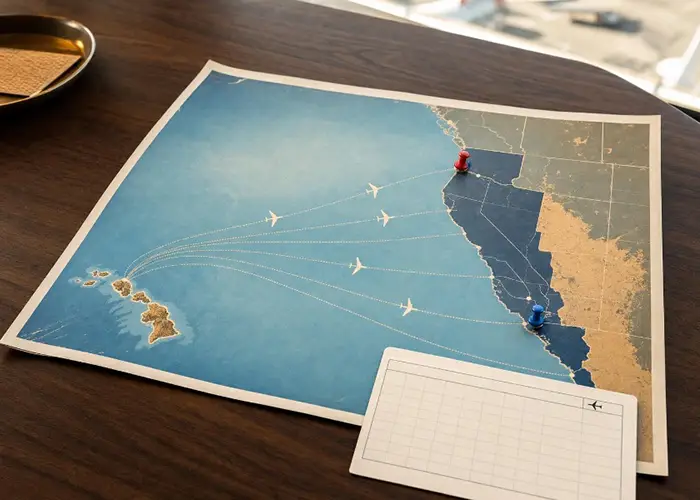
Long-haul travelers heading to Asia have new options for peak holiday season. Japan Airlines’ FY2026 plan brings international operations to 101% of prior-year levels, adds Narita to Delhi and Naha to Taipei, and uses the larger 777-300ER on Honolulu service during peak periods. Larger aircraft on Honolulu flights can ease pressure during busy travel windows, though seat availability can still move quickly.
Qatar Airways offers broad reach for connecting itineraries, with a Summer 2026 schedule serving more than 150 destinations from June 16 to September 15, 2026. The airline notes that schedules may change, which is a useful reminder for anyone stitching together a multi-leg trip. On complex routings, watch for equipment swaps and check minimum connection times so a tight transfer does not become a missed flight.
Secondary and Convenience Airports
Sometimes the smartest booking starts at the smaller airport. Avelo will begin service from McKinney National Airport (DTX) in November 2026 to five destinations, with introductory fares from $99 and a free first checked bag promotion at launch. For travelers in the northern Dallas area, a closer airport can mean less driving, simpler parking, and a faster path from curb to gate.
Breeze Airways plays a similar role with its 11 new nonstop routes announced June 24, 2026, and introductory fares from $49 one way. When a smaller airport offers a nonstop to your destination, it can beat a big hub for a weekend trip even if the base fare looks close, because you save time on both ends. Newer markets can see seasonal adjustments, so confirm the route is still operating on your travel dates. A quick scan of aviation news today can flag route headlines across airlines, aircraft, routes, and freight, but confirm launch dates with the airline before planning around them.
How to Verify Air Travel Updates Before You Book
Fast-moving news is exciting, but a headline is not a confirmed flight. Use a simple three-step check before you spend money.
- Start with the airline newsroom. Press releases carry the specifics: inaugural date, route, frequency, and aircraft type. This is where JetBlue, United, Alaska, and others publish official details.
- Check the airport news page. Airports like San Diego confirm launch dates and frequencies from their side, which can catch details a summary misses.
- Use macro sources for context. OAG and IATA analyses help you understand broader capacity trends, such as the count of 1,323 new Summer 2026 routes, so a single change makes more sense in the bigger picture.
When New Routes Mean Better Deals
New routes often come with introductory pricing, and the examples above show the pattern: Breeze from $49 one way and Avelo from $99 with a free checked bag at launch. These fares tend to appear when sales first open and can move quickly as seats fill. Booking early in the sales window usually gives you the best shot at the lowest price and the widest choice of dates.
Watch for warning signs too. Thin schedules, such as a route operating only a few days a week, can be more prone to seasonal suspension. If a carrier publishes a schedule change, look for fee-free change windows, which airlines sometimes offer when they adjust times or cancel a frequency. As a habit, re-check your schedule two to three weeks before departure so any shift does not surprise you at the airport.
Micro-Itinerary Ideas
- Weekend hop: Use one of Breeze’s new nonstop pairs to reach a smaller city without a connection, ideal for a two-night trip.
- Fall Euro-city break: Fly United’s new Newark nonstops to Split, Bari, Glasgow, or Santiago de Compostela while summer crowds thin out.
- Rome gateway: Take ITA Airways from Houston to Rome on the A330-900, then continue by rail across Italy.
- Hawaii from California: Book Southwest’s Burbank or Ontario nonstops to Honolulu and avoid the usual coastal connection.
Traveler Checklist
Before you lock in a trip built around a new or changing route, run through these quick confirmations:
- Verify the inaugural date and make sure your travel dates fall after it.
- Check the aircraft type and cabin, especially if premium seating matters to you.
- Confirm the day-of-week pattern so your return works as planned.
- Plan an alternate airport or routing in case the schedule shifts.
- Note any fee-free change windows the carrier publishes with updates.
Planning Around a Moving Map
The takeaway for late 2026 is straightforward: more nonstop options are appearing across Florida, the West Coast, the Atlantic, and Asia, which means better itineraries may be within reach if you act while introductory fares and fresh award space are available. The catch is timing. New routes reward early bookers, but schedules can change. The traveler who confirms details in the airline newsroom, cross-checks the airport page, and re-verifies a few weeks out is the one most likely to avoid surprises. Watch the headlines, then trust the primary source, and let the map work in your favor.