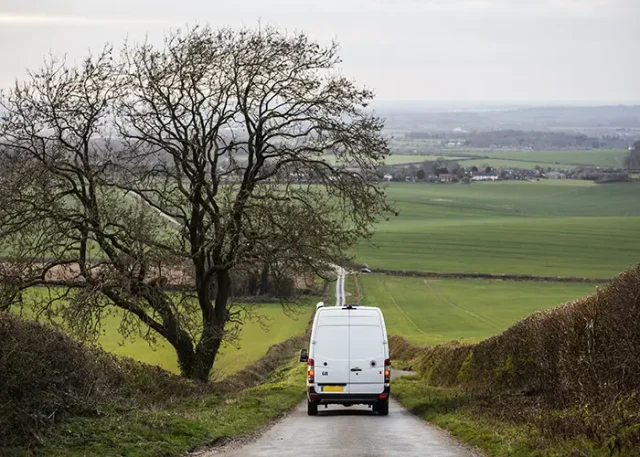
A memorable British road trip does not need to cover hundreds of miles each day. Some of the country’s most rewarding landscapes can be explored on compact campervan routes combining coastlines, national parks, historic towns and rural villages.
Campervan booking platform CamperDays has identified five routes measuring approximately 150 to 240 miles. Depending on the vehicle, road conditions and driving style, each could potentially be completed using a single tank of fuel.
The itineraries range from Northumberland’s castle-lined coast to the lakes and mountain passes of Cumbria, providing inspiration for travellers who want to spend more time exploring and less time driving.
1. The Northumberland Coast Explorer
Approximate distance: 180 to 220 miles
Northumberland’s combination of golden beaches, medieval castles and wildlife-rich islands makes it one of England’s most scenic coastal road-trip destinations.
Bamburgh is a natural starting point. Its imposing castle rises above a broad beach and sand dunes, creating one of the most recognizable views in northeast England. From there, the route can continue to Seahouses, where boats depart for the Farne Islands.
The islands support colonies of seabirds and grey seals, while seasonal boat excursions provide opportunities to see puffins and other marine wildlife. Advance reservations are advisable during busy periods.
Farther north, the tidal causeway leads to the Holy Island of Lindisfarne. Visitors can explore Lindisfarne Priory, walk to the castle and enjoy views across the surrounding coastline. Safe crossing times must always be checked before travelling because the causeway is covered by the tide twice each day.
The journey can also incorporate quieter coastal communities such as Alnmouth, Beadnell and Craster, along with a walk to the ruins of Dunstanburgh Castle.
2. The Norfolk Slow Road
Approximate distance: 170 to 220 miles
With relatively flat terrain, small coastal towns and expansive landscapes, Norfolk is particularly well suited to a leisurely campervan trip.
Begin around Holkham, where a vast sandy beach borders a national nature reserve. From there, Wells-next-the-Sea offers a working harbour, independent shops and colourful beach huts set against the dunes.
Blakeney is another worthwhile stop. Boat tours travel from the surrounding harbours to observe the seals living around Blakeney Point, while the coastal paths provide views over salt marshes and tidal creeks.
The route can then turn inland toward the Norfolk Broads, a network of lakes and navigable waterways surrounded by wetlands, reedbeds and traditional windmills. Travellers can leave the campervan behind for a few hours and explore by boat, bicycle or on foot.
Norfolk’s slower roads are part of the attraction, but journey times can still increase considerably during the summer. Planning shorter daily stages leaves room for spontaneous beach walks, village lunches and wildlife stops.
3. The Scottish Borders Circular
Approximate distance: 180 to 240 miles
Travellers do not need to drive deep into the Highlands to experience Scotland’s rolling countryside, historic ruins and dramatic coastline. The Scottish Borders offer all three within a comparatively compact area.
Melrose is an excellent base for exploring the region. The town is known for the ruins of Melrose Abbey, its independent shops and its setting beneath the Eildon Hills.
From Melrose, the route can continue toward Kelso and Jedburgh. Kelso sits near the meeting point of the Rivers Tweed and Teviot, while Jedburgh is home to another of the Borders’ great medieval abbeys.
The circular journey should also include the coast around St Abb’s Head. Walking trails extend across clifftops and grasslands overlooking the North Sea, with opportunities to observe nesting seabirds during the breeding season.
Quiet country roads are a major part of the route’s appeal, although campervan drivers should allow additional time on narrow or winding sections. Those planning a broader Scottish itinerary can find more inspiration in DRIFT Travel’s guide to a spring road trip through the United Kingdom.
4. The Jurassic Coast Sampler
Approximate distance: 150 to 220 miles
The Jurassic Coast stretches across Dorset and East Devon, bringing together fossil-rich cliffs, seaside towns and some of southern England’s most photographed natural formations.
Lyme Regis is a fitting place to begin. The town has a long association with fossil hunting, and guided walks can help visitors understand the coastline’s geology while searching safely along the shore.
Travelling east, West Bay is recognizable for its towering golden cliffs and working harbour. The route can then continue toward Lulworth Cove and Durdle Door, a natural limestone arch reached by a steep coastal path.
The region can become crowded during school holidays and summer weekends. Campervan spaces are limited at some attractions, and certain car parks restrict larger vehicles or prohibit sleeping overnight. Travellers should research parking before setting out and use a designated campsite rather than assuming an overnight stop is permitted.
DRIFT Travel’s overview of the most scenic coastline destinations in the UK offers additional ideas for extending a seaside itinerary.
5. The Lake District Scenic Circuit
Approximate distance: 180 to 230 miles
Mountain scenery, lakeside villages and extensive walking trails make the Lake District a natural choice for a campervan journey.
Keswick provides access to Derwentwater and the northern fells, while nearby Buttermere offers one of the national park’s most beautiful lakeside walks. Grasmere, associated with poet William Wordsworth, combines literary history with cafés, shops and access to surrounding trails.
The journey can be expanded with lake cruises, short hikes and visits to villages such as Ambleside and Hawkshead. Drivers should be aware that several Lake District roads are narrow, steep or unsuitable for larger motorhomes. Mountain-pass routes should only be attempted when the vehicle, weather and driver experience are appropriate.
Parking also fills quickly during peak periods. Using established campsites and local bus services can make it easier to explore popular areas without moving the campervan throughout the day.
How to use less fuel on a campervan road trip
A one-tank journey is an approximate concept rather than a guarantee. Fuel range varies according to tank capacity, vehicle weight, engine type, road elevation, traffic, weather and driving habits.
Several simple measures can help reduce fuel consumption:
- Plan a logical circular route that avoids unnecessary backtracking.
- Maintain a steady speed and avoid sudden acceleration or braking.
- Carry a full freshwater tank only when it is required.
- Check tyre pressure before departure.
- Group nearby attractions together rather than making repeated journeys.
- Use bicycles, public transportation or park-and-ride services after reaching a destination.
- Avoid travelling at peak times when congestion is likely.
- Confirm height, width and weight restrictions before using minor roads or entering car parks.
Planning a responsible campervan trip
Wild camping and overnight parking regulations vary across Britain. Being permitted to park does not necessarily mean that sleeping in a vehicle is allowed.
Travellers should use designated campsites or approved overnight locations, dispose of wastewater responsibly and avoid setting up chairs, awnings or cooking equipment in ordinary car parks. Local council websites should be checked for current restrictions.
At coastal and rural destinations, visitors should also avoid blocking gateways or narrow roads, take waste away with them and follow local fire regulations.
These five routes demonstrate that a rewarding road trip is not measured by distance. By slowing down and concentrating on one region, travellers can experience more of Britain’s landscapes while spending less time behind the wheel.
For campervan rental information, visit CamperDays.