
A winter journey to Fairbanks offers more than a chance to see the northern lights. It can also include dog sledding through snow-covered forests, walking beside reindeer, learning to curl with local players, meeting Interior Alaska homesteaders, and soaking in geothermal water surrounded by snow.
Gondwana Ecotours has opened reservations for its eight-day Alaska Northern Lights Adventure, a small-group itinerary operating from September through April. The tour is designed to maximize aurora-viewing opportunities while introducing travelers to the landscapes, people, and winter traditions of Interior Alaska.
Searching for the Northern Lights Near Fairbanks
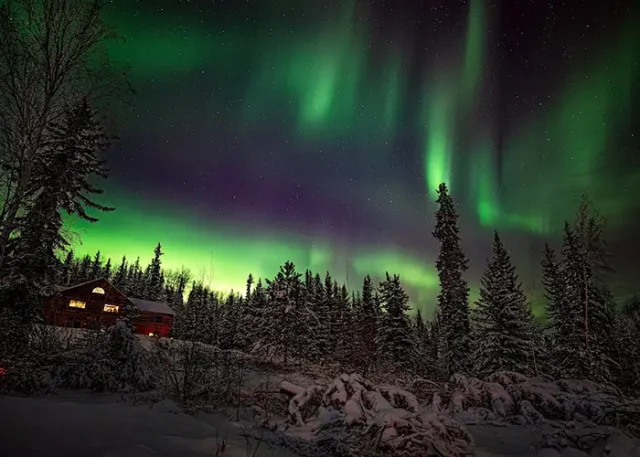
Fairbanks is one of North America’s most dependable aurora-viewing destinations. Its location beneath the Auroral Oval—a ring-shaped area of heightened geomagnetic activity—provides frequent opportunities to see the lights when skies are dark and clear.
The region’s inland climate, relatively low precipitation, and long winter nights also contribute to favorable viewing conditions. Explore Fairbanks defines its broader aurora season as August 21 through April 21, although the Gondwana itinerary operates from September through April.
Most nights are spent at countryside lodges outside Fairbanks, away from the city’s light pollution. Rather than requiring guests to remain awake watching the sky, a dedicated nocturnal guide monitors local weather conditions and aurora activity.
When the lights appear, guests receive personal wake-up calls. This system allows travelers to sleep while someone else keeps watch—an especially welcome feature when aurora activity occurs late at night or in the early morning.
Gondwana Ecotours reports that 99 percent of its guests witnessed the northern lights during this itinerary over the previous three seasons. That figure is based on the company’s own guest results and should not be considered a guarantee. Cloud cover, weather, and solar activity can prevent sightings on any individual departure.
Travelers can find additional independent viewing locations through DRIFT Travel’s article about the Fairbanks Aurora Borealis Viewing Map and Guide.
Help with Northern Lights Photography
Photographing the aurora can be challenging, particularly for travelers unfamiliar with low-light photography.
Tour guides assist guests with basic camera and smartphone settings, helping them adjust exposure, focus, and stability to improve their chances of capturing the lights. Camera kits and tripods are also available to rent at the lodge.
Modern smartphones can produce surprisingly good aurora photographs when used in night mode and held steady. Travelers bringing interchangeable-lens cameras will generally achieve better results with a wide-angle lens, manual focus, a tripod, and spare batteries kept warm inside a coat.
The visual appearance of the aurora can also differ from photographs. Cameras frequently record stronger greens, purples, and reds than the human eye sees, particularly during a faint display. During periods of greater activity, however, the lights may become bright enough to see curtains, arcs, and movement clearly across the sky.
Dog Sledding Through Alaska’s Winter Forests
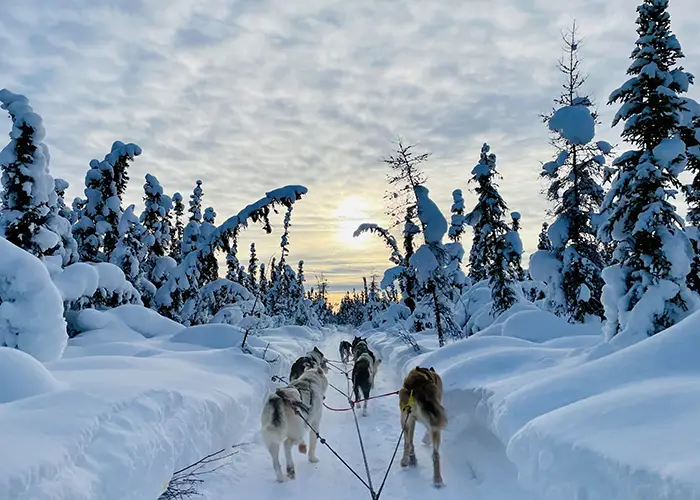
Daytime activities begin with one of Alaska’s most enduring winter traditions: dog sledding.
Guests meet local mushers and their sled dogs before traveling through snow-covered forest trails. Beyond the excitement of the ride, the experience introduces visitors to the relationship between mushers and their teams, along with the preparation and care involved in running dogs safely in winter conditions.
Dog mushing has long played an important role in Alaska, providing transportation between remote communities before the arrival of modern roads and aircraft. It remains the state sport and an important part of Alaska’s cultural identity.
Readers interested in the tradition can learn more through DRIFT Travel’s feature on the history and continuing culture of dog sledding in Alaska.
Walking with Reindeer
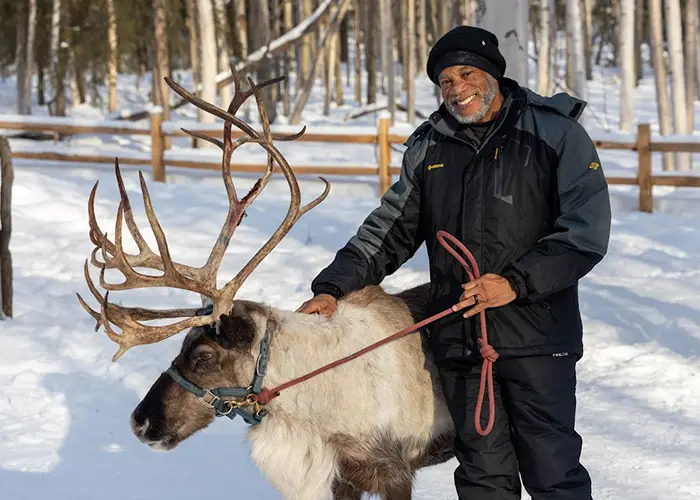
The itinerary also includes a visit to Running Reindeer Ranch, a family-owned property in Fairbanks’ Goldstream Valley.
Guests join a guided natural-history walk through the boreal forest while the ranch’s reindeer move freely alongside the group. Guides explain how the animals are adapted to northern climates and discuss the surrounding taiga ecosystem.
The visit concludes with refreshments and an opportunity to learn more about the ranch and its herd. Winter visitors should expect uneven, snow-covered terrain and arrive prepared with insulated boots, warm mittens, layered clothing, and appropriate outerwear.
Learning to Curl with Local Players
Curling may not be the first activity travelers associate with Alaska, but the sport has an active local following in Fairbanks.
During a private introductory session, local players teach guests how to deliver a stone, sweep the ice, understand scoring, and work as part of a curling team.
The activity provides a lighthearted way to spend time indoors during the coldest part of the day. It also adds a participatory element to the itinerary, allowing travelers to try a northern winter sport rather than simply watch from the sidelines.
Soaking at Chena Hot Springs
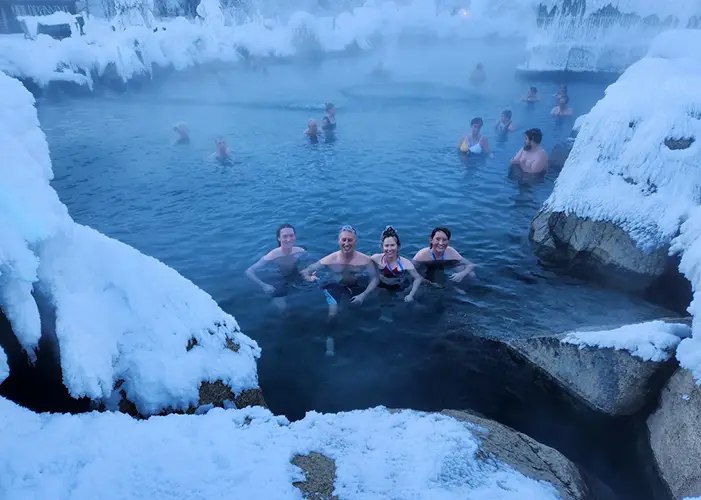
One of the itinerary’s most relaxing experiences is a visit to Chena Hot Springs Resort, located approximately 60 miles northeast of Fairbanks.
The resort’s geothermal waters provide a striking contrast to Alaska’s winter temperatures. Steam rises from the outdoor rock lake as snow covers the surrounding landscape, creating one of the region’s most recognizable winter scenes.
The outdoor hot-springs lake is reserved for adults, while additional indoor and outdoor pools are available at the resort. Travelers should review current health requirements and access information before visiting.
Chena Hot Springs is also known for aurora viewing, its year-round ice museum, and winter activities. However, this itinerary’s primary purpose at the resort is to give guests time to relax in the thermal water after several days of outdoor exploration.
Meeting Local Homesteaders
The tour’s cultural experiences extend beyond Fairbanks attractions. Guests share meals and conversations with local homesteaders, including a family living off the grid in the Alaskan backcountry.
These visits provide insight into the practical realities of life in Interior Alaska, where cold temperatures, limited winter daylight, remote locations, and long distances can shape everyday routines.
“The best part of this tour is the people we meet,” said Jared Sternberg, founder of Gondwana Ecotours. “We visit a local family who lives off the grid and hear about their lifestyle in the Alaskan backcountry.”
The itinerary also includes home-cooked breakfasts and a visit to the University of Alaska Museum of the North, where exhibitions explore Alaska Native cultures, wildlife, natural history, art, and the state’s diverse regions.
What the Eight-Day Itinerary Includes
The Alaska Northern Lights Adventure includes six nights at countryside accommodations outside Fairbanks and one night in the city. Local transportation, daily breakfasts, admission to scheduled attractions, activities, and guide services are included.
Each group is accompanied by three professional guides who divide responsibilities among daytime excursions, transportation, and overnight aurora monitoring.
The operator describes its departures as carbon neutral and says it works with local communities and businesses throughout the itinerary. Travelers who prioritize responsible tourism may still wish to review the company’s current sustainability practices and carbon-accounting methods before booking.
Preparing for a Fairbanks Winter Adventure
Temperatures in Interior Alaska can fall far below freezing, making suitable clothing essential. Visitors should pack or rent an insulated parka, snow pants, winter boots, thermal base layers, a warm hat, neck protection, and mittens. Hand and foot warmers can make nighttime aurora sessions considerably more comfortable.
Cold weather can also drain phone and camera batteries quickly. Spare batteries should be stored close to the body, and electronics should be placed in a sealed bag before returning indoors to reduce condensation.
The itinerary is scheduled from September through April, but conditions vary significantly across that window. September and early April generally offer milder temperatures, while midwinter provides longer nights and a deeper snow-covered landscape.
Complete departure information is available from the Gondwana Ecotours Alaska Northern Lights Adventure page.