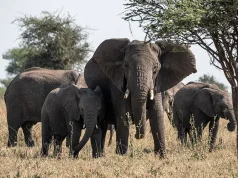

In South Africa’s Great Karoo, a safari can mean more than watching wildlife from the back of a game-drive vehicle. Guests can track wild cheetahs on foot, sleep beneath the stars, hike through Big Five country and learn how generations of people have used the region’s indigenous plants.
These experiences unfold at Samara Karoo Reserve, a 67,000-acre private reserve near Graaff-Reinet in South Africa’s Eastern Cape. Established as a conservation project in 1997, Samara has transformed former agricultural properties into a connected wilderness encompassing mountains, grasslands, river valleys and semi-arid plains.
The reserve lies at the meeting point of five vegetation biomes and is now home to the Big Five, as well as cheetahs, giraffes, zebras, aardvarks, antelope and more than 100 recorded bird species.
While conventional game drives remain an important part of the experience, Samara’s most memorable activities encourage travelers to encounter the Karoo more slowly and intimately.
Sleep beneath the Karoo stars
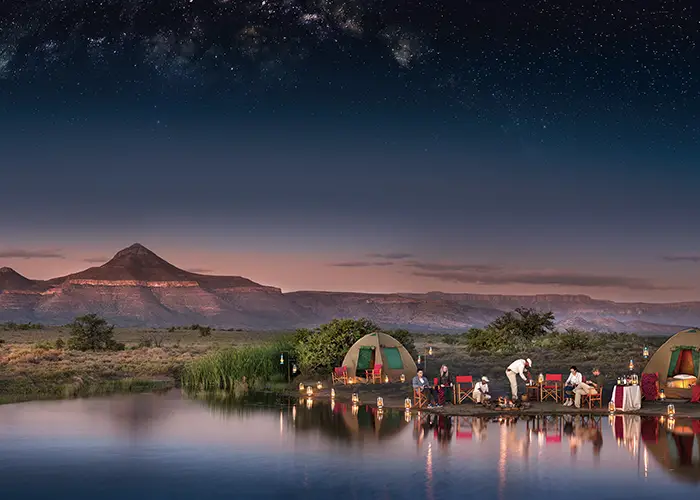
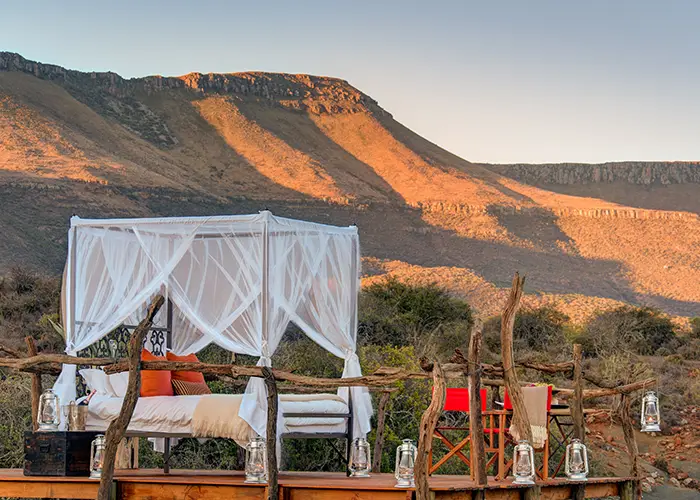
Samara’s Star Bed replaces the walls of a traditional safari suite with an uninterrupted view of the night sky.
The experience takes place on a raised platform overlooking the Milk River. Guests arrive around sunset, when drinks and a picnic dinner are served as the surrounding landscape fades into darkness.
Wildlife may appear near the river below, while the platform’s elevated position provides wide views across the reserve. Once night falls, guests sleep beneath the open sky wrapped in locally made Karoo mohair blankets.
The Great Karoo’s sparse population, dry climate and limited artificial lighting make it one of South Africa’s most impressive stargazing regions. On clear nights, the Milky Way can appear with a depth and clarity rarely seen near cities.
The Star Bed is particularly suited to couples, although its appeal goes beyond romance. Sleeping outdoors allows guests to hear the sounds of the reserve without the separation created by lodge walls—the movement of animals, distant calls and the gradual change from nighttime stillness to early morning birdsong.
Weather conditions and wildlife activity can influence whether the experience proceeds, so flexibility is important.
Walk to a remote fly camp
Fly camping offers a more adventurous interpretation of the earliest walking safaris.
Accompanied by experienced guides and trackers, guests leave the lodge on foot and travel through Big Five habitat toward a temporary wilderness camp. Walking changes the rhythm of a safari. Rather than focusing exclusively on larger animals, guides can interpret tracks, plants, insects, birds and subtle signs that are easily missed from a vehicle.
The route may pass through areas used by lions, elephants, rhinos and other wildlife. Guides determine the safest course based on conditions, animal movements and the experience of the group.
At the fly camp, the day concludes with sundowners, a traditional South African braai and stories around the fire. The camp is intentionally simple but comfortable, allowing guests to experience a night in the bush without carrying and assembling all their own equipment.
After dark, the surrounding wilderness becomes part of the experience. The distant roar of a lion or call of a jackal provides a reminder that the camp is not separated from the reserve by permanent fences or lodge structures.
Guests wake to birdsong before continuing their guided journey through the Karoo.
Follow the Cheetah Trail
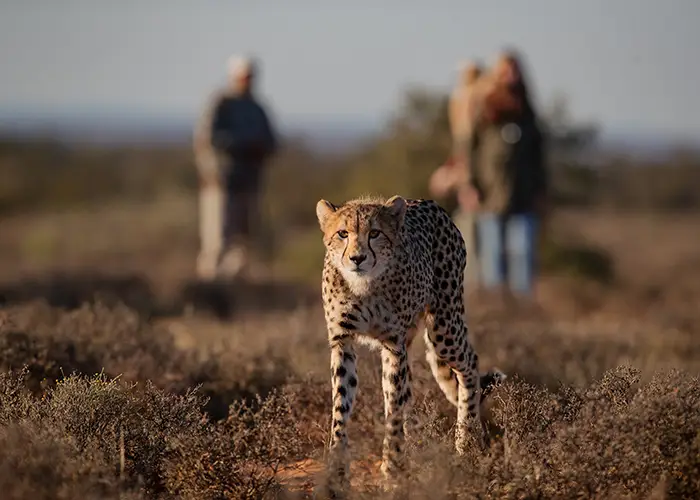
Samara is widely regarded as one of Africa’s leading destinations for tracking wild cheetahs on foot. The reserve’s four-day Cheetah Trail turns that signature encounter into a longer walking journey.
Described as a slackpacking adventure, the trail allows guests to hike with only a light daypack while camp staff handle the heavier luggage and logistical arrangements.
Days are spent crossing open plains, river valleys and mountain landscapes with Samara’s guides and trackers. Finding a cheetah is never guaranteed, but the search itself provides insight into animal behavior, tracking techniques and the conservation work required to restore a functioning ecosystem.
When conditions allow, guests may approach a located cheetah on foot under the close supervision of their guide. Unlike a sighting from a vehicle, a walking encounter requires patience, silence and careful awareness of the surrounding landscape.
Overnight accommodations are divided between Samara’s off-grid Plains Camp and a secluded mobile camp. This combination allows travelers to experience both the comfort of a permanent safari camp and the simplicity of sleeping in the wilderness.
The journey is less about covering a set distance than about moving at the pace of the environment. Wildlife sightings, weather and animal tracks help shape each day’s route.
DRIFT has previously explored the experience in greater detail in Samara Karoo Reserve’s Cheetah Trail.
Explore Khoi and San heritage
The Great Karoo’s human history stretches back thousands of years. Guided cultural experiences at Samara introduce guests to this history through rock art, medicinal plants and the traditional knowledge associated with the landscape.
Rock paintings and engravings provide evidence of the Khoi and San communities that lived in and traveled through the region. Examining these sites with a knowledgeable guide can help visitors understand the relationship between the artwork, wildlife and changing environment.
Samara has also introduced a Medicinal Plants Guide documenting the uses and cultural significance of indigenous plant species found across the reserve.
The project was developed with Pokkie Benadie, a master tracker and long-standing member of the Samara team, herbalist Roxanne Joubert and adventure guide Branden Hair. It brings together generations of botanical knowledge while highlighting the biodiversity found across Samara’s five vegetation biomes.
These experiences add an important dimension to a safari. The Karoo is not an untouched landscape without human history; it is a place shaped by generations of observation, movement and cultural knowledge.
A reserve rebuilt through rewilding
The wildlife visitors see at Samara today is the result of a long-term restoration project.
Beginning in 1997, the reserve’s founders gradually assembled 11 former farms and began rehabilitating overgrazed land, removing internal fencing and restoring natural ecological processes. Indigenous wildlife was reintroduced as suitable habitats recovered.
Cheetahs returned to the landscape in 2004, followed by other historically occurring species. The reserve is now home to lions, elephants, buffalo, black rhinos and leopards, restoring the complete Big Five to this section of the Great Karoo.
Samara’s wider conservation vision is to contribute to a landscape-scale wildlife corridor connecting three national parks. Tourism helps finance habitat restoration, wildlife monitoring and the continued expansion of protected land.
Readers interested in the reserve’s recent developments can explore What’s New at Samara Karoo Reserve.
Planning a stay at Samara
Samara offers three intimate accommodations: Karoo Lodge, the exclusive-use Manor and the tented Plains Camp. Together, they accommodate a maximum of approximately 40 guests, keeping vehicle traffic and crowding around wildlife sightings relatively low.
The reserve is located near the historic town of Graaff-Reinet. Travelers arriving by air typically fly into Chief Dawid Stuurman International Airport in Gqeberha, formerly Port Elizabeth, followed by a road transfer of approximately three hours. Charter flights may also be arranged.
The Eastern Cape is considered a malaria-free safari region, making Samara an appealing option for families and travelers who prefer to avoid malaria-risk destinations. Visitors should still seek current medical advice before traveling anywhere in Southern Africa.
Conditions vary considerably by season. Winter mornings can be extremely cold, particularly during open-vehicle drives and walking activities, while summer days can be hot. Layered clothing, broken-in walking shoes, sun protection and a reusable water bottle are useful throughout the year.
A conventional two-night safari may provide an introduction to the reserve, but travelers interested in the Star Bed, fly camping, cultural excursions or the Cheetah Trail should allow additional time. These experiences are most rewarding when the Karoo is approached without a hurried schedule.