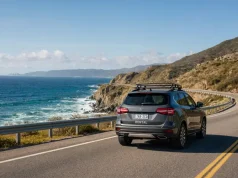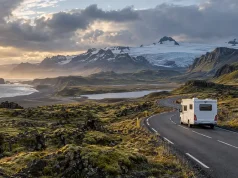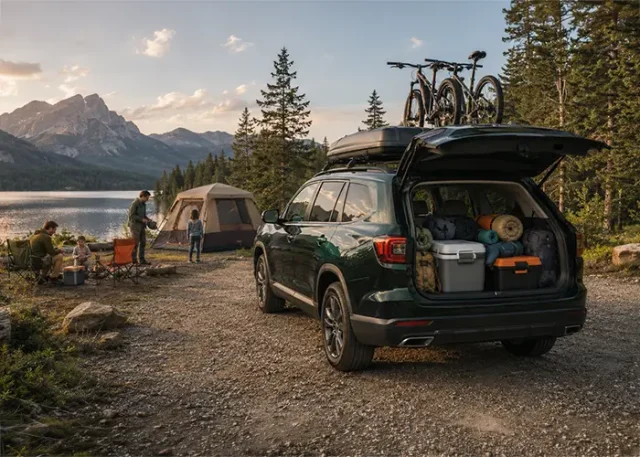
Camping trips can quickly reveal whether your SUV has enough space and capability for the journey. That is why SUVs are a popular choice for camping and road trips.
In this article, you’ll learn how to choose the right SUV for camping based on your needs.
What Makes an SUV Good for Camping?
A good camping SUV should offer enough space for passengers and gear and remain comfortable on longer trips.
Key features include:
- Plenty of cargo space
- Fold-flat rear seats
- Enough passenger space
- All-wheel or four-wheel drive
- Good ground clearance
- Towing capability
- Roof-rack compatibility
- Comfort on long drives
The best SUV for camping is the vehicle that best matches your travel style.
Think About Both Passenger Space and Cargo Capacity
Before comparing vehicles, consider what typically goes in the car when you leave for a camping weekend.
A basic trip might include a tent, sleeping bags, a cooler, food, backpacks, folding chairs, and cooking equipment. Families can easily add several more bags, toys, bicycles, sports equipment, or a stroller. Suddenly, available cargo space becomes much more important than it appeared during a short test drive.
Three-row SUVs can be particularly useful for families because they provide more flexibility. You might use every seat when driving around town but fold the third row when heading out for a camping trip.
The Nissan Pathfinder is one example of a three-row SUV that may appeal to families looking for this kind of versatility. Shoppers considering a larger SUV for camping and road trips can find more information about available Pathfinder options.
When comparing vehicles, look beyond the published cargo number as well. Pay attention to the shape of the cargo area, how easily the seats fold, whether the loading floor is convenient, and whether bulky equipment can actually fit through the rear opening.
Those practical details often matter more at a campsite than a small difference in total cargo volume.
AWD, Ground Clearance, and the Roads You Actually Drive
Camping does not automatically mean off-roading.
Many popular campgrounds can be reached entirely on paved roads. Others may require several miles on gravel, dirt roads, or maintained forest routes. Only a smaller group of campers regularly travels on genuinely difficult trails.
Access conditions can vary considerably between campgrounds. For example, the National Park Service notes that some camping areas at Great Sand Dunes require a high-clearance four-wheel-drive vehicle.
That distinction should influence the SUV you choose. Drivers who frequently explore rough terrain may want to look at more off-road-focused vehicles such as the Ford Bronco. Features designed for difficult trails can be valuable when steep grades, rocks, mud, or deep ruts are part of the trip.
For travelers who mostly use highways and maintained campground roads, those capabilities may be unnecessary. All-wheel drive and reasonable ground clearance can already provide extra confidence when dealing with rain or snow.
Choosing a vehicle for conditions you rarely encounter can mean paying for capability that adds little to your actual trips. Think about the most difficult roads you realistically expect to drive rather than the most adventurous trip you could imagine taking someday.
Towing Can Expand Your Camping Options
Even if you currently camp with a tent, it can be worth thinking about towing before choosing an SUV.
Travel habits change. Some campers eventually add a small trailer, while others want to transport bikes, personal watercraft, or additional equipment that is difficult to fit inside the vehicle.
SUVs vary considerably in what they are designed to tow, so this is an area where assumptions can become expensive. If towing is part of your plans, check the specific vehicle’s rated capacity and remember that passengers, cargo, trailer weight, and equipment all need to be considered.
A larger SUV, such as the Jeep Grand Cherokee, may appeal to travelers seeking a combination of passenger comfort and useful towing capability. But bigger numbers are not automatically better. Someone who never plans to tow anything may be better served by prioritizing interior space, fuel economy, or everyday driving comfort instead.
Think several years ahead. Buying around your likely future needs can help you avoid discovering that your vehicle is poorly suited to a new trailer or hobby later.
Comfort Matters More on Long Road Trips
A vehicle can be perfectly capable at a campsite and still be unpleasant to drive for six hours.
For many campers, most of the trip takes place on pavement. That makes road-trip comfort every bit as important as outdoor capability.
Seat comfort should be one of the first things you notice. If possible, spend more than a few minutes in the driver’s seat during a test drive. Check whether passengers in the second and third rows have enough room as well.
Climate control, charging ports, storage compartments, cup holders, and easy access to frequently used items may sound like minor conveniences, but they become more important when several people are sharing a vehicle for an entire day.
Family-oriented three-row SUVs such as the Toyota Highlander illustrate why many buyers look beyond ruggedness when choosing a camping vehicle. A comfortable cabin and practical passenger layout can be just as valuable as extra ground clearance when most adventures begin with a long highway drive.
Driver-assistance and connectivity features can also reduce fatigue during extended trips, although they should never replace attentive driving.
Should You Sleep Inside the SUV?
Some people want an SUV that gets them to the campground. Others want the SUV itself to become part of the campsite.
If you plan to sleep inside your vehicle regularly, your priorities change considerably.
The first question is whether the rear seats fold into a surface that is long and flat enough for you to sleep comfortably. Total cargo volume does not tell you this. Interior length, wheel-well placement, seat shape, and floor height can make two similarly sized SUVs feel very different when converted into sleeping spaces.
Ventilation also matters. Sleeping inside a completely closed vehicle can quickly become uncomfortable because of heat and condensation. Window screens, carefully designed ventilation solutions, and weather protection can make car camping much more practical.
Privacy is another consideration. Window covers or curtains are easy to overlook until you are trying to sleep at a busy campground.
Finally, think about where your gear goes at night. An SUV may have enough room for two people to sleep in the back, but that space becomes less useful if every bag and cooler has to be moved outside before bedtime.
Anyone specifically searching for the best SUV to camp and sleep in should test the sleeping setup rather than relying only on specifications.
Camping Features That Are Easy to Overlook
Some of the most useful camping features are not the ones that receive the most attention in advertising.
Power outlets and USB ports are a good example. They can help keep phones, lights, cameras, navigation devices, and other equipment charged during a trip.
Roof rails or crossbar compatibility can create additional space for bicycles, kayaks, roof boxes, or other bulky gear. Cargo tie-down points make it easier to keep equipment from sliding around while driving.
An easy-to-clean interior can also be surprisingly valuable. Muddy shoes, wet jackets, sand, food, and camping equipment tend to find their way inside even on carefully planned trips. All-weather floor mats and durable cargo-area materials can make cleanup much easier when you return home.
Other details worth checking include underfloor storage, rear-hatch height, interior lighting, spare-tire accessibility, and whether the rear doors open wide enough to load awkward equipment.
None of these features alone determines the best SUV for camping, but together they can make repeated trips noticeably easier.
Match the SUV to the Way You Travel
Rather than searching for one vehicle that is supposedly perfect for everyone, start by identifying the kind of camper you are.
Weekend campers who usually travel as a couple may not need three rows of seating or substantial towing capability. A smaller SUV or crossover can offer enough cargo space while remaining convenient and efficient for normal daily driving.
Families have a different set of priorities. Passenger capacity, flexible seating, climate control, cargo organization, and comfort on long drives often become more important. This is where larger two-row and three-row SUVs can make sense.
Frequent outdoor travelers may place more weight on drivetrain capability, ground clearance, roof-mounted equipment, towing, and durability on rough roads.
There is also no reason your needs must fit neatly into one category. Someone may spend most weekends at developed campgrounds but take one longer road trip every summer. Another family may need three rows every day but rarely drive anywhere more demanding than a gravel access road.
The best SUV is the one that handles those real-world situations without requiring too many compromises during the rest of the year.
Final Thoughts
Choosing the best SUV for camping and road trips is less about finding the biggest or most rugged vehicle and more about matching the SUV to the way you travel.
Start with the basics: how many people normally come with you, how much equipment you carry, what roads you drive, and whether towing or sleeping inside the vehicle is part of your plans. Then consider comfort, cargo flexibility, drivetrain capability, and the smaller practical features that make trips easier.
A vehicle chosen around your actual adventures will usually serve you better than one selected simply because it looks ready for the wilderness.