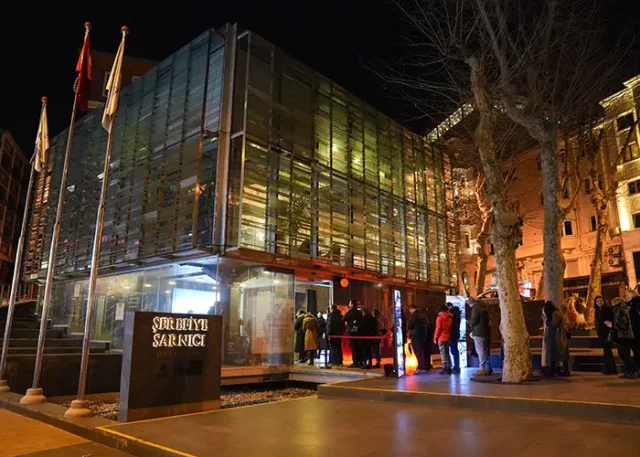
Beneath the busy streets of Istanbul’s Historic Peninsula lies another city—one shaped by shadowy chambers, marble columns and waterworks dating back nearly 1,600 years.
The Şerefiye Cistern, also known as the Theodosius Cistern, offers a particularly atmospheric introduction to this underground world. Located within walking distance of Hagia Sophia, the Blue Mosque and the Grand Bazaar, the ancient reservoir has been transformed into a cultural venue where contemporary art and live music meet Eastern Roman architecture.
Although it receives less attention than the nearby Basilica Cistern, Şerefiye offers an experience that feels more intimate and contemplative—especially when its columns, water and vaulted ceilings become part of an exhibition or performance.
A city supported by water
For centuries, access to water was one of Constantinople’s most important challenges. The city’s growing population, seasonal rainfall and vulnerability during sieges led Eastern Roman engineers to create an extensive system of aqueducts, channels and underground reservoirs.
Water carried into the city could be stored beneath palaces, public buildings, churches and neighborhoods. These cisterns helped sustain Constantinople through dry periods and military blockades while quietly supporting life above ground.
Many of the reservoirs disappeared beneath later construction as the city continued to evolve. Some were forgotten completely, while others became workshops, storage areas or foundations for newer buildings.
Şerefiye Cistern is among the oldest surviving examples on Istanbul’s Historic Peninsula. With no original construction inscription, historians generally date it to the fifth century and associate it with the reign of Emperor Theodosius II.
The structure remained concealed beneath later buildings for generations. Municipal restoration work beginning in 2010 brought the cistern back into view, eventually allowing it to reopen as an archaeological attraction and cultural space.
Descending into Şerefiye Cistern
Entering the cistern means leaving the movement and noise of central Istanbul behind.
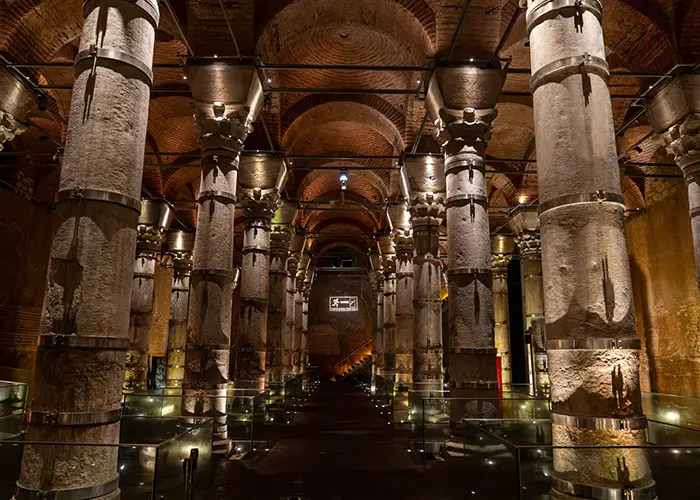
Below street level, rows of marble columns rise toward the brick-vaulted ceiling. Carefully positioned lighting illuminates the stonework, while reflections in the shallow water make the chamber appear deeper and more expansive than it is.
The setting is impressive without needing much explanation. Repeated columns establish a natural rhythm through the space, and changes in light reveal different colors and textures in the marble. Even footsteps and quiet conversations take on a different quality in the underground acoustics.
Travelers familiar with the grand scale and mythological details of the Basilica Cistern will find a different atmosphere here. Şerefiye is more compact, but its smaller dimensions bring visitors closer to the structure’s engineering and architectural details.
The two reservoirs can easily be visited on the same day. Şerefiye is only a short walk from Sultanahmet Square and the Basilica Cistern, making it a natural addition to a longer exploration of the Old City. DRIFT readers planning a compact visit can also use this 48-hour Istanbul itinerary as a starting point.
Contemporary art between ancient columns
Şerefiye Cistern’s modern identity extends beyond its archaeological importance. The chamber now hosts temporary installations designed to interact with its architecture, water and shifting illumination.
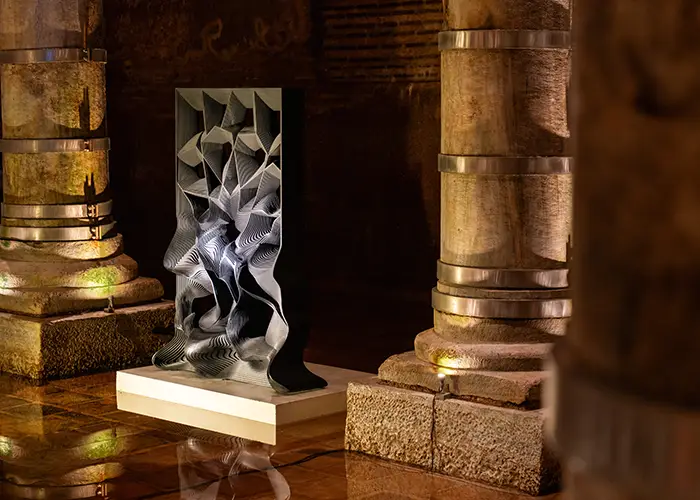
Through August 31, 2026, visitors can see Turkish artist Seçkin Pirim’s Then and Now, known in Turkish as Dün ile Bugün. The exhibition places Pirim’s layered, modular sculptures in conversation with the cistern’s historic columns.
Reflections allow some of the works to appear as though they are floating on the water. Others change as visitors move through the chamber, revealing how the forms respond to different viewing angles and lighting conditions.
The installation explores ideas of repetition, balance, fragility and transformation. Those themes are especially effective inside a building that has survived centuries of change above it.
According to Kültür İstanbul, the exhibition brings modern forms together with the rhythms of light, water and history. The result is less like a conventional gallery visit and more like walking through a single immersive composition.
Music from the depths
The cistern’s distinctive acoustics have also made it an unusual concert venue.
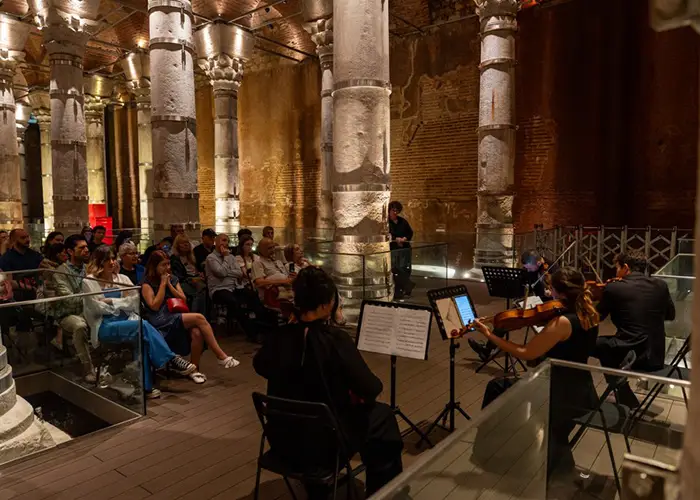
Its Voices from the Depths concert series—Derinden Gelen Sesler in Turkish—has presented programs ranging from Baroque and classical music to opera, acoustic performances and traditional Turkish compositions.
Inside the chamber, notes linger beneath the vaulted ceiling and travel between the columns. The architecture becomes part of the performance, adding resonance and a sense of ceremony that would be difficult to reproduce in a standard concert hall.
Evening concerts operate separately from regular museum admission, and the repertoire and performance dates change. Travelers hoping to attend should consult the Kültür İstanbul event calendar and reserve tickets in advance when possible.
Planning a visit
Şerefiye Cistern is located on Piyer Loti Avenue in Istanbul’s Fatih district, close to many of Sultanahmet’s most recognizable landmarks.
The museum is currently open daily from 10 a.m. to 6 p.m. Concerts and other special events may take place outside the normal visiting schedule and generally require separate tickets. Because hours, exhibitions and performances can change, visitors should confirm details through the cistern’s official website before setting out.
Allow roughly 30 to 45 minutes for a standard visit, or longer if you enjoy architectural photography and contemporary art. The space can be combined with the Basilica Cistern, Hagia Sophia, the Blue Mosque or the Grand Bazaar without requiring additional transportation.
Comfortable shoes are useful for exploring the surrounding district, where cobbled streets and sloping sidewalks are common. The underground chamber is also noticeably cooler than the streets above, making it a welcome pause during Istanbul’s warmer months.
For more ideas around the neighborhood, see DRIFTtravel’s guide to visiting Istanbul in June, which covers several of the Historic Peninsula’s major attractions.
Where to Stay
Staying in Sultanahmet places travelers within walking distance of Şerefiye Cistern, Hagia Sophia, the Blue Mosque, Topkapı Palace and the Grand Bazaar. It also makes early-morning sightseeing easier, before day-trip crowds arrive.
Four Seasons Hotel Istanbul at Sultanahmet is the area’s standout luxury choice. Set inside a century-old neoclassical building, the hotel surrounds a landscaped courtyard and sits steps from Hagia Sophia and the Blue Mosque. It is particularly well suited to travelers looking for refined service, a spa and a quiet retreat in the center of the Old City.
AJWA Sultanahmet offers an opulent interpretation of Ottoman design, with hand-painted ceilings, mother-of-pearl furniture, marble details, Turkish artwork and richly patterned textiles. Its location on Piyer Loti Avenue is especially convenient for visiting Şerefiye Cistern and the Grand Bazaar.
Hotel Amira Istanbul is a smaller boutique option near the southern side of Sultanahmet. The hotel offers several family-room configurations, breakfast and a seasonal rooftop restaurant overlooking the Marmara Sea and Old City rooftops. It is a practical choice for travelers who prefer a more intimate property while remaining close to Istanbul’s historic landmarks.
Travelers planning to spend more time exploring contemporary Istanbul, Karaköy or the Bosphorus may prefer to stay outside Sultanahmet and use the tram to reach the Historic Peninsula. For a short cultural visit centered on the city’s major monuments, however, the Old City remains the most convenient base.