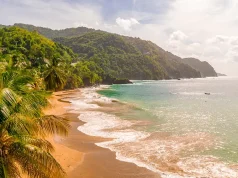
Belize may be best known for Caribbean water, palm-fringed cayes and one of the world’s most remarkable reef systems, but the country’s appeal extends well beyond the shoreline. Travel inland or south along the coast and the experience shifts to ancient Maya cities, limestone caves, cacao farms, community-led wildlife conservation and Garifuna traditions that remain part of everyday life.
That range is especially impressive in a country small enough to combine coast and interior in one vacation. A traveler can paddle through a cave in the morning, learn how cacao becomes chocolate in the afternoon and snorkel above coral gardens a few days later. For visitors who want to engage more deeply with the places they visit, these experiences reveal a Belize that cannot be understood from a beach chair alone.
Make chocolate with Maya cacao producers
Chocolate begins far from the candy aisle. In Belize’s southern Toledo District, cacao grows in humid forest landscapes where Maya farmers have cultivated it for generations. Farm and chocolate-making experiences introduce visitors to the long process behind the finished bar, from growing and harvesting cacao pods to fermenting, drying, roasting and grinding the beans.
Depending on the host, guests may crack roasted beans by hand, grind cacao with traditional stone tools and prepare a drink or chocolate from the resulting paste. The best experiences place the activity within a broader conversation about Maya foodways, family farming and agroforestry. Cacao can be grown beneath a canopy of other trees, linking the crop with forest conservation and diversified local livelihoods.
Look for community-based visits or small producers that clearly explain who leads the experience and how tourism revenue supports the farm. Rather than treating chocolate making as a quick demonstration, allow enough time to hear the growers’ perspective and understand why cacao carries cultural as well as economic importance.
Experience Garifuna culture in Hopkins
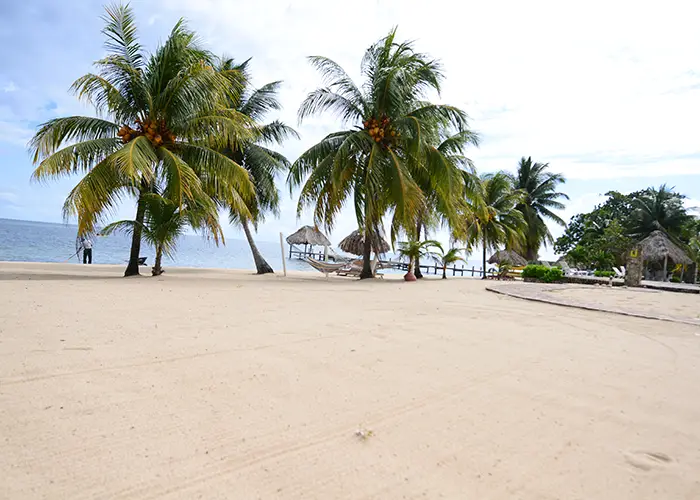
Hopkins, a coastal village in the Stann Creek District, is one of the most accessible places to learn about Garifuna culture in Belize. The Garifuna people have a distinct heritage shaped by Indigenous Caribbean and African ancestry, with language, music, dance and food traditions passed between generations.
Visitor experiences may include drum lessons, dance, storytelling and hands-on cooking. One dish to know is hudut, traditionally made with fish in a coconut-based broth and served with mashed plantain. Preparing it with a local host creates space to learn how ingredients, music and community life connect.
Choose experiences led by Garifuna guides, cooks and cultural organizations. Their interpretation matters: the goal should be participation and respectful exchange, not reducing a living culture to entertainment. Travelers interested in the country’s flavors can continue with DRIFT’s introduction to food in Belize.
Cross the river to Xunantunich
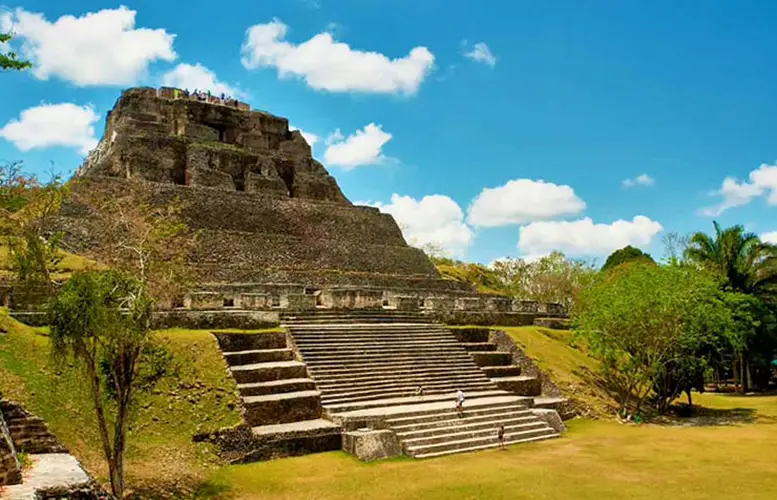
The journey to Xunantunich is memorable before the archaeological site even comes into view. Visitors reach it by crossing the Mopan River on a hand-cranked ferry near the village of San Jose Succotz, then continue uphill to the remains of an important ancient Maya center.
The site contains plazas, temples and palaces constructed on a limestone ridge. Its best-known structure, El Castillo, rises approximately 130 feet above the main plaza and features reconstructed stucco friezes. A licensed guide can provide essential context about the city’s development, political role and architecture instead of presenting it as a collection of mysterious ruins.
Xunantunich is an easy addition to time in western Belize, particularly from San Ignacio. Caracol, set much deeper in the Chiquibul Forest, requires a longer excursion, while Lubaantun and Nim Li Punit pair naturally with cultural and cacao experiences in Toledo. Families considering the Cayo District can also consult DRIFT’s family guide to Belize and San Ignacio.
Paddle into Belize’s limestone caves
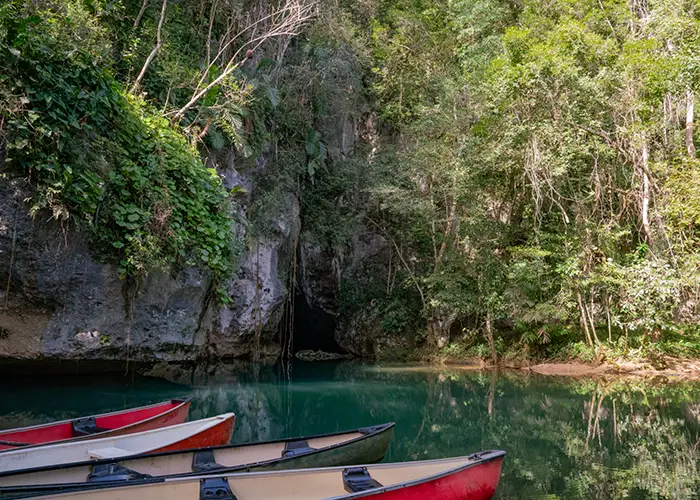
Belize’s cave systems combine geology, adventure and Maya history. They should be approached as culturally significant places rather than natural playgrounds alone: caves occupied an important position in ancient Maya belief and ritual life, and some contain archaeological materials that must not be touched or disturbed.
At Barton Creek Cave in the Cayo District, guided canoe trips follow an underground waterway beneath high limestone formations. The calm paddling format makes the cave accessible to travelers who may not want the physical demands of a longer expedition. Elsewhere in the country, cave tubing and more strenuous guided routes offer different levels of challenge.
Conditions can change after heavy rain, and access may be restricted for safety or conservation. Book with a licensed guide, follow instructions closely and confirm what footwear, lighting and swimming ability are required before setting out.
See conservation at work
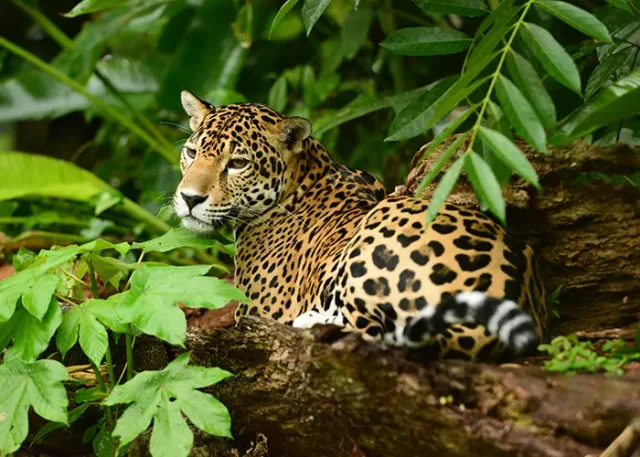
Wildlife encounters have greater value when visitors also understand how habitat is protected. At the Community Baboon Sanctuary in the Belize River Valley, the name can be confusing: the protected animals are black howler monkeys, locally called baboons. The sanctuary operates across privately owned land in participating villages, using community stewardship to maintain connected forest habitat.
Guided visits can introduce travelers to howler monkeys, birds and the plants that support the local ecosystem. Staying on the trail and allowing guides to control the encounter helps avoid stressing or habituating wildlife.
In San Ignacio, the Green Iguana Conservation Project focuses on education and the incubation, rearing and release of green iguanas. Located at the San Ignacio Resort Hotel, it gives visitors a closer look at the species while explaining conservation pressures and the project’s work. Animal handling policies can evolve, so travelers should follow current guidance and prioritize observation over photographs or physical contact.
Return to the water with a better understanding
Going beyond the beach does not mean skipping the sea. The Belize Barrier Reef Reserve System is a UNESCO World Heritage Site comprising seven protected areas, while the larger reef environment includes offshore atolls and an extraordinary range of marine life.
Hol Chan Marine Reserve, near Ambergris Caye, is among the country’s best-known snorkeling and diving areas. Nearby Shark Ray Alley is known for encounters with nurse sharks and rays, while Lighthouse Reef attracts experienced divers and visitors traveling to the Great Blue Hole. Conditions, travel time and required skill levels differ considerably between sites.
Responsible operators brief guests on buoyancy, wildlife distance and reef-safe behavior. Snorkelers and divers should never stand on or touch coral, chase animals or remove anything from the water. Choosing small-group trips and established local guides can make the experience both more informative and less disruptive.
How to plan a coast-and-interior Belize itinerary
A well-paced trip should include at least two bases. San Ignacio works well for Xunantunich, caves and inland conservation experiences, while Hopkins or the Toledo District provides access to Garifuna and Maya-led cultural activities. Ambergris Caye, Caye Caulker or Placencia can then anchor time on the reef.
Belize has domestic flights, buses, water taxis, rental cars and local transfer services, but not every attraction is easy to reach independently. DRIFT’s guide to exploring Belize without renting a car explains how to connect the main destinations using public transportation, taxis and tours.
Travel times that look short on a map can expand because of ferry schedules, road conditions or remote access. Avoid squeezing a major inland excursion and a flight or boat departure into the same day. It is also wise to verify archaeological-site hours, cave conditions and marine departures shortly before traveling.
Belize rewards curiosity. Its beaches may draw travelers in, but cacao, drums, forest trails, river crossings and underground waterways often become the experiences they remember most.
For destination information and current travel-planning resources, visit the official Travel Belize website.