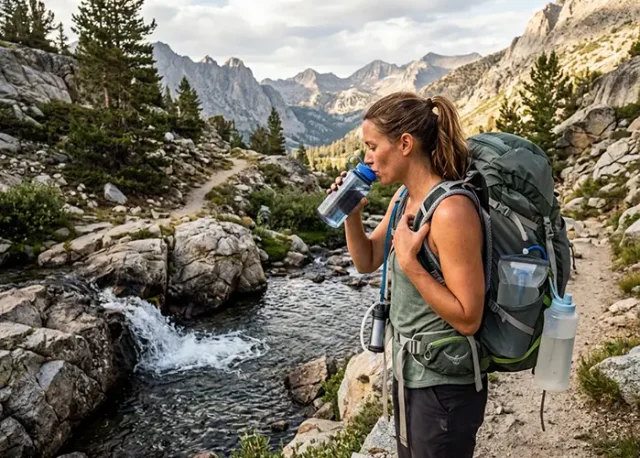
A liter of fluid weighs 1 kilogram, which makes it heavier per unit than almost anything else a hiker carries. It is also one of the few items in the pack that you may be able to replenish along the route at reliable streams and springs, using appropriate water treatment where necessary. That combination makes fluid the one line in the load that gets recalculated all day.
Pack Load Thresholds
The common rule of thumb is around 10% of body weight for a day hike and up to 20% for a multi-day trip. Those numbers are a starting point rather than hard limits, and tolerance around them varies enormously. Some hikers carry heavier loads comfortably for weeks. Others find that considerably lighter packs are better suited to their fitness, experience, terrain, or injury history.
Biomechanical research supports the broader point that increasing pack weight changes how the body moves and how much effort walking requires. Foot pressure, energy expenditure, balance, and loading on the lower body can all change as pack weight increases. There is no single percentage at which a pack suddenly becomes unsafe for everyone, which is why body weight alone should not determine the final load.
For a 75-kilogram hiker, 20% is 15 kilograms total. Three liters of fluid is 3 of those kilograms, or a fifth of the entire load, spent on something that may be available again at a reliable source farther up the trail.
Consumables Against Base Weight
Pack weight divides into two categories that behave completely differently. Base weight is the gear that comes home with you, and it is largely fixed the moment you leave the trailhead. Consumables are fluid, food, and fuel, and they shrink as the trip proceeds.
On a four-day trip, the two categories can be close to equal at the start. A 15-kilogram load might hold 8 kilograms of gear and 7 of consumables, and by the final morning the same pack can be under 9 kilograms without a single item having been left behind.
Fluid is the strange one in that group. Unlike water on a well-sourced route, food and stove fuel generally can’t be replenished repeatedly throughout the day, so their starting quantities require more advance planning. Fluid can sometimes be reduced by carrying less between dependable sources and refilling more often, because the resource exists along the route. That makes the fluid line one of the most adjustable numbers in the whole pack, and it is where many hikers have the largest gap between what they carry and what they actually need.
Sodium and the Weight of Retention
Sodium can influence how well the body retains fluid, particularly during long, hot, or unusually sweaty days, and it adds very little weight to a pack. It does not replace water, but sodium lost through substantial sweating may need to be replaced alongside fluid.
Hikers on hot or prolonged routes sometimes buy hydration drinks that provide electrolytes or carry salty foods alongside their water. Salt tablets are another option for some people, although individual needs vary considerably. Salted food can contribute sodium without adding another category of gear, provided the hiker actually eats it during the day instead of saving everything for camp.
The useful distinction is that sodium and fluid work together. Carrying electrolytes is not a reason to reduce the amount of water needed to reach the next dependable source safely.
Drinking at the Source
One of the most effective weight-saving techniques in the backcountry involves no additional gear at all. At a reliable source, a hiker can drink according to thirst and expected needs, then carry only what is reasonably required to reach the next dependable source with an appropriate margin.
The technique has limits that are easy to ignore. Drinking a large amount simply because water is available does not eliminate the need to plan the next stretch, and forcing fluid beyond what the body needs is not useful. A better approach is to drink comfortably at the source, consider the distance, terrain, temperature, and exposure ahead, and fill accordingly.
On a well-watered route, that can mean carrying considerably less than someone who automatically tops off every container at every crossing.
Load Placement Inside the Pack
Where the fluid sits changes how the pack carries, which is why people who train with a heavy backpack pay attention to packing as well as total load. Heavy items generally carry better when they are kept close to the back rather than hanging far away from the body’s center of mass.
Side pockets are convenient, but a large bottle can create noticeable imbalance if the opposite side is much lighter. Padded shoulder straps and a hip belt that transfers load onto the pelvis also work best when the overall load is packed securely and evenly.
The compromise many hikers land on is one accessible bottle in a side pocket or shoulder-strap pocket for drinking on the move, with any additional water stored closer to the back and balanced with the rest of the load.
Recalculating at Every Source
The carry decision gets remade at every reliable stream, and the inputs are always similar. How many hours to the next dependable source? What is the terrain doing in between? How hot is it? And how reliable is the next source at this point in the season?
Answering those questions at a stream takes less than a minute and can easily save a kilogram on some stretches. Hikers who skip the question and top off every container out of habit can spend much of the trip under a heavier pack without gaining meaningful additional security.
Recent conditions matter too. A spring that was reliable earlier in the season may slow or disappear after weeks of dry weather, so maps are most useful when combined with current trail reports or local information.
Cases Where Extra Volume Is Correct
Weight discipline has limits, and some situations override it. Safety guidance for anyone heading out on a solo hike converges on the same basic idea: plan for the day that does not go as scheduled.
A desert section or a dry ridge with no dependable source for hours calls for the necessary carry regardless of what the pack weighs. A group with a member who is moving more slowly, struggling with the conditions, or otherwise needs additional support should distribute more margin. And any route where a wrong turn, delayed crossing, or twisted ankle could add hours to the day deserves a water reserve that has nothing to do with the ideal schedule.
Ranger accounts of the deadly mistakes that happen in parks often reinforce the importance of planning and safety margins. The distinction that matters is between habitual over-carrying and deliberate margin. The first adds weight without considering the route ahead. The second adds weight for a specific reason on a particular stretch.
The Decision Rule
Use commonly cited pack-weight guidelines as a starting point rather than a hard ceiling, and treat fluid as an adjustable line inside the overall load. Carry enough to reach the next reliable source with an appropriate margin, drink according to your needs when water is available, and consider sodium alongside fluid during long or particularly sweaty days.
Keep additional water balanced and reasonably close to the back, and recalculate the carry whenever you reach a dependable source. When the gap between two sources is genuinely uncertain, carrying extra water is the right trade.
Being 1 kilogram heavy for two hours costs pace. Being 1 liter short in the afternoon of a hot day costs the rest of the day.