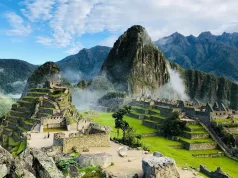

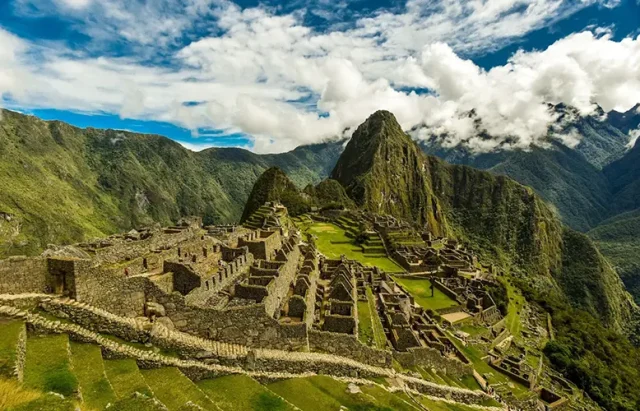
Machu Picchu may be Peru’s most recognizable landmark, but the country’s appeal extends far beyond its famous Inca citadel. New tours, improved air access and more comfortable airport facilities are making it easier for travelers to experience Peru’s lesser-known landscapes, regional food traditions and contemporary culture.
From walking through the Amazon after dark to following coffee from the Andes into the rainforest, these experiences offer a more expansive view of Peru—and several compelling reasons to start planning a future visit.
Explore the Amazon after sunset
The Peruvian Amazon feels entirely different once daylight disappears. Guided night walks in the Tambopata rainforest introduce travelers to the nocturnal species that remain hidden during the day.
Accompanied by experienced naturalists, visitors may encounter tree frogs, insects, reptiles, night birds and other creatures adapted to life after dark. Guides also explain how plants and animals communicate, hunt and protect themselves in one of the world’s most biodiverse environments.
Tambopata National Reserve is reached through Puerto Maldonado in southeastern Peru. Many rainforest lodges arrange boat transportation, wildlife excursions and night walks as part of a stay. Conditions can be humid and trails muddy, making closed-toe footwear, lightweight clothing and insect protection essential.
Taste Arequipa’s ancestral cuisine
Peru’s culinary reputation is often associated with Lima, but Arequipa has one of the country’s most distinctive regional food cultures.
The city’s traditional picanterías are known for preparing recipes that have been passed down through generations. Dishes may include rocoto relleno, a stuffed spicy pepper; adobo arequipeño, a slow-cooked pork stew; and chupe de camarones, a rich shrimp soup.
Local culinary tours provide an introduction to regional ingredients and traditional cooking techniques, with some itineraries including market visits and hands-on demonstrations. More adventurous diners may also encounter preparations featuring cuy, or guinea pig, and alpaca—ingredients with long histories in Andean cuisine.
A food experience in Arequipa also creates an opportunity to explore the city itself. Its historic center, recognized by UNESCO, is known for graceful colonial buildings constructed from pale volcanic stone, earning Arequipa its nickname, the White City.
Follow coffee from the Andes to the Amazon
Peru is an increasingly respected producer of specialty coffee, with many beans grown by small farming communities along the eastern slopes of the Andes.
Multi-day coffee routes are beginning to make these communities more accessible to visitors. One itinerary developed by Gocta Labs travels between the Andean highlands and the Amazonas region, stopping at coffee farms, specialty cafés and waterfalls along the way.
Travelers can learn how coffee cherries are harvested and processed, meet producers and compare beans grown at different elevations. Overnight stays on local farms add a personal dimension to the journey while helping direct tourism revenue to rural communities.
The experience is also an alternative way to discover northern Peru, a region with cloud forests, archaeological sites and dramatic waterfalls but considerably fewer international visitors than Cusco and the Sacred Valley.
A new family-focused Peru itinerary
Families interested in combining wildlife, history and hands-on cultural activities will have another option for exploring Peru in 2027.
G Adventures has announced a new National Geographic Family Journey connecting Lima, the Amazon, the Sacred Valley, Machu Picchu and Cusco. Designed for families traveling with children between the ages of seven and 17, the itinerary balances major landmarks with activities intended to keep younger travelers engaged.
Planned experiences include a visit to the Cusco Planetarium, a chocolate-making workshop and ceramic painting with artisans in the Cuyo Chico community. In the Amazon, families stay at an ecolodge and participate in naturalist-led walks and boat excursions in search of toucans, monkeys, sloths and aquatic wildlife.
The itinerary reflects a broader shift in family travel. Rather than simplifying a destination for children, well-designed multigenerational trips are increasingly using interactive experiences to help younger visitors understand local history, nature and culture.
Peru steps onto the screen
Film and television are providing another source of inspiration for Peru travel.
Paddington in Peru introduced audiences to a story moving through Lima, the Andes and the Amazon, while Transformers: Rise of the Beasts placed Cusco, Machu Picchu and the landscapes of San Martín at the center of its action.
Other productions have drawn upon Peru’s dramatic settings. Dora and the Lost City of Gold was inspired by Andean archaeology, while the red sands of Playa Roja in Paracas National Reserve appeared in Don’t Look Up.
More recently, the Lima district of Barranco was featured in the music video for ENHYPEN’s “Bloody Paradise.” Known for its street art, galleries, historic mansions and lively dining scene, Barranco is one of the easiest filming locations for visitors to explore independently.
Travelers interested in screen tourism should remember that a movie’s story setting and its actual filming locations are not always identical. A locally guided tour can help distinguish the real places from the fictional geography created on screen.
A more comfortable arrival in Lima
Many international trips to Peru begin at Jorge Chávez International Airport, which moved into a new terminal in 2025.
The airport now includes The Club LIM, the largest lounge in The Club network. Located in the international departures area, it covers approximately 1,836 square meters and can accommodate more than 450 guests. Amenities include showers, meeting areas, dining spaces and locally inspired artwork.
Travelers facing long connections or late-night departures can also use Sleepover, an in-terminal facility with individual sleeping pods and family cabins. The spaces include beds, air conditioning, electrical outlets and work surfaces, offering an alternative to leaving the airport during a lengthy layover.
More connections from Canada
Access from Canada is also expected to improve. Beginning with the summer 2027 schedule, Air Canada plans to extend its nonstop Montréal-Lima route into year-round service.
The airline is expected to operate the route twice weekly using a Boeing 787-8 Dreamliner. Seasonal nonstop flights between Toronto and Lima are also scheduled to continue.
The Montréal service will be particularly useful for travelers from Quebec and Eastern Canada, reducing the need to connect through Toronto or a U.S. airport. As airline schedules can change, travelers should confirm operating dates before making arrangements.
Archaeology continues to reshape Peru’s story
Peru’s past is far from fully understood, and continuing archaeological discoveries are revealing new chapters of the country’s history.
In Lima, remains connected to the former Church and Hospital of the Holy Spirit have been uncovered beneath the Santa Rosa de Lima Sanctuary. Recovered materials include colorful 18th-century Valencian tiles, providing insight into the appearance and use of the historic complex. Elements of the discovery can now be seen in Lima’s historic center.
In Áncash, researchers have also identified an early Andean structure at the Chankillo Archaeoastronomical Complex. The UNESCO World Heritage Site is already celebrated for its 13 towers, which functioned as a remarkably precise solar calendar more than 2,000 years ago.
Restoration and research are continuing, and the newly studied section is not yet ready for general visitor access. However, the discovery reinforces Chankillo’s importance to the history of astronomy in the Americas.
Looking beyond Peru’s icons
Peru’s headline attractions remain extraordinary, but they represent only one part of the country.
A night in the Amazon, a meal in an Arequipa picantería or a conversation with a coffee farmer can be every bit as memorable as standing above Machu Picchu. With new family itineraries, improved air connections and better facilities in Lima, travelers have more ways to build a journey that reaches beyond the familiar highlights.
The result is a richer kind of Peru vacation—one shaped not only by the places travelers photograph, but also by the people, flavors and stories they encounter along the way.