
Patagonia’s vast pampas, glacier-carved fjords and serrated mountain peaks have long attracted hikers and wildlife enthusiasts. A new guided cycling adventure from ExperiencePlus! Bicycle Tours will offer another way to explore this remote corner of South America, combining electric mountain biking with historic estancia stays and cultural experiences.
The seven-day Beyond: Patagonia Estancias by E-bike tour will take cyclists through southern Chile, beginning and ending in Puerto Natales. Scheduled for February 24 to March 2, 2027, the journey follows quiet gravel roads through working ranchlands and open border country near Torres del Paine.
Rather than treating the bicycle as the sole focus, the itinerary balances daily riding with regional food, wildlife excursions and an extended stay at a working Patagonian ranch.
Beginning on the shores of Última Esperanza Sound
The journey starts in Puerto Natales, a small waterfront city on the shores of Última Esperanza Sound. Best known as a gateway to Torres del Paine National Park, Puerto Natales provides cyclists with their first introduction to the scenery and flavours of Chilean Patagonia.
From there, riders travel along the shores of Eberhard Fjord towards Puerto Prat, an isolated settlement established by European immigrants in the late 19th century.
The itinerary also visits Mylodon Cave Natural Monument, a significant archaeological and paleontological site north of Puerto Natales. The cave is named for the giant ground sloth whose remains were discovered there in the 1890s. Evidence of early human activity has also been found in the area, adding another layer to the region’s history.
Cycling beneath the Paine Massif
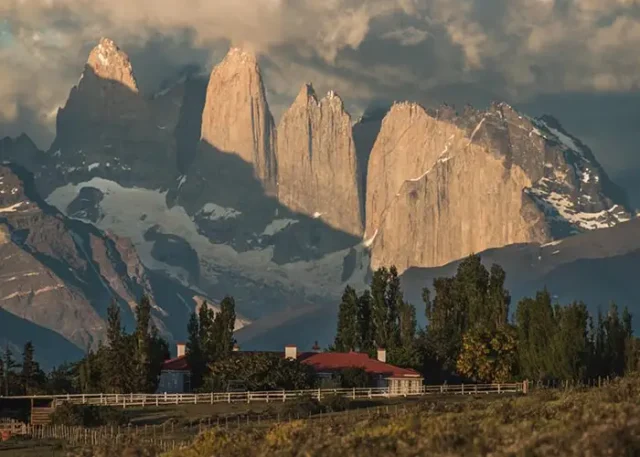
As the journey moves north, the landscape becomes increasingly expansive. Riders cross open grasslands framed by views of the Paine Massif and the rugged Sierra Baguales mountain range.
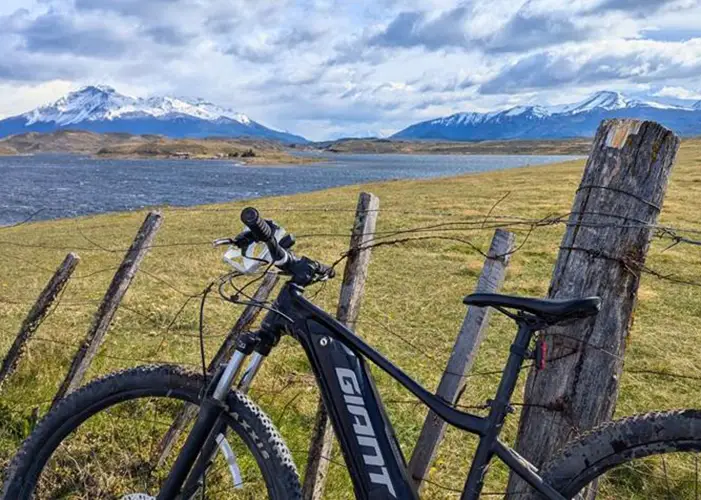
The route follows primarily quiet gravel roads through Patagonia’s pampas, fjords and working ranchlands. These are places where sheep farming, horsemanship and gaucho traditions remain closely connected to everyday life.
The group will also visit Estancia San Luis, a historic ranch close to the Argentine border, before continuing deeper into Chilean Patagonia.
While the terrain is generally rolling, Patagonia’s famously strong winds can make riding more demanding than the elevation profile might suggest. Electric mountain bikes provide pedal assistance, helping riders manage both the undulating roads and changing weather conditions while still enjoying an active experience.
Travellers considering the tour may find DRIFT Travel’s guide to e-bikes for touring useful when deciding whether this style of cycling trip is right for them.
Three nights at Estancia Cerro Guido
A central feature of the itinerary is a three-night stay at Estancia Cerro Guido, a historic working ranch near the eastern edge of Torres del Paine National Park.
Surrounded by mountains, grasslands and conservation areas, Cerro Guido combines estancia traditions with comfortable accommodations and locally inspired dining. Its location provides access to some of Patagonia’s most recognizable landscapes without requiring visitors to return to a busy tourism centre each evening.
The extended stay also allows cyclists to spend time away from the saddle. A full day is reserved for optional activities within the estancia’s private reserve.
Depending on availability and local conditions, choices may include horseback riding, hiking, fly-fishing, wildlife observation, puma tracking or exploring the property by four-wheel-drive vehicle. These excursions offer a closer look at the ecology of the region and the ongoing relationship between wildlife conservation and ranching.
Pumas are among Patagonia’s most celebrated animals, but sightings can never be guaranteed. Guided wildlife experiences instead emphasize tracking, habitat and the broader ecosystem, which may also include guanacos, rheas, condors and foxes.
More than a cycling holiday
The itinerary is part of ExperiencePlus!’s Beyond collection, a series created for travellers who want active exploration to form part of a wider cultural experience.
In Patagonia, that approach means sharing meals influenced by regional ingredients, meeting people connected to the area’s ranching traditions and learning about the challenges of living in a sparsely populated landscape.
Electric bikes also make the journey approachable for a broader range of cyclists. Pedal assistance can help riders of different abilities travel together, but participants should not expect an entirely effortless trip. Confidence riding on unpaved surfaces, the ability to control a heavier bicycle and a reasonable level of fitness will still contribute to a more enjoyable experience.
Prospective travellers should try an e-bike before departure if possible, particularly on gravel or uneven terrain. Familiarity with the controls, braking response and additional weight can make a significant difference once riding in a remote environment.
Preparing for Patagonia’s changing weather
February falls near the end of Patagonia’s summer, when longer daylight hours create favourable conditions for outdoor exploration. Even during summer, however, the region can experience sunshine, rain, cool temperatures and powerful winds within a single day.
Cyclists should bring moisture-wicking layers, a waterproof and wind-resistant jacket, full-finger gloves and sun protection. Off-bike footwear suitable for short walks and uneven ground will also be useful.
Because the itinerary travels through remote areas, participants should review the operator’s fitness guidance, equipment information and travel insurance requirements before booking. International travellers will generally need to reach Puerto Natales through Santiago or another regional gateway, so additional travel time should be included on either side of the tour.
A slower look at Chilean Patagonia
For travellers accustomed to seeing Patagonia through coach windows or during short visits to Torres del Paine, cycling provides a more immediate connection to the landscape. Gravel roads reveal the scale of the pampas, while estancia stays introduce the culture that has developed within them.
The experience also reflects a broader movement towards adventure travel built around meaningful local experiences, in which the journey is shaped as much by people, food and place as it is by physical activity.
Additional itinerary and departure information is available through the official ExperiencePlus! Patagonia tour page.