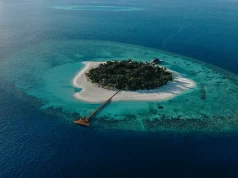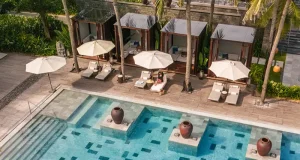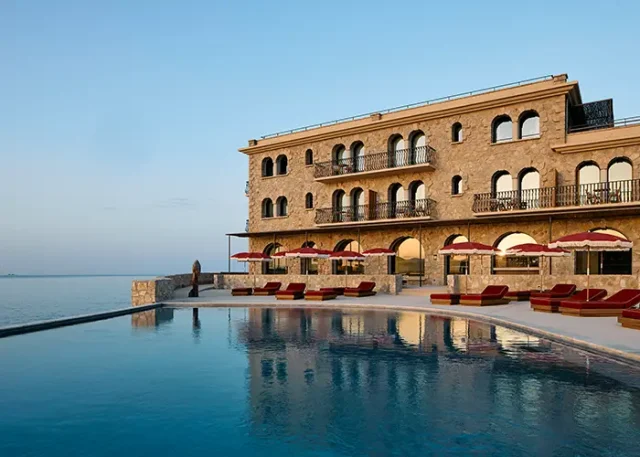
On a private island just off the coast of Bandol in southern France, a new chapter in Mediterranean hospitality is taking shape. The recently opened Zannier Île de Bendor combines the relaxed spirit of Provence with an ambitious environmental restoration project designed to revive the island’s landscape rather than simply build around it.
The opening brings Zannier Hotels’ conservation-focused approach to the Mediterranean for the first time. It also places the property within a wider portfolio in which sustainability initiatives are tailored to their surroundings, from coral reefs along Vietnam’s coast to wildlife reserves in Namibia.
For travelers, the result is a private-island escape where restored architecture, native planting and car-free mobility are intended to become part of the experience rather than remain behind-the-scenes hotel initiatives.
A Mediterranean Island Reimagined
Île de Bendor sits off the Provençal coast near Bandol, a destination known for its harbor, beaches and celebrated wine region. In restoring the island, Zannier Hotels retained 25 existing buildings and upgraded them to contemporary environmental standards, preserving a sense of place while reducing the need for entirely new construction.
The project also involved removing 1,500 square meters of paving and increasing the number of trees on the island by more than 15 percent compared with its previous landscape. Mediterranean species now account for 70 percent of the planting across the redesigned grounds, helping the vegetation respond more naturally to the local climate and ecosystem.
Rather than hauling away material during construction, approximately 25,000 tons of excavated earth and stone were reused on-site. The island has also been made car-free, encouraging guests and staff to move around with a lighter impact.
Together, these measures are intended to return more of the island to nature while retaining the beaches, harbor, leisure facilities and architecture that express the Provençal art de vivre. The property is working toward BREEAM Excellence, BiodiverCity and Green Globe certifications.
A Different Sustainability Plan for Every Destination
Zannier Hotels does not apply an identical environmental checklist to every property. Instead, its programs respond to the most pressing needs of each landscape and the communities that surround it.
That philosophy can be seen at Zannier Phum Baitang in Cambodia, where the resort has earned Green Globe certification for five consecutive years, reflecting an established commitment to environmental and social standards.
Across the portfolio, four Zannier properties currently hold Green Globe certification. Their settings vary considerably, encompassing Cambodian countryside, the Vietnamese coast and the Namibian desert. This geographic range has encouraged the company to focus on locally relevant action rather than a single definition of sustainable luxury.
Restoring Coral Reefs in Vietnam
At Zannier Bãi San Hô in Vietnam, the conservation effort extends into the sea. The resort works with the SASA Marine Animals Rescue Center to help protect coral reefs and restore the surrounding marine environment.
Over two years, the partnership restored 200 square meters of coral and established a 100-square-meter coral garden. Teams also removed 180 kilograms of abandoned fishing nets and 250 kilograms of submerged wood, while eliminating more than 1,100 invasive organisms from the area.
The work illustrates how a coastal resort can play a direct role in the health of the waters that attract travelers in the first place. Reef restoration is not merely an operational issue for the hotel; it contributes to the long-term resilience and biodiversity of the broader destination.
Protecting Wildlife in Namibia
In Namibia, Zannier’s conservation efforts center on threatened wildlife and the protection of habitat. Zannier Omaanda operates in connection with the Zannier Reserve, created in partnership with the N/a’an ku sê Foundation.
Since the reserve launched in 2018, it has supported the relocation of endangered species and established a round-the-clock anti-poaching unit. The initiative has recorded eight consecutive years without a poaching incident and includes the Shiloh Wildlife Sanctuary, a care and rehabilitation facility for rhinos and elephants.
Zannier Sonop, also in Namibia, demonstrates a different form of environmental sensitivity. The lodge was constructed around existing boulders to limit disturbance and soil erosion. It is powered entirely by 923 solar panels, recycles all non-organic waste and uses a self-sustaining water system suited to its remote desert setting.
Regeneration Beyond the Guest Room
Across its properties, Zannier Hotels says it is working to regenerate local environments through reforestation, ecological restoration, improved soil health and water conservation. Its remote hotels also employ measures such as composting, reducing plastics, reusing wastewater and creating farm-to-table cycles.
These efforts reflect a broader change in how environmentally conscious travelers assess luxury hotels. Design, privacy and service remain important, but the way a property interacts with its setting increasingly shapes the overall experience. A private island can feel less exclusive if its development has compromised the landscape that makes it special.
Zannier Hotels founder Arnaud Zannier describes nature as central to the guest experience, adding that the hotel’s role is to protect it. As he puts it, “The real luxury is not to impress nature, but to let its beauty speak for itself.”
A New Model for Mediterranean Luxury
With Zannier Île de Bendor, the company is applying lessons learned in some of the world’s most environmentally sensitive destinations to one of Europe’s most visited coastal regions.
The island’s restoration does not depend on a single headline initiative. Its approach combines adaptive reuse, native landscaping, reduced paving, material recovery, car-free mobility and independent certification targets. Individually, each measure is practical; together, they suggest a more thoughtful model for developing a Mediterranean resort.
For guests, the appeal remains straightforward: an island setting, the rhythms of southern France and an atmosphere shaped by sea, architecture and gardens. What distinguishes Île de Bendor is the effort to ensure that hospitality supports those qualities rather than overwhelming them.
As Zannier Hotels continues to expand, every landscape will require a different response. On Île de Bendor, that response begins with giving more of the island back to the Mediterranean environment that defines it.