Family vacations have always been educational in one way or another. A new place introduces unfamiliar food, landscapes and ways of life, even when no formal lesson is involved. But some trips go further, replacing passive sightseeing with practical skills that are rooted in the destination.
These five escapes are a long way from a classroom. Families can learn to read the Canadian wilderness, sketch wildlife in Botswana, explore Indonesia’s reefs, help restore a corner of the English countryside or discover what horses can teach us about slowing down. The result is the kind of travel that sends everyone home with more than photographs.
Learn Wilderness Skills in British Columbia
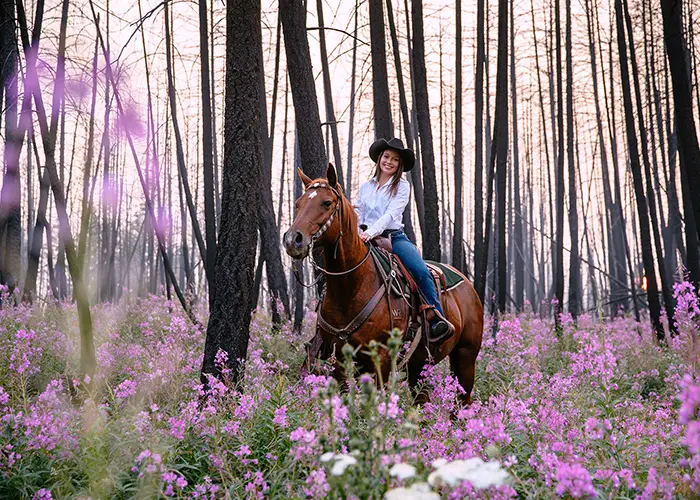
At Siwash Lake Wilderness Resort & Ranch, the surrounding landscape is both playground and teacher. The remote, off-grid property lies in British Columbia’s Cariboo region, where families can develop the practical awareness needed to move confidently through the backcountry.
Horseback riding is central to the experience, with mounts and private guides matched to riders from novice to advanced. Guests can also learn the basics of fly-fishing, from reading aquatic environments and understanding fish behavior to tying flies and practicing catch-and-release techniques. Archery, hiking and other guided activities encourage closer attention to terrain, changing weather and the rhythms of life far from a city.
The forest adds another layer to the story. Wildfire affected Siwash Lake in 2017, and the regenerating land now gives visitors a firsthand look at ecological recovery. New growth, returning wildlife and a landscape reshaped by fire turn a family adventure into a lesson in resilience and responsible stewardship.
Travelers interested in the property’s horse-centered approach can also read DRIFT’s guide to luxury equine hotels around the world.
Paint the Okavango Delta in Botswana
The Okavango Delta changes by the hour. Water catches the morning light, grasses shift in the breeze and wildlife is rarely still for long. In 2027, Okavango Horse Safaris plans to use that movement as the basis for a pair of artist-led retreats.
Rather than working from photographs after the fact, participants will sketch and paint within the landscape, observing its color, light and wildlife from the ground and, for riders, from horseback. Artists can even experiment with water from the Delta in their work, creating a literal connection between the finished piece and the place that inspired it.
South African wildlife artist Joni-Leigh Doran is scheduled to lead a retreat in March 2027, followed by British equestrian artist Freya Roze in April. The programs will naturally appeal to adults and older teens who are comfortable with a focused creative itinerary. Families should confirm age and riding requirements before booking.
Even for visitors who do not consider themselves artists, the premise is compelling: spending time drawing an animal or studying a reflection can reveal details that a quick photograph misses. For more ideas in the region, DRIFT’s guide to family safaris in Southern Africa explores other ways younger travelers can learn from the bush.
Build Diving Skills Aboard a Yacht in Indonesia
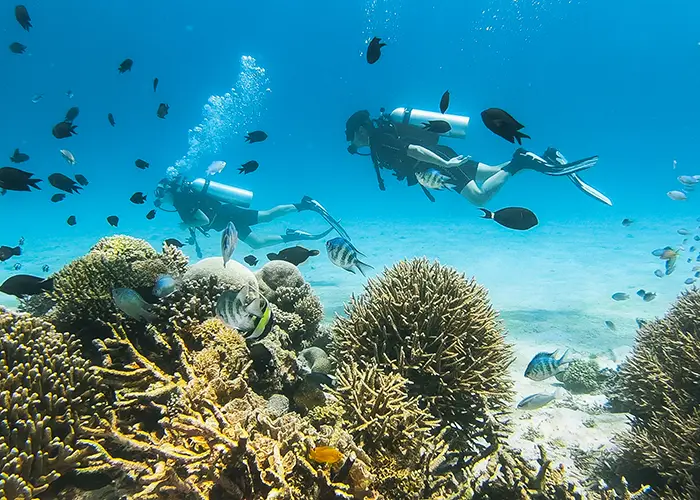
On a Rascal Voyages sailing, the Indonesian archipelago becomes an open-air marine classroom. The company’s traditionally inspired wooden yachts travel through biodiverse waters such as Komodo National Park, Raja Ampat and the Spice Islands, placing guests within easy reach of reefs, islands and coastal communities.
Depending on the itinerary and each traveler’s experience, time underwater can be used to build confidence, refine diving technique and understand more about coral reefs and the animals that depend on them. Snorkeling offers a more accessible option for family members who are too young to dive or simply prefer to stay near the surface. Certification requirements and minimum ages vary, so these details should be checked for every departure.
The yachts provide another form of education above the waterline. Their design draws on Indonesia’s long wooden-boatbuilding tradition, while the routes show how strongly life across the archipelago remains connected to the sea.
Rascal’s published 2027 schedule includes a conservation voyage with Manta Trust in Komodo National Park from June 1 to 8, as well as a family-focused Ring of Fire departure from June 10 to 17. The former adds specialist insight into manta rays and their conservation; the latter may be the more natural fit for parents traveling with children. Availability and program details can change, so families should confirm the current itinerary directly.
Reconnect With the Land in Somerset
At 42 Acres in Somerset, England, learning starts with looking more closely at what grows nearby. The 173-acre regenerative estate hosts a rotating calendar of retreats, workshops and volunteer gatherings centered on food, ecology and nature restoration.
One medicinal mushroom workshop scheduled for November 2026 covers safe identification, sustainable growing, harvesting, preservation and extraction. Participants also inoculate a log to take home, allowing the lesson to continue in the garden. Other events explore seasonal plants, traditional preparations and regenerative growing.
The estate’s Wild Guardians gatherings offer a more hands-on route into conservation. These monthly volunteer sessions invite participants to support nature restoration while learning practical skills and observing how habitats change over time.
Not every event is designed specifically for children, and activities involving foraging or medicinal plants require careful supervision and expert instruction. Families should review the age guidance for individual workshops. For those with older children, however, 42 Acres offers a thoughtful alternative to a conventional country break—one built around participation rather than consumption.
Slow Down With the Ponies at NIHI Rote
The newest experience on this list is found at NIHI Rote & Hospitality Academy, which opened on Indonesia’s Rote Island in 2026. Its barefoot setting is naturally suited to active families, with surf, ocean adventures and space to explore. Yet one of its most memorable lessons may be the quietest.
Small Rotenese ponies are part of the resort environment, and family experiences are being developed around calm observation and respectful interaction rather than a conventional riding program. The idea is simple: notice how a horse responds to movement, proximity and mood, then allow the animal to decide whether to approach or walk away.
That horse-led pace can be especially valuable on a trip where the temptation is to fill every hour. Time near the herd encourages children and adults to pay attention to body language, personal space and their own energy without turning the encounter into a performance. NIHI Rote’s broader equine-wellness program is still evolving, so families should ask which guided encounters are available during their stay.
Learning is woven into the resort in another way, too. Guests check in through the on-site Hospitality Academy, where young people from Rote and the wider region train in the industry. It gives families a visible reminder that learning travel can be reciprocal: visitors arrive curious about a destination while local students build skills for their own futures.
Choosing the Right Learning Vacation
The best educational trip is not necessarily the one with the most structured program. It is the one that matches a family’s ages, interests and comfort levels. Before booking, ask about minimum ages, physical demands, instructor credentials, equipment, water safety and whether activities can be adapted for non-riders or non-divers.
It is also worth leaving room in the schedule. The strongest lessons often arrive between planned activities: noticing fresh growth in a burned forest, watching a manta ray move over a reef or realizing that a pony is more likely to approach when everyone becomes still. Those moments turn a vacation into something more lasting—a shared skill, a new interest or simply a different way of seeing the world.