
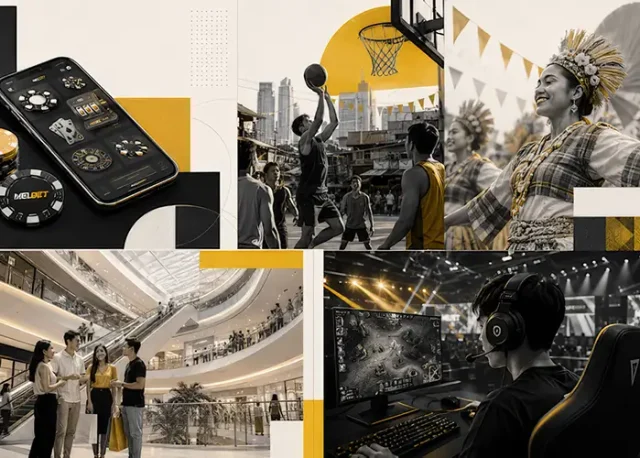
The Philippines is often reduced to beaches, islands and tropical resorts. Daily life tells a wider story. Basketball courts fill after school, local fiestas can occupy several days, malls work as social spaces, and mobile games draw large competitive audiences. Tradition and digital culture do not sit in separate worlds. They often share the same neighborhood and the same evening.
That mix also shapes leisure at home. A phone may carry a sports stream, messages, games and paid entertainment within one session. Someone opening a casino online section is using the same device that may have shown basketball highlights minutes earlier. The activities have different rules and risks, even when access looks similar. Clear time and spending limits help keep paid gaming separate from everyday social entertainment.
Basketball Starts at Street Level
Basketball is difficult to avoid in the Philippines. FIBA research has found that close to one third of the population plays regularly. The reason is partly practical. A full football field is not required, and small games work on a half-court. A hoop can fit into a barangay, schoolyard or narrow urban space.
Local play also creates spectators without formal marketing. Friends stop beside the court. Families watch neighborhood tournaments. Children learn rules by seeing older players before joining themselves. The sport grows through repetition rather than only through professional television.
Barangay Tournaments Turn Sport Into a Community Event
A local basketball contest can involve far more than the ten players on the floor. Organizers arrange schedules, referees and basic prizes. Food sellers appear near the venue. Neighbors follow teams connected with streets or communities they know. A small match can become the main social event of the evening.
That gives basketball a different role from a sport watched only through foreign broadcasts. The local player may be a classmate, cousin or coworker. Results create conversations that continue after the final whistle. Community tournaments also give younger athletes regular competition without requiring an elite academy.
The MPBL Makes Geography Part of the Rivalry
The Maharlika Pilipinas Basketball League extends that local idea to a larger level. Its teams are closely linked with cities and provinces rather than relying only on corporate identities. Supporters can therefore connect a club with a place they already know. Rivalries become easier to understand when geography is part of the name. The model gives Philippine basketball another layer beside the PBA and college competitions.
That regional connection also affects how adults follow individual fixtures. Someone checking an MPBL betting site Philippines can compare recent results, rosters and the specific matchup before looking at a market. Supporting the nearest club does not make its next result certain. Any stake should come from a preset leisure budget rather than hometown loyalty. Local knowledge is context, not a guarantee.
Fiestas Show How Local Identity Works
Sport is only one place where communities gather. Fiestas remain an important part of life across the country. Many celebrate a patron saint, local history, a harvest or a town anniversary. They can include processions, music, food, dance and competitions. Even small barangays may have their own annual celebration.
The interesting part is how local each event can feel. One province may emphasize agricultural products. Another focuses on religious tradition or indigenous culture. Decorations and performances change with the place. A visitor therefore sees many versions of Filipino identity rather than one national template.
The Mall Is More Than a Shopping Building
Large malls have an unusually broad role in many Philippine cities. They provide air-conditioned spaces for food, cinema, shopping and meetings. Families can spend several hours there without buying much beyond a meal. Events, pop-up displays and small performances also use the same buildings. In dense urban areas, the mall often works as a practical social hub.
This helps explain why entertainment categories overlap so easily. A visit can include lunch, an arcade, a film and shopping in one location. Digital services extend the same pattern onto the phone. Several kinds of leisure now sit one tap apart.
Esports Has Become a Serious Competitive Culture
Competitive esports became a mainstream phenomenon across the Philippines. Mobile Legends leads this expansion by operating smoothly on standard smartphones. Local rosters consistently excel during global tournaments. The national squad secured its fourth straight SEA Games title in 2025. Today, organized teams, professional coaches, corporate sponsors, and massive online audiences support the discipline.
The betting side has developed beside that competitive scene. Adults considering esports betting need to understand the title before treating it like a traditional sport. Map pools, patches, team roles and tournament formats can change how a matchup should be assessed. A famous organization does not automatically have an advantage after a roster change. Fixed limits are useful because fast digital markets can encourage equally fast decisions.
Mobile Phones Connect the Old and New
The striking part of modern Philippine entertainment is not that digital culture replaced older habits. It sits beside them.
Several parts of this mix are easy to notice:
- barangay basketball remains highly visible;
- regional leagues give cities their own teams;
- fiestas keep local traditions public;
- malls combine food, cinema and social life;
- smartphones carry sports and gaming together;
- esports creates new competitive heroes.
These activities come from different periods, but they now share the same audience. That overlap is one of the clearest features of contemporary Filipino leisure.