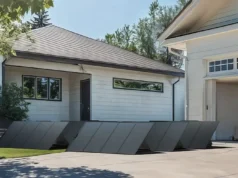


The first warning at a small Bothell home was outside: a septic odor in the backyard and moisture near the tank. Only two people occupied the two-bedroom property. That relatively modest household use had not prevented an underground problem from developing.
Septic Solutions LLC began with pumping to relieve the immediate overflow risk, then recommended investigating the outgoing line. The camera stopped approximately four feet in. What looked like an obstruction turned out to be a structural failure: part of an old concrete pipe had deteriorated away.
For owners who spend time away from a property or host occasional guests, the case raises a useful maintenance question. Does the system work as designed, or does it merely appear adequate under its current load?
A Camera Inspection Revealed More Than a Full Tank
The initial pump-out addressed an overfilled tank. It did not establish why wastewater had stopped moving correctly through the system. Continuing with a camera inspection changed the direction of the investigation: the firm resistance encountered in the pipe required closer examination.
Excavation along the expected route revealed fragments of deteriorated concrete pipe and a surviving plastic section. The issue was not simply material that could be washed out. A portion of the route intended to carry wastewater no longer had an intact pipe.
The distinction matters when evaluating a service recommendation. Pumping, line cleaning, and structural repair perform different jobs. A useful diagnosis explains which problem has been found and why the proposed work follows from it, rather than presenting every method as an interchangeable solution.
Low Household Use Did Not Establish That the System Was Sound
The company’s account explains that low use helped mask the deterioration. Wastewater was dispersing into surrounding soil instead of following the intended distribution route. The investigation identified the condition before the homeowner had a complete picture of its extent.
That finding has a practical lesson for a lightly occupied property. A quiet week with functioning drains is a limited observation. It says little about a buried pipe’s structural condition or how the system will respond to a different pattern of use.
The same distinction is relevant to a second home, although this case was not one. Maintenance should be based on the actual system and its history, with expected occupancy discussed separately. Assuming that an infrequently used property needs no attention confuses lower use with evidence of good condition.
Documentation Helped Explain the Next Decision
The recorded result was stabilization and diagnosis. Pumping removed the immediate overflow risk, and the investigation established the structural problem. The case does not document a completed permanent replacement, so the discovery should not be presented as a finished reconstruction.
Septic Solutions’ wider service approach helps explain why that distinction is useful. In owner interview notes, Art Nikolin describes reviewing available drawings and past records before visits, then adding photographs and findings to the property’s service history. The company describes its team’s septic-industry background as extending to 2017.
For the owner, a documented diagnosis provides something concrete to act on: the failed component, the observed condition, and the work still required. Keeping those elements separate also makes later conversations clearer if repairs are staged or another specialist becomes involved.
What Should a Maintenance Plan Address After a Finding Like This?
An appropriate plan follows the identified condition rather than promising that scheduled pumping alone will correct damaged infrastructure. Septic Solutions describes septic system maintenance in Snohomish County as including component checks, sludge and scum assessment, filter care, pump and alarm testing where applicable, and investigation of lines when warranted.
The environmental concern is specific here. Wastewater traveling outside its intended route calls for attention even if indoor fixtures continue to drain. Accurate diagnosis gives the owner a basis for addressing that condition instead of repeatedly treating the tank level as the only problem.
For anyone responsible for a home while traveling, the useful takeaway is to establish the system’s condition before relying on it during an absence or a change in occupancy. The Bothell investigation shows the value of finding out what is underground—and being clear about what has been stabilized, what has been diagnosed, and what remains to be repaired.