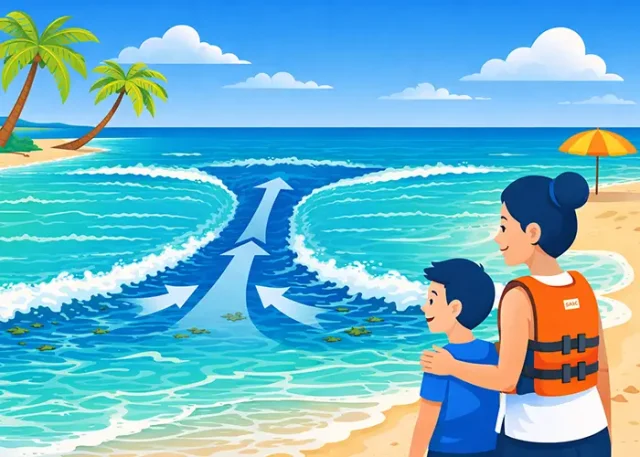
A family beach day in the Caribbean represents a specific kind of tranquility. The visual promise of turquoise water and soft sand, however, can obscure a less visible reality. For parents, particularly those accustomed to the controlled environment of a pool or the gentler wave action of some coastal areas, understanding the dynamics of the ocean is not merely academic—it is a fundamental aspect of trip planning. Rip currents are one of the most common and least understood ocean hazards on these beaches, a silent force that demands respect and preparedness, especially when children are involved.
1. The Mechanics of a Rip Current: Why Caribbean Waters Can Deceive
A rip current is not an undertow that pulls you under; it is a powerful, narrow channel of water flowing swiftly away from the shore. It acts as a river within the sea, formed when water pushed toward the beach by waves needs a path back out. This water converges and funnels through the path of least resistance—often a break in a sandbar or a deep channel near a reef or rock formation.
The very features that make Caribbean beaches beautiful contribute to this risk. Complex reef systems and shifting sandbars create natural channels where water can rush back out with significant force. The clear, calm appearance of the water inside a rip current is part of its danger; it can often appear as a deceptively placid gap between breaking waves. A parent looking out may see a stretch of smoother, darker, or slightly choppier water and mistake it for a safer place to swim, when it is precisely the opposite.
2. The Heightened Vulnerability of Children
The physical power of a rip current presents a disproportionate risk to children due to several converging factors. First, their smaller body mass and generally lower strength mean they can be pulled into a current more easily and will fatigue much faster if they attempt to swim directly against it. Second, the panic response is acute. The sudden sensation of being carried away from shore can trigger instinctive, frantic swimming that exhausts energy in minutes.
It is critical to understand that standard pool confidence and inflatable toys offer no meaningful protection. Arm floaties and pool noodles are designed for calm, controlled water. In a moving current, they are unstable and can be pulled from a child’s grasp or provide a false sense of security that leads them into deeper water. True safety in the ocean stems from knowledge, supervision, and respect for conditions, not disposable plastic gear.
3. Conditions That Demand Increased Caution
While rip currents can form at any time, certain conditions elevate the probability. Parents should be particularly vigilant in the days following strong offshore winds or storms, even if the sky overhead is clear. These events rearrange the underwater landscape, creating new channels. Similarly, a beach day with larger, more frequent waves indicates more water is moving toward shore, which will increase the outflow through rips.
Venturing outside the relative protection of a resort’s monitored swimming area often means leaving mitigated zones. During seasonal transitions, such as the approach of hurricane season, generally more turbulent ocean patterns can persist even without a direct storm. The assumption that a familiar beach from a previous visit will behave the same way is a common and potentially risky oversight.
4. Identifying the Hazard: Reading the Water Before Swimming
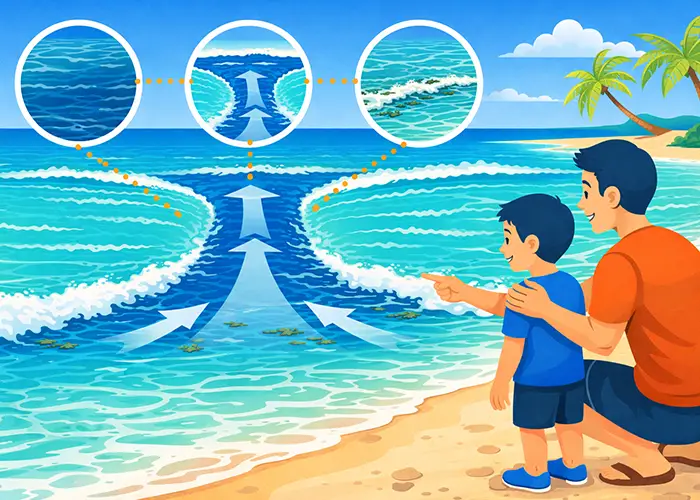
Before allowing a child to step into the surf, parents should spend several minutes observing the water’s patterns. Look for these visual clues that may indicate a rip current:
- A channel of churning, choppy water.
- A line of foam, seaweed, or debris moving steadily seaward.
- A noticeable difference in water color, often darker because it is deeper.
- A break in the incoming wave pattern where waves are not breaking.
The absence of warning flags or signs is not an all-clear signal. Many beautiful, remote Caribbean beaches have no formal lifeguard services. The responsibility for assessment falls entirely on the adults present.
| Visual Clue | What It Often Indicates | Why It’s Misleading |
| Calm, smooth patch amidst breaking waves | Water flowing rapidly through a deep channel. | Looks like the safest place to enter, but is the most hazardous. |
| Darker water color | Deeper channel where sand has been carried away. | Can be mistaken for a shadow or simply deeper, calm water. |
| Line of foam or debris moving out past the waves | Seaward flow of a rip current. | May be ignored as random drift rather than a directional current. |
5. & 6. Consulting Official Local Resources
For families visiting destinations like the Cayman Islands, relying on local expertise is non-negotiable. Two primary official resources provide essential, real-time information.
The Cayman Islands National Weather Service (CINWS) issues marine forecasts that detail wave height, swell direction, and wind conditions—all factors influencing rip current formation. Hazard Management Cayman Islands (HMCI) provides public safety alerts for severe weather or hazardous sea conditions.
Checking these resources should be a fixed part of a parent’s morning routine, like applying sunscreen. It is essential before planning any water-based activity, when traveling with young swimmers, after any overnight weather change, or before visiting less-frequented beaches. For a multi-day stay, this daily check-in allows families to adapt their plans proactively.
7. Interpreting Forecasts for Family Safety
A “Small Craft Warning” or advisory for higher surf is not just information for boaters. It is a direct indicator of increased ocean energy that leads to stronger and more frequent rip currents. For a family, this doesn’t necessarily mean canceling the beach day, but it should trigger a shift in plans. It may mean choosing a sheltered cove over an open beach, committing to wading only in very shallow water, or planning beach time for shell collecting and sandcastles rather than swimming. The goal is informed adaptation, not avoidance fueled by fear.
8. Pre-Swim Briefings: Essential Lessons for Children
Before a child’s toes touch the water, a clear, calm conversation is necessary. Frame it as learning the “rules of the ocean.” Key points include:
- Never swim against a current. If caught, the instruction is to swim parallel to the shoreline until free of the pull, then swim in at an angle.
- Conserve energy. Float or tread water and call or wave for help if unable to self-rescue.
- Define clear boundaries. Use a fixed landmark on shore to designate the absolute limit for how far out they may go, and enforce that they swim only within a parent’s direct line of sight and close proximity.
This briefing empowers a child with a plan, which can reduce panic.
9. Selecting Appropriate Safety Gear
The only flotation device that should be considered for a non-swimmer or young child in unpredictable ocean conditions is a U.S. Coast Guard-approved life jacket. It should be properly fitted and worn at all times near the water. Rash guards provide sun protection and prevent minor scrapes, while reef shoes protect feet from hot sand and sharp coral. Crucially, parents should mentally categorize all other inflatable toys—rings, floats, arm bands—as toys, not safety devices. They are for fun in knee-deep water under direct hand-holding supervision, not for venturing into wave action.
Knowledge of rip currents shifts a parent’s position from a passive watcher to an informed risk manager. This understanding allows families to engage with the ocean respectfully, fully enjoying its beauty without dismissing its power. The resulting confidence is a tangible safety measure. For Miami parents seeking to establish water competence before a vacation, building ocean safety skills is a practical consideration. This can start early; structured swimming lessons for toddlers at establishments like SwimRight Academy Miami focus on foundational water safety awareness and survival skills, preparing children for more dynamic water environments. This type of skill-building, paired with consistent supervision and daily attention to conditions, creates a comprehensive approach that helps keep family beach experiences positive.