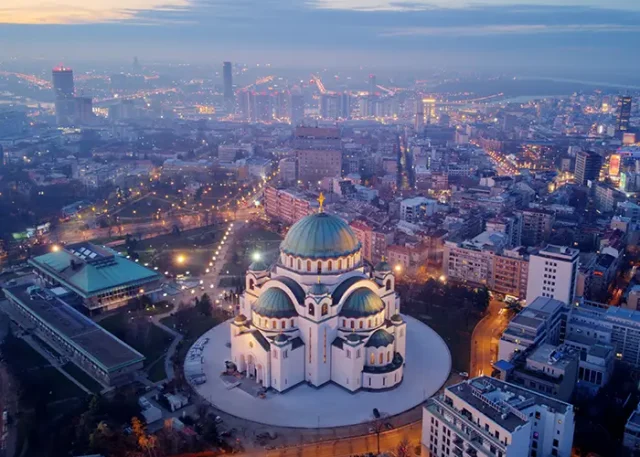
As Belgrade prepares to host EXPO 2027, Serbia’s capital is rapidly stepping into the spotlight as one of Europe’s most compelling emerging destinations. Ambitious cultural planning, significant museum developments, and large-scale urban renewal projects are reshaping the city, reinforcing Belgrade’s identity as a place where history, innovation, and contemporary urban life intersect.
EXPO 2027 Belgrade is expected to welcome millions of visitors and position Serbia at the heart of global conversations around creativity, collaboration, and future-focused ideas. In anticipation, the city has committed substantial investment to culture, architecture, and public spaces—ensuring that by 2027, visitors will experience not only a world-class international exposition, but a revitalized capital offering rich experiences throughout the year.
Even today, Belgrade’s cultural offerings are impressive. Landmarks such as Belgrade Fortress and Kalemegdancommand sweeping views over the meeting point of the Sava and Danube rivers, while the riverside district of Zemunreveals a slower, historic rhythm of life. The city’s artistic depth is reflected in institutions like the Museum of Contemporary Art, the National Museum of Serbia, and the Yugoslav Film Archive. A packed calendar of festivals, performances, and nightlife further underscores Belgrade’s reputation as one of Europe’s most energetically creative capitals.
Food is another defining element of the city’s appeal. Shaped by centuries of cultural exchange, Belgrade’s culinary scene blends traditional Serbian cooking—celebrated for grilled meats, slow-cooked specialties, and regional wines—with a wave of modern bistros and refined dining concepts. From time-honored kafanas and lively markets to stylish restaurants lining the Sava and Danube, the city has earned a reputation as a regional gastronomic hub, admired for its authenticity, creativity, and accessibility.
Central to Belgrade’s transformation is a new generation of cultural institutions scheduled to open or reopen ahead of EXPO 2027:
- Nikola Tesla Museum (new building)
One of the city’s most closely watched projects, the Nikola Tesla Museum is relocating to the historic Milan Vapa Paper Mill (1924). The adaptive-reuse design, led by Zaha Hadid Architects in partnership with Bureau Cube Partners, was selected in early 2025. Set to open in 2027, the new museum will present an immersive celebration of Tesla’s legacy within a striking contemporary setting. - Historical Museum of Serbia (new home)
Belgrade’s former Main Railway Station at Sava Square is being reimagined as the permanent home of the Historical Museum of Serbia, with official announcements pointing to an opening ceremony in early 2027—symbolically linking the city’s past with its future. - Museum of the City of Belgrade (new space)
Planned as part of a broader museum district between Sava Square and the Resavska/Mostar area, the Museum of the City of Belgrade will move into a newly adapted building. While timelines continue to evolve, the project is closely aligned with the cultural programme surrounding EXPO 2027. - Museum of Natural History Belgrade (new building)
A long-awaited purpose-built home for the Museum of Natural History Belgrade is planned near Ušće, one of the city’s most prominent riverfront zones, reflecting Belgrade’s growing emphasis on science, education, and environmental awareness. - Aeronautical Museum Belgrade (reconstruction)
Situated near Belgrade Nikola Tesla Airport, the Aeronautical Museum Belgrade is undergoing extensive modernization, including new hangars and updated exhibition spaces. The reopening is scheduled for 2027, just ahead of the Expo.
Together, these developments build on Belgrade’s established cultural strengths while signaling a broader renaissance. From reimagined riverfronts and restored historic landmarks to bold architecture, evolving cuisine, and a confident contemporary spirit, Belgrade in 2027 will present itself as a city renewed—welcoming the world with energy, authenticity, and ambition.