September is a transitional month in South America. Winter gives way to spring across much of the southern half of the continent, the dry season continues in several Andean destinations, and seasonal wildlife spectacles reach some of their most exciting moments.
It can also be a rewarding time to travel before the busier period surrounding the Southern Hemisphere’s summer holidays. From whale watching in Argentina to exploring Peru’s Sacred Valley, these are five of the best places to visit in South America in September.
Cusco and the Sacred Valley, Peru
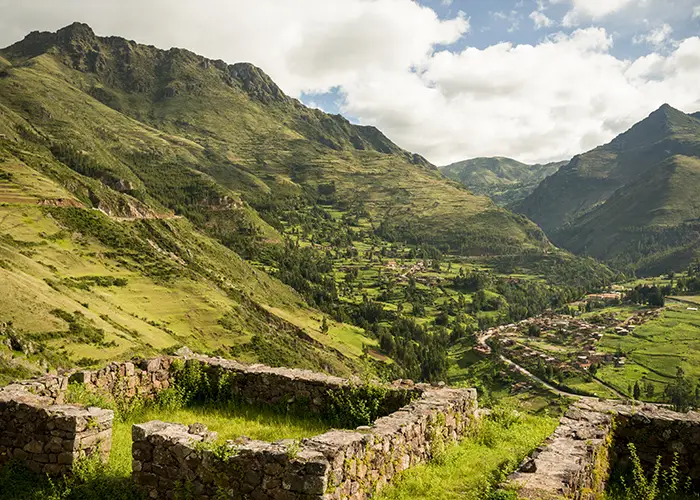
September falls near the end of the dry season in the Peruvian Andes, making it a popular month for exploring Cusco, the Sacred Valley and Machu Picchu. Days are generally bright and suitable for sightseeing, although mountain weather can change quickly and evenings remain cool.
Cusco deserves more than a hurried overnight stay. The former Inca capital combines archaeological sites, colonial architecture, museums, markets and a growing culinary scene. The Plaza de Armas provides a natural starting point, while the hillside neighborhood of San Blas is filled with workshops, galleries and small restaurants.
Outside the city, the Sacred Valley offers some of Peru’s most memorable scenery. Travelers can explore the agricultural terraces at Moray, the salt ponds of Maras and the archaeological complexes at Pisac and Ollantaytambo. The valley’s villages, markets and mountain lodges also make it possible to experience the region at a slower pace.
September can still be busy along the most popular routes, so entrance tickets, train journeys and accommodations should be reserved well in advance. Travelers planning to hike the Inca Trail must book through an authorized operator, and permits can sell out months ahead.
Because Cusco sits at approximately 3,400 meters above sea level, it is wise to allow at least a day or two to acclimatize before beginning strenuous activities. Starting in the lower Sacred Valley before returning to Cusco can make the adjustment easier for some visitors.
Puerto Madryn and Península Valdés, Argentina
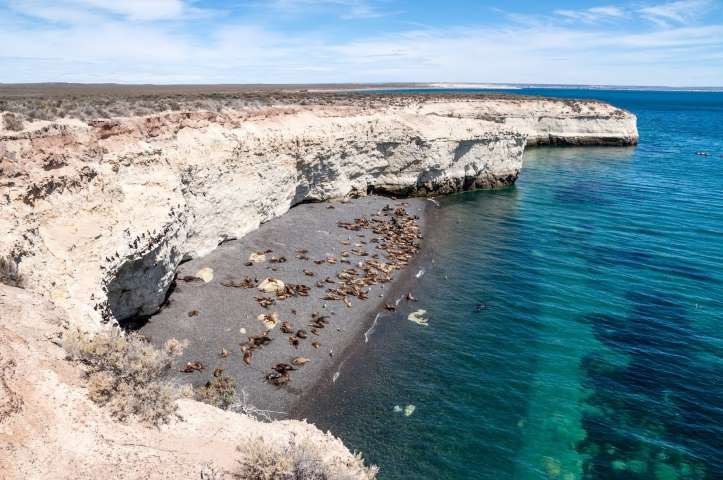
September is one of the most exciting times to visit Argentina’s Atlantic coast. Southern right whales gather around Península Valdés between June and early December, with September and October typically bringing some of the highest concentrations.
Puerto Madryn is the main base for exploring this wildlife-rich region of northern Patagonia. Boat excursions depart from Puerto Pirámides when sea conditions permit, giving visitors an opportunity to observe whales in their natural habitat. At El Doradillo, whales may sometimes be seen surprisingly close to shore around high tide.
The peninsula supports much more than whales. Depending on the location and timing, travelers may also encounter sea lions, elephant seals, dolphins, guanacos, rheas and numerous seabirds. Magellanic penguins begin returning to their nesting areas during September, although the season becomes more established as spring progresses.
Wildlife sightings are never guaranteed, and boat excursions can be canceled because of wind or rough water. Building some flexibility into the itinerary is therefore advisable.
Puerto Madryn can be reached by air through its local airport or through Trelew, approximately an hour away by road. Travelers should pack warm layers and a wind-resistant jacket, even as the region begins moving into spring.
Readers planning a wider Argentina journey can find more ideas in DRIFT Travel’s guide to destinations to visit in Argentina.
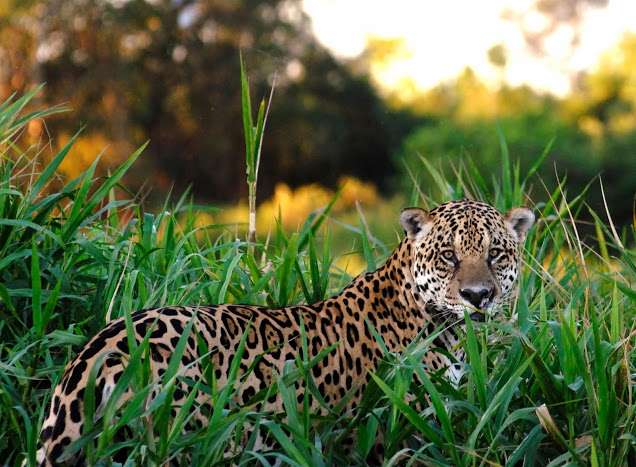
The Pantanal, Brazil
For travelers interested in wildlife, September is an excellent month to explore the Pantanal. This enormous tropical wetland extends across parts of Brazil, Bolivia and Paraguay, with the majority located in Brazil.
September falls near the end of the Pantanal’s dry season. As water levels recede, animals tend to gather around rivers, lagoons and other remaining water sources, creating favorable conditions for wildlife observation.
The region is home to jaguars, giant river otters, capybaras, caimans, tapirs, giant anteaters and hundreds of bird species. Jaguar sightings are never assured, but the period from June through September is widely regarded as one of the most promising times to look for them, particularly in the northern Pantanal.
Experiences vary depending on where visitors stay. Activities may include guided boat excursions, safari drives, horseback riding, nature walks and nocturnal wildlife tours. A knowledgeable local naturalist can make a considerable difference, helping visitors identify animal behavior while ensuring that wildlife is observed responsibly.
Cuiabá is the principal gateway to the northern Pantanal, while Campo Grande provides access to many southern lodges. Transfers can be lengthy and may involve rough roads, so travelers should allow sufficient time between flights and lodge arrivals.
September can be extremely hot, especially later in the month. Lightweight clothing, sun protection, insect repellent and a reusable water bottle are essential. Travelers should also consult a medical professional about appropriate health precautions well before departure.
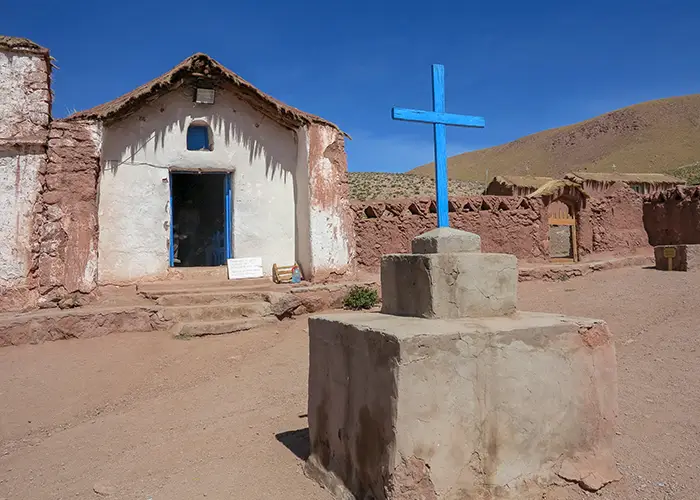
San Pedro de Atacama, Chile
San Pedro de Atacama offers an entirely different kind of September adventure. Located in northern Chile, the town is the gateway to salt flats, volcanic landscapes, high-altitude lagoons and some of the clearest night skies on the planet.
The arrival of spring brings increasingly pleasant daytime conditions, although temperatures can still drop sharply after sunset. At higher elevations, early-morning excursions may encounter conditions well below freezing.
Valle de la Luna is among the most accessible nearby attractions. Its dunes, salt formations and sculpted ridges become especially dramatic as the evening light shifts across the desert. Other excursions reach the El Tatio geyser field, the salt flats and lagoons around Piedras Rojas, and areas inhabited by flamingos and vicuñas.
Many attractions sit at significant elevations. Piedras Rojas exceeds 4,000 meters above sea level, while the El Tatio geysers are reached before sunrise following a steep ascent. Visitors should spend time acclimatizing, remain hydrated and avoid scheduling the most demanding high-altitude outing immediately after arriving.
The nearest airport is in Calama, approximately an hour from San Pedro by road. Stargazing tours are popular, but visibility depends on cloud cover and the lunar cycle. Travelers hoping for the darkest possible skies should check the moon phase before choosing their dates.
In years with sufficient winter rainfall, parts of the wider Atacama region may experience the desierto florido, or flowering desert. Blooms can begin in September, but this is a weather-dependent natural event and does not occur on the same scale every year.
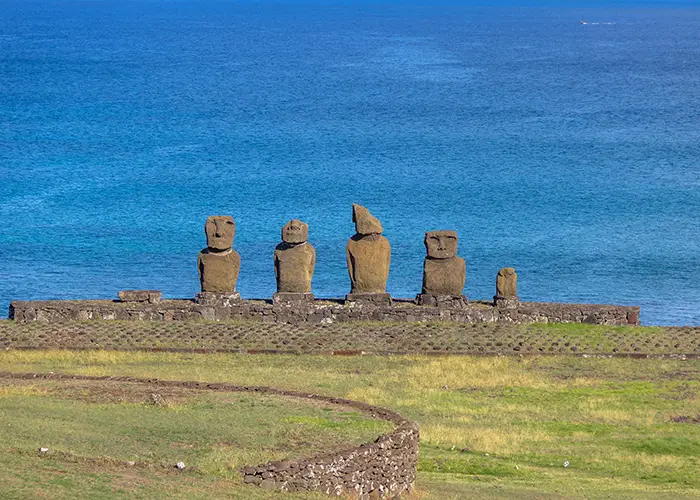
Rapa Nui, Chile
Rapa Nui, also known as Easter Island, is one of South America’s most culturally significant destinations. Its remote Pacific location, monumental moai and living Polynesian traditions create an experience unlike anywhere else on the continent.
September falls within the island’s cooler, quieter period. Temperatures are generally comfortable for walking and archaeological exploration, although rain and wind remain possible throughout the year.
Rano Raraku is one of the island’s essential sites. The volcanic quarry was used to carve the moai, and nearly 400 figures remain in various stages of completion. Nearby Ahu Tongariki presents the island’s largest restored ceremonial platform, with 15 moai standing against a dramatic coastal backdrop.
Other important locations include the ceremonial village of Orongo, the crater at Rano Kau, Ahu Akivi and the sunset views from Tahai. Anakena Beach combines white sand and clear water with an impressive archaeological setting.
Visitors should remember that Rapa Nui is not simply an open-air collection of monuments. It is the homeland of the Rapa Nui people, and its archaeological sites are sacred cultural places. Travelers must remain on established paths, follow local rules and never touch or climb on the moai or ceremonial platforms.
Access to many of the island’s principal archaeological locations requires an accredited local guide. Entry documentation, park tickets and accommodation arrangements should be confirmed before departure. Flights generally operate from Santiago, and the journey takes approximately five and a half hours.
Planning a September Trip to South America
South America’s size means there is no single September climate. A traveler might encounter warm, dusty conditions in the Pantanal, freezing temperatures before sunrise in the Atacama Desert and powerful winds along the Patagonian coast—all during the same trip.
Packing should be based on elevation and local conditions rather than season alone. Layered clothing, sun protection, sturdy footwear and a rain-resistant outer layer will cover many situations, but specialized trips may require additional gear.
September is also a popular month for several of the experiences highlighted here. Machu Picchu tickets, Pantanal lodges, whale-watching accommodations and Rapa Nui flights should be reserved early.
Most importantly, avoid trying to combine too many distant destinations in a single itinerary. Flights frequently route through major hubs, and overland distances can be substantial. Choosing one country or a geographically connected region usually results in a more relaxed and rewarding journey.
For more inspiration, explore DRIFT Travel’s overview of what makes South America so special.