
Few cities are as closely connected to the water as Istanbul. The Bosphorus does more than separate Europe from Asia: it carries ferries between neighborhoods, links the Black Sea with the Sea of Marmara and has influenced the city’s trade, culture and daily life for centuries.
Each September, that relationship takes on a competitive dimension during the Bosphorus Cup. The annual sailing event brings racing yachts into the heart of Istanbul, transforming one of the world’s busiest and most recognizable waterways into a dramatic urban racecourse.
Celebrating its 25th anniversary in 2026, the event offers visitors a chance to watch world-class sailing while discovering a city that often makes the most sense when viewed from the water.
Racing between two continents
The Bosphorus Cup was established in 2002 by Turkish businessman and sailor Orhan Gorbon, who wanted to bring yacht racing directly into Istanbul.
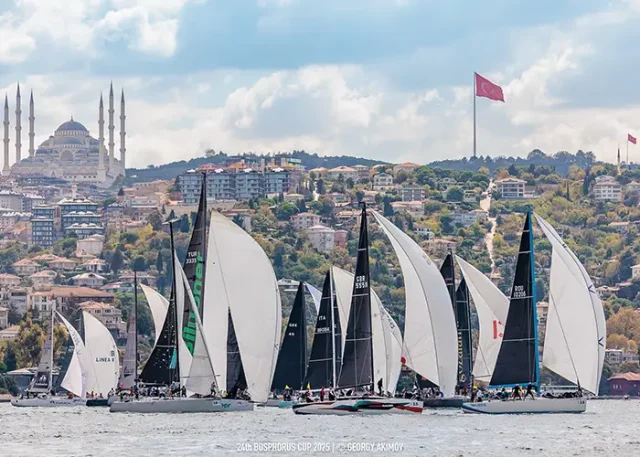
The 2026 competition takes place from September 17 to 19. The first two days of racing are held on the Sea of Marmara, followed by the event’s defining race through the Bosphorus on Saturday, September 19.
For the race, commercial shipping traffic is temporarily suspended and the fleet moves through the center of the city. Yachts pass beneath suspension bridges and alongside Ottoman palaces, historic fortresses, mosques, waterfront mansions and densely populated neighborhoods.
There are not many sailing events where spectators can watch the action while eating breakfast at a waterfront café or waiting for a commuter ferry.
Why the Bosphorus is so challenging
The setting may be spectacular, but the Bosphorus is not an easy place to race.
The strait has a distinctive two-layer current system. At the surface, water generally travels south from the Black Sea toward the Sea of Marmara. Beneath it, denser saltwater moves north in the opposite direction.
Bends, headlands and changes in the width of the channel create additional eddies and back currents. The surrounding hills and buildings can also influence the wind, producing sudden shifts and areas of unpredictable pressure.
Crews must constantly assess the current, wind and shoreline. The shortest geographical route is not necessarily the fastest, and local sailors sometimes move surprisingly close to shore in search of calmer water.
Conditions can change quickly. A favorable section of the strait can become difficult within minutes, forcing crews to tack or change strategy with little warning. This combination of wind, current and cityscape has helped earn the competition its description as a “theater of winds.”
Where to watch the Bosphorus Cup
One of the best aspects of the event is that the main Bosphorus race can be viewed from public spaces along the shoreline.
For 2026, the official Bosphorus Cup Fan Zone is located at Akıntıburnu in Arnavutköy. Open from noon until 4 p.m. on September 19, it provides a central place for spectators to follow the fleet as it moves through the strait.
Arnavutköy is also an appealing neighborhood in its own right, known for its colorful waterfront houses, seafood restaurants and narrow streets.
Other waterfront areas may offer views as the race progresses, including sections of Beşiktaş, Ortaköy and Bebek. Spectators should arrive early, as promenades, cafés and public viewpoints can become crowded.
Binoculars can be useful, although the yachts often pass close enough to shore for visitors to appreciate the speed and constant tactical movement of the fleet. Race conditions and temporary security restrictions may affect access to some areas, so checking the official Bosphorus Cup schedule before setting out is advisable.
Take a local ferry across the Bosphorus
Visitors do not need to board a yacht or book a private cruise to experience Istanbul from the water. The city’s public ferries provide one of its most enjoyable and practical sightseeing experiences.
Routes between the European and Asian sides reveal the geography of Istanbul in a way that is difficult to understand from land. Domes and minarets rise above the historic peninsula, while palaces, towers and wooden mansions line the water.
A ferry trip from Eminönü or Karaköy to Kadıköy offers an easy introduction. Kadıköy’s markets, restaurants and lively streets provide a contrast to the monumental architecture of Sultanahmet.
Another option is to cross from Beşiktaş to Üsküdar. From the Asian shoreline, travelers can walk toward Salacak for views across the water toward the Maiden’s Tower and the historic peninsula.
Ferries are part of Istanbul’s public transportation system rather than dedicated sightseeing boats, making them an authentic glimpse into everyday life. Schedules can be checked through Şehir Hatları, the city’s ferry operator.
Make time for Turkish coffee
A day beside the Bosphorus should include at least one Turkish coffee. Served in a small cup with the grounds left to settle at the bottom, the drink is intended to be enjoyed slowly.
Mandabatmaz, hidden along a narrow street near İstiklal Avenue in Beyoğlu, is among the city’s best-known traditional coffee stops. The name roughly translates as “a buffalo would not sink,” a reference to the unusually thick foam for which its coffee is known.
Near the Spice Bazaar in Eminönü, Kurukahveci Mehmet Efendi has been roasting coffee since the 19th century. Its historic shop remains a popular place to purchase freshly ground Turkish coffee to take home.
Neither location requires an elaborate visit. The appeal lies in pausing for a small ritual that has been part of Istanbul life for generations.
Escape to the Princes’ Islands
Travelers with an additional day can continue exploring Istanbul’s maritime character with a ferry trip to the Princes’ Islands.
Located in the Sea of Marmara, the archipelago feels removed from the traffic and intensity of central Istanbul. Büyükada, the largest and most visited of the islands, has historic mansions, tree-lined streets and waterfront restaurants.
Cars are largely absent from the island, and visitors generally explore on foot, by bicycle or using electric public transportation. The ferry journey is part of the experience, providing wide views of Istanbul’s skyline before the city gradually recedes.
A visit requires more than a casual afternoon once ferry travel is included. Travelers should allow most of a day and consult the official Princes’ Islands ferry timetable before departing.
Exploring Istanbul beyond the race
The Bosphorus Cup may provide the reason for a September visit, but Istanbul offers enough history, food and culture to justify a longer stay.
First-time visitors will likely want to explore Hagia Sophia, the Blue Mosque, Topkapı Palace and the Grand Bazaar. Crossing the Galata Bridge on foot reveals another side of the city, with fishermen lining the railings and ferries moving through the Golden Horn below.
Yet some of the most memorable moments require no formal itinerary. They might involve eating grilled fish beside the Bosphorus, watching the evening ferries from a waterfront park or beginning the day with a traditional Turkish breakfast overlooking the strait.
The Bosphorus is not simply a scenic backdrop for Istanbul. It is one of the forces that created the city and continues to shape how people move through it.
During the Bosphorus Cup, that connection becomes especially vivid. Yachts race between two continents while the city watches from ferries, terraces and waterfront neighborhoods—a sporting event that could happen nowhere else.