
The Isle of Skye and Scotland’s west coast are best known for rugged mountains, dramatic shorelines, and sweeping Highland landscapes. During winter, however, the region reveals another side of its character.
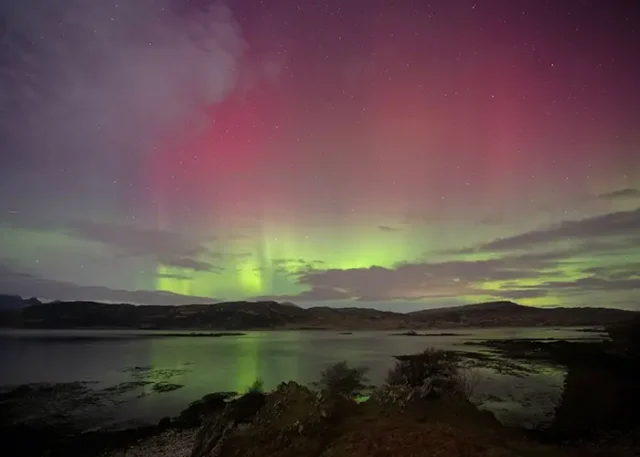
Shorter days, quieter roads, and long nights create an atmospheric setting for stargazing—and the possibility of seeing the Northern Lights. While an appearance by the Aurora Borealis is never guaranteed, Skye’s limited light pollution and north-facing coastal viewpoints make the island one of Scotland’s most promising aurora-watching destinations.
For winter 2026–2027, the family-run Sonas Collection is encouraging travelers to discover this quieter season from its boutique properties on the Isle of Skye and near Oban. The emphasis is on unhurried days, locally inspired Scottish food, fireside evenings, and nights spent watching the sky.
Why Visit the Isle of Skye in Winter?
Skye’s popularity has grown considerably, and famous locations such as the Old Man of Storr, Fairy Pools, Quiraing, and Neist Point can become busy during summer.
Winter changes the rhythm of the island. Visitor numbers fall, scenic roads become less congested, and familiar landscapes can feel considerably wilder. Frost, low clouds, changing light, and occasional snow add drama to the mountains and coast.
This is also an opportunity to experience Skye at a slower pace. Instead of trying to visit every landmark, travelers can concentrate on a few carefully chosen walks, scenic drives, local meals, and evenings beneath the stars.
Those planning a longer journey could incorporate Skye into a Scottish Highlands road trip or follow the west coast from Oban toward the island.
Can You See the Northern Lights on Skye?
Yes, the Northern Lights can be visible from the Isle of Skye, but several conditions must align.
Auroras occur when charged particles released by the sun interact with gases in Earth’s atmosphere. To see the resulting light display from Scotland, travelers need sufficient solar activity, a dark location, a clear view toward the north, and—often the greatest challenge on the west coast—cloud-free skies.
According to VisitScotland, some of Skye’s most promising viewing areas include Trumpan, Staffin Bay, and the Trotternish Peninsula. Coastal headlands are particularly useful because they can provide wide, unobstructed views over the sea.
October through March generally offers the best viewing window because the nights are longer and darker. Displays are frequently reported between 9 p.m. and 2 a.m., although auroral activity can occur earlier or later.
Travelers should remember that cameras often capture more color than the human eye. A display that appears pale gray or faintly green in person may look much brighter in a long-exposure photograph.
Four Winter Bases on Scotland’s West Coast
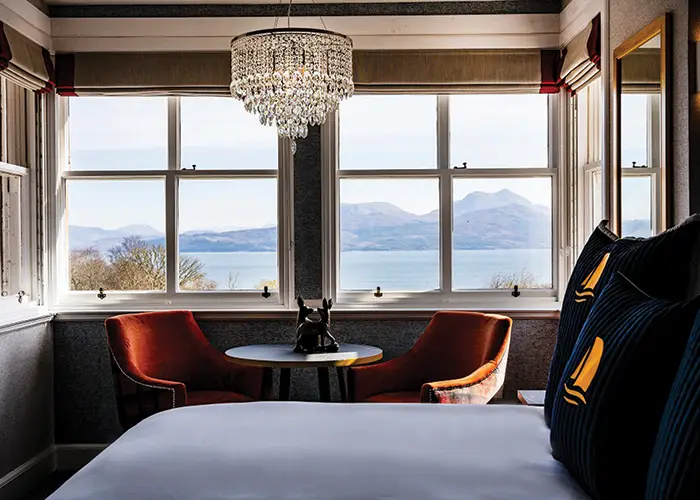
Sonas Collection operates four family-run boutique hotels: three on the Isle of Skye and one near Oban. Each provides access to dark skies while offering a comfortable retreat when winter weather moves across the Highlands.
Knipoch House Hotel Near Oban
Located between wooded hills and Loch Feochan, Knipoch House Hotel offers a country-house setting outside Oban.
Its position away from the town’s brighter lights provides better conditions for stargazing on clear evenings. During the day, guests can explore the landscapes of Argyll, follow coastal walking routes, or spend time in Oban, a harbor town known for seafood, whisky, and ferry connections to the Hebrides.
The hotel can also serve as the starting point for a broader journey through western Scotland. DRIFT readers can find more inspiration in From Sea to Skye: The Pursuit of Happiness in Western Scotland.
Skeabost House Hotel
Skeabost House Hotel occupies a Victorian mansion beside Loch Snizort, approximately seven miles from Portree.
The secluded setting provides convenient access to northern Skye, including the Trotternish Peninsula. By day, travelers can explore places such as the Old Man of Storr, Kilt Rock, Staffin Bay, and Quiraing, subject to road and trail conditions.
After dark, the hotel’s location beside the loch offers the kind of open landscape and limited artificial light that aurora watchers seek. Even when the Northern Lights do not appear, a clear night can reveal an impressive field of stars.
Duisdale House Hotel
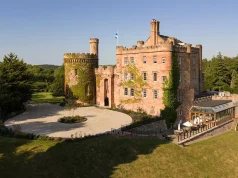
Set on the Sleat Peninsula in southern Skye, Duisdale House Hotel is a former Victorian mansion surrounded by woodland and coastal scenery.
Sleat is sometimes called the Garden of Skye because of its relatively sheltered landscape. It is a quieter part of the island, with opportunities for short walks, shoreline exploration, and scenic drives overlooking the Sound of Sleat.
Dining is a central part of the experience, with an emphasis on seasonal Scottish ingredients. On clear nights, guests can step outside to watch the sky before returning to the warmth of the hotel.
Toravaig House Hotel
Also located on the Sleat Peninsula, Toravaig House Hotel offers a smaller, more intimate base for exploring southern Skye.
The surrounding area is well suited to travelers interested in coastal scenery, peaceful roads, and easy access to the Armadale area. The hotel’s boutique scale complements the slower pace of a winter visit, when evenings might include a warming whisky followed by a look at the night sky.
What to Do on Skye During Winter
Aurora watching is best treated as an added possibility rather than the sole purpose of a trip. Cloud cover can prevent sightings even when geomagnetic activity is strong, so a flexible daytime itinerary is essential.
Winter activities on Skye can include:
- Driving through the Trotternish Peninsula
- Photographing the Old Man of Storr from lower viewpoints
- Visiting the Fairy Pools when conditions are safe
- Exploring Portree and its colorful harbor
- Walking along beaches and sheltered coastal trails
- Visiting local galleries, craft studios, and distilleries
- Photographing waterfalls after winter rain
- Watching for red deer, seals, otters, and birds of prey
Some attractions, restaurants, tours, and ferry services operate on reduced winter schedules. Travelers should confirm opening hours and transportation arrangements before setting out.
How to Improve Your Chances of Seeing the Aurora
Start by checking both the weather and space-weather forecasts. The UK Met Office publishes a frequently updated space-weather forecast that indicates when auroral activity may reach Scotland.
A standard weather forecast is equally important. Even a strong geomagnetic event will be difficult to see through thick cloud.
For the best chance of a sighting:
- Find a location away from streetlights and illuminated buildings.
- Look for an unobstructed view toward the northern horizon.
- Allow your eyes at least 15 to 20 minutes to adjust to the darkness.
- Avoid looking repeatedly at a bright phone screen.
- Use a red-light setting on a flashlight when possible.
- Dress in warm, waterproof layers.
- Bring a tripod if you plan to photograph the sky.
- Remain patient, as displays can appear and disappear quickly.
Avoid stopping on narrow roads or entering unfamiliar terrain in darkness. Winter weather can change rapidly, and Skye’s coastal paths, mountain trails, and roadside verges may be wet, icy, or difficult to see.
Photographing the Northern Lights
Modern smartphones can capture surprisingly effective aurora photographs when placed on a stable surface or tripod. Use night mode, turn off the flash, and avoid digital zoom.
With a dedicated camera, begin with a wide-angle lens, a wide aperture, a moderately high ISO, and an exposure of several seconds. The ideal settings will depend on the brightness and movement of the aurora. Longer exposures capture more light but can blur the structure of a fast-moving display.
Including part of the landscape—a loch, mountain, shoreline, or hotel silhouette—can give the image a stronger sense of place.
A Different Kind of Scottish Escape
A winter journey to Skye is not only about checking the Northern Lights off a bucket list. Its appeal lies in experiencing the island after its busiest season has ended.
The days invite scenic drives and windswept walks. Evenings are made for Scottish food, a glass of whisky, and the warmth of a fire. When the clouds part, the darkness reveals a sky that can be remarkable whether or not the aurora arrives.
And if green, purple, or red light begins to move above the Highland landscape, it becomes an unforgettable addition to an already memorable Scottish winter escape.