
There are faster ways to cross the Atlantic, but few can match the romance of traveling beneath billowing sails with nothing but open water on the horizon.
In 2027, Star Clippers will offer several transatlantic voyages aboard its traditional tall ships, giving travelers an alternative to both air travel and conventional cruising. Rather than filling each day with busy ports and tightly scheduled excursions, these longer ocean passages make the journey itself the main attraction.
The four featured crossings range from 15 to 24 nights, with one eastbound voyage in spring and three westbound options in fall. Along the way, travelers can experience historic ports in Spain, Morocco, Portugal, and the Canary Islands before settling into the slower rhythm of an extended Atlantic passage.
The Appeal of Crossing an Ocean Under Sail
Transatlantic cruises are often chosen for their relaxing sea days, but the experience aboard a tall ship is notably different from spending a week or more on a large resort-style vessel.
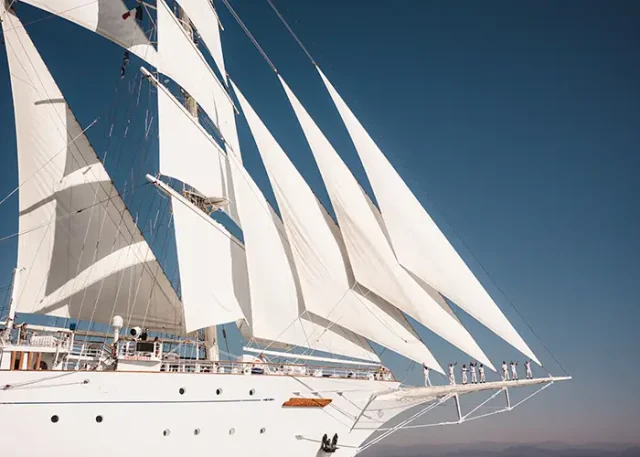
Star Clipper and Star Flyer are four-masted, square-rigged barquentines inspired by the clipper ships of the 19th century. Each measures approximately 115 meters and accommodates no more than 166 guests, creating an intimate atmosphere more reminiscent of a private yacht than a conventional cruise ship.
The vessels combine traditional sailing features with modern accommodations, dining, swimming pools, teak decks, and indoor lounges. Although they are equipped with engines, the crew raises the sails and harnesses the wind whenever conditions permit.
Days at sea provide time to watch the crew handle the sails, learn about navigation and seamanship, or participate in supervised activities such as climbing the rigging. Guests can also relax in the bowsprit netting, read beside the pool, enjoy an unhurried meal, or find a quiet corner of the deck.
Without constant port calls or a packed entertainment schedule, a crossing encourages passengers to settle into the natural rhythm of the ship. Breakfasts stretch a little longer, conversations develop between travelers, and evenings end beneath skies largely untouched by light pollution.
Four Star Clippers Atlantic Crossings in 2027
The 2027 program includes voyages for travelers interested in a nearly uninterrupted crossing as well as those who want to combine sea days with several culturally rich ports.
Antigua to Malaga Aboard Star Clipper
Departing St. John’s, Antigua, on April 3, 2027, this 20-night eastbound voyage aboard Star Clipper crosses the Atlantic to Malaga, Spain.
After leaving the Caribbean, the ship spends an extended period at sea before reaching Ponta Delgada on São Miguel Island in the Azores. The Portuguese archipelago makes a natural midpoint between North America and Europe, rising from the Atlantic with volcanic landscapes, crater lakes, hot springs, and hydrangea-lined roads.
In Ponta Delgada, travelers can explore the historic center, walk along the waterfront, sample Azorean cuisine, or venture into the island’s interior. São Miguel’s best-known natural attractions include the twin lakes of Sete Cidades, Lagoa do Fogo, and the geothermal landscapes surrounding Furnas.
From the Azores, Star Clipper continues east to Malaga. The Andalusian port offers an appealing conclusion to the voyage, with beaches, museums, tapas bars, and historic sites such as the Alcazaba and Gibralfaro Castle.
Malaga to Antigua Aboard Star Clipper
Travelers who want more time in port before crossing the Atlantic can consider Star Clipper’s 24-night westbound voyage departing Malaga on October 27, 2027.
Before beginning the long ocean passage, the ship visits destinations in Spain, Morocco, and the Canary Islands. Scheduled calls include Ceuta, Cádiz, Tangier, Casablanca, and Las Palmas.
Cádiz is one of Europe’s oldest continuously inhabited cities, known for its compact historic center, waterfront fortifications, and lively plazas. Across the Strait of Gibraltar, Tangier introduces travelers to Morocco through its medina, cafés, markets, and multicultural history.
Casablanca presents a more modern side of the country. The city’s most recognizable landmark is the Hassan II Mosque, dramatically positioned beside the Atlantic Ocean. From there, the voyage continues to the Canary Islands before turning west toward the Caribbean.
With 24 nights aboard, this is the longest of the four featured crossings and the best suited to travelers who want both port exploration and a substantial amount of uninterrupted time at sea.
Las Palmas to Antigua Aboard Star Clipper
Star Clipper will also depart Las Palmas on November 5, 2027, for a 15-night westbound crossing to St. John’s, Antigua.
This itinerary includes a visit to San Sebastián on La Gomera before heading across the Atlantic. One of the quieter Canary Islands, La Gomera is known for its steep valleys, dramatic mountain scenery, traditional villages, and ancient laurel forests.
San Sebastián also has connections to Christopher Columbus, who stopped on the island before his 1492 Atlantic voyage. Travelers can explore the compact historic center or venture farther inland to discover the landscapes of Garajonay National Park, a UNESCO World Heritage Site.
Following La Gomera, the ship begins its extended Atlantic passage, eventually arriving in Antigua. This voyage offers the same tall-ship experience as the longer Malaga departure but with fewer ports and a shorter overall itinerary.
Las Palmas to St. Maarten Aboard Star Flyer
The fourth featured crossing departs Las Palmas on November 12, 2027. Star Flyer will sail for 15 nights to St. Maarten, also stopping at San Sebastián on La Gomera before beginning the westbound passage.
Star Flyer is the sister ship of Star Clipper, with the same 166-guest capacity and similar four-masted design. The small number of passengers can make it easier to meet fellow travelers, while the ship’s teak decks provide ample space to find a quiet place to watch the sea.
Arrival in St. Maarten also creates opportunities to extend the journey in the Caribbean. Travelers can spend additional time on the island or connect with neighboring destinations such as Anguilla, St. Barts, Saba, and St. Martin.
What Is Life Like During a Transatlantic Crossing?
An ocean crossing requires a different mindset from a conventional vacation. There may be multiple consecutive days without a port call, limited access to high-speed communications, and fewer organized attractions than travelers would find aboard a large cruise ship.
For the right passenger, those qualities are precisely the appeal.
Days tend to revolve around the weather, the sea, meals, informal onboard activities, and the changing position of the ship. Guests may watch sail maneuvers, attend talks about navigation, spend time with a book, or simply observe the ocean.
Wildlife sightings are possible but unpredictable. Depending on the route and season, passengers may see dolphins, flying fish, seabirds, or whales. Far from land, sunsets and night skies can become some of the voyage’s most memorable sights.
The atmosphere is generally casual, although travelers should bring a few polished outfits for dinner. Windproof layers, a light waterproof jacket, nonslip shoes, sun protection, and seasickness medication are also sensible additions to the packing list.
Who Should Consider an Ocean Crossing?
A tall-ship crossing may appeal to travelers who:
- Enjoy sea days more than busy port schedules
- Prefer smaller ships and an informal onboard atmosphere
- Are interested in sailing, maritime history, or navigation
- Want time to read, write, relax, or disconnect
- Appreciate unusual journeys that feel more adventurous than conventional cruises
- Are comfortable spending many consecutive days at sea
It may be less suitable for travelers who require constant entertainment, extensive children’s facilities, frequent port calls, or reliable high-speed internet throughout the trip.
Because Atlantic weather and sea conditions can vary, passengers should also be comfortable with the possibility of noticeable ship movement. Anyone concerned about seasickness should speak with a physician or pharmacist before departure and pack appropriate medication.
A Journey Defined by Time and Distance
Modern travel is usually designed to eliminate time between destinations. Flights are chosen for speed, connections are shortened, and itineraries are filled with as many sights as possible.
A transatlantic voyage aboard a tall ship takes the opposite approach.
The distance between continents becomes part of the experience. Progress is measured in changing winds, sunsets, and days spent watching the horizon. The ship is not simply a way to reach Europe or the Caribbean; it is the destination for much of the journey.
Star Clippers’ 2027 ocean crossings offer several ways to experience that slower style of travel, from a spring voyage through the Azores to fall sailings connecting Spain and the Canary Islands with Antigua and St. Maarten.
For travelers willing to exchange crowded ports and hurried sightseeing for open decks, star-filled nights, and the sound of wind in the sails, crossing the Atlantic can once again feel like a genuine voyage of discovery.