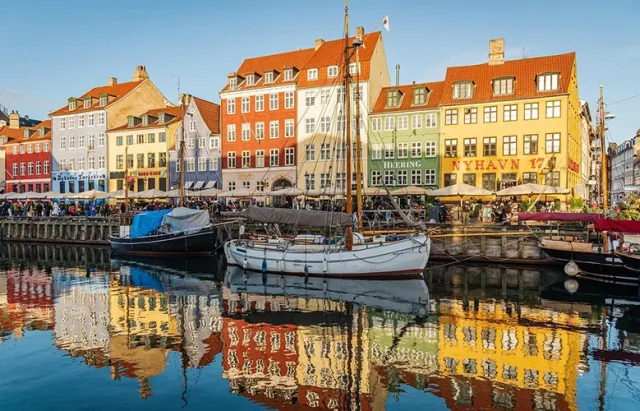
Copenhagen is often introduced through superlatives: one of the world’s most livable cities, a model of sustainability, a capital where cycling outnumbers cars. While all of this is true, these labels barely scratch the surface. To truly understand Copenhagen, you need to experience how the city functions on a human level — how people move, gather, relax, and coexist with their environment.
Rather than rushing between attractions, slow travel offers a more meaningful way to engage with the Danish capital. It allows visitors to see how urban design, culture, and everyday habits come together to create a city that feels calm, intuitive, and surprisingly personal.
Why Copenhagen Is Ideal for Slow Travel
Copenhagen is compact, flat, and thoughtfully planned. Distances between neighborhoods are short, public spaces are welcoming, and the city prioritizes people over traffic. These qualities make it ideal for travelers who prefer walking, observing, and absorbing the rhythm of a place rather than simply consuming highlights.
Here, slow travel is not a compromise — it is the default. Locals linger in parks, swim in the harbor, and use public spaces as extensions of their homes. Visitors who adapt to this pace quickly notice that the city reveals more when you give it time.
Walking as a Way to Understand the City
Walking through Copenhagen offers insight into how carefully daily life is structured. Streets feel safe and predictable. Public benches are positioned where people naturally want to stop. Green spaces are integrated into residential areas rather than isolated as destinations.
This walkable design reflects a deeper philosophy: the city is built to support everyday life, not to impress from a distance. Experiencing Copenhagen on foot makes these priorities immediately visible.
Neighborhoods That Reflect Different Sides of Copenhagen
Each district contributes a distinct layer to the city’s identity.
Indre By
The historic center blends medieval streets, royal landmarks, and modern retail into a seamless whole. Walking here highlights how Copenhagen preserves its past while remaining fully functional in the present.
Nørrebro
Diverse, creative, and energetic, Nørrebro showcases Copenhagen’s multicultural side. Independent cafés, community spaces, and informal social life define the area. It feels lived-in rather than curated.
Vesterbro
Once industrial, Vesterbro now balances edgy culture with relaxed everyday living. Wide streets and adaptive reuse of buildings make it a rewarding area to explore without a fixed route.
The Harbor: Copenhagen’s Open Living Room
Copenhagen’s harbor is central to its identity. Unlike cities where waterfronts are reserved for industry or tourism, here they are shared spaces. People swim year-round, sit quietly along the water, or meet friends for unhurried conversations.
Walking along the harbor paths offers a clear sense of how deeply water is integrated into daily life. It is not scenery — it is infrastructure.
Learning the Context Behind the City
While independent exploration reveals much, understanding why Copenhagen works the way it does often requires local context. Concepts like trust-based society, cycling infrastructure, and sustainable planning are deeply rooted in history and policy.
Many visitors choose to join a free walking tour in Copenhagen to gain this background. These tours focus less on ticking off landmarks and more on explaining how the city evolved into what it is today.
Design That Serves Daily Life
Danish design is often associated with aesthetics, but in Copenhagen its most important function is usability. Everything from public transport stops to playgrounds reflects a focus on comfort, accessibility, and long-term thinking.
This approach becomes especially clear when walking through residential areas, where design quietly supports daily routines without drawing attention to itself.
Food, Coffee, and the Rhythm of the City
Copenhagen’s food culture aligns naturally with slow travel. Bakeries appear exactly when you need a pause. Coffee shops encourage lingering rather than turnover. Meals are integrated into the day rather than dominating it.
Walking between stops turns food into part of the journey, not the sole objective.
Experiencing Copenhagen With Local Insight
To fully appreciate Copenhagen, many travelers seek experiences guided by locals who understand the city beyond its surface. Operators such as Nordic Freedom Tours Copenhagen emphasize storytelling, context, and lived experience rather than scripted tourism.
This approach aligns well with the city itself: understated, thoughtful, and focused on substance over spectacle.
Final Thoughts
Copenhagen does not demand attention — it earns it through consistency, balance, and quiet confidence. It is a city that functions exceptionally well not because it tries to impress, but because it prioritizes quality of life.
For travelers drawn to slow exploration, meaningful urban design, and cities that feel genuinely lived in, Copenhagen offers a rare sense of coherence. Walking through it is not just a way to get around — it is the key to understanding why the city works.