Most festivals are designed to be heard from a distance. Hiljaa Fest, a new nature-listening event in southeastern Finland, is asking visitors to do the opposite: slow down, remain quiet and pay attention to sounds that might otherwise go unnoticed.
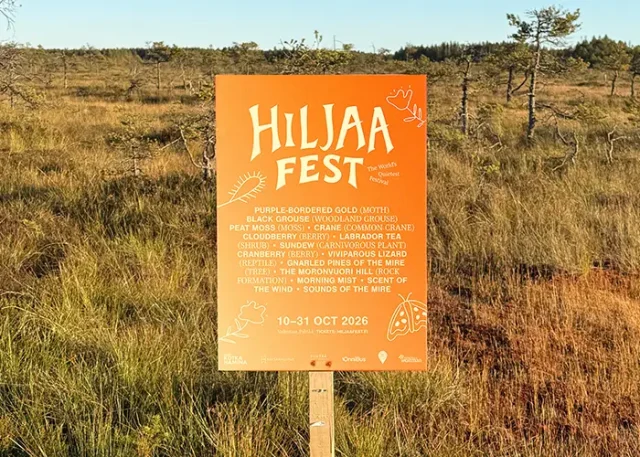
Taking place at Valkmusa National Park in the municipality of Pyhtää, the inaugural festival opens on October 10, 2026. Organizers describe it as the world’s first Festival of Nature Listening, with birds, water, wind and rustling vegetation replacing amplified music and headline performers.
It is a distinctly Finnish interpretation of a fall festival—and one that reflects the growing appeal of quiet travel, nature immersion and experiences designed around slowing down.
A Festival Without Amplified Sound
Nicknamed “Quietchella,” Hiljaa Fest will feature 13 natural “performers” heard across four outdoor stages within Valkmusa National Park.
There are no celebrity appearances or elaborate sound systems. Instead, the festival program is shaped by black grouse, migrating birds, moving water, wind passing through the vegetation and the subtle sounds of the surrounding mire.
Some performers are more predictable than others. Wind and water will likely make an appearance, while birds and other wildlife will arrive on their own schedules. Unexpected sounds may become the day’s surprise guests.
That unpredictability is an important part of the experience. Rather than moving between scheduled concerts, visitors will explore the national park at their own pace, listening for changes in the landscape and noticing small details that are easily lost amid the noise of everyday life.
Discovering Valkmusa National Park
Located approximately 90 minutes east of Helsinki, Valkmusa National Park protects an extensive mire landscape that is unusual in southern Finland.
More than 40 types of mire habitat have been identified in the park, creating valuable environments for wetland birds, butterflies and other wildlife. Open bogs, forested edges and areas of colorful moss combine to create a landscape that feels far more remote than its relatively accessible location might suggest.
Boardwalks carry hikers across the wetland, while observation points and rest areas provide places to pause. In fall, changing leaves and richly colored bog vegetation add another dimension to the scenery.
Valkmusa National Park is less internationally known than Finland’s northern wilderness areas, but that is part of its appeal. Visitors can experience the silence and open landscapes associated with Finnish Lapland without traveling to the far north.
Learning to Listen Again
The premise behind Hiljaa Fest is simple: silence has become increasingly difficult to find.
Even time spent outdoors is often accompanied by traffic, notifications, conversation or music playing through headphones. Hiljaa Fest encourages visitors to put those distractions aside and concentrate on the natural soundscape.
The experience is not necessarily about encountering absolute silence. A wetland is filled with sound once someone takes the time to listen: wings moving overhead, footsteps against wooden boards, distant birdcalls and wind brushing across moss and grasses.
Wilderness guide and Hiljaa Fest creative director Simo Peri describes the festival as a journey intended to support both the mind and the spirit. Its four natural stages have been selected to help visitors experience different acoustic qualities within the park.
No two walks will sound exactly alike. Weather, wildlife and the time of day will determine what each visitor hears.
The Experience Continues After Opening Day
Hiljaa Fest begins with its official opening on October 10, but the experience will not disappear after a single day.
The self-guided festival continues through October 30, allowing travelers to explore the trails and listening locations independently. This extended format also reduces the need for visitors to gather in one place at the same time, helping the event retain the calm atmosphere at the heart of its concept.
Travelers visiting after opening day can follow the route at their own pace, spend longer at a particular listening point or return at a different time to hear how the park changes.
Early morning may bring more bird activity, while late afternoon light can transform the colors of the mire. Rain, mist and wind will create their own distinct soundtracks.
Planning a Fall Visit
October weather in southeastern Finland can be cool, wet and changeable. Visitors should dress in warm layers and bring waterproof outerwear and sturdy footwear. Binoculars can be useful for observing birds, while a small thermos makes longer pauses along the route more comfortable.
Headphones are one item best left in a backpack.
As with any protected natural area, visitors should remain on designated paths, avoid disturbing wildlife and follow current park instructions. Trail and visitor information is available through Finland’s official Luontoon outdoor service.
Valkmusa can be visited as a day trip from Helsinki, but spending additional time in the region creates opportunities to explore more of Finland’s southeastern coast. The nearby communities of Kotka and Hamina offer waterfront parks, maritime attractions, historic streets and access to the Gulf of Finland. Regional travel information is available from Visit Kotka-Hamina.
A Different Kind of Finnish Festival
Hiljaa Fest may use the language of music festivals, but its purpose is more contemplative than celebratory. There are no competing stages, long lines or pressure to catch every performance.
Instead, the festival invites travelers to stand still, listen carefully and allow the natural environment to determine the program.
For visitors looking for a quieter fall escape, “Quietchella” offers a compelling reason to travel beyond Helsinki and discover one of southern Finland’s less familiar national parks. In Valkmusa, nature is not simply the setting for the festival. It is the entire show.
More information and program updates are available at Hiljaa Fest.