

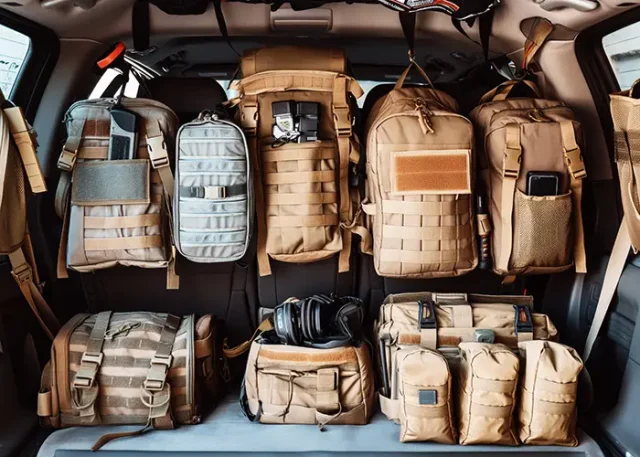
Not all bags are suitable for real-life use. Others disintegrate within a few months. Other ones are expensive to maintain over the years and weigh a ton, or do not have the basic functionality. Most tactical packs are in the middle ground. They also accept punishment silently, yet make it simple and user-friendly to carry every day.
The process of locating an appropriate tactical backpack implies that one has to realize how manufacturers strike a balance between conflicting priorities. The need to be durable requires more weighty materials and reinforced construction. Practicality demands comfortable carrying systems and careful organization. The successful brands figure out how to make both without compelling users to decide between durability and functionality.
Material Choices That Define Longevity
The choice of fabric defines the length of the pack under stress. Cheap nylon tears, bargain zippers fail, and poor-quality stitching unravels at the most opportune time. Quality tactical packs prevent such issues by using superior raw materials.
The reason why military-grade nylon has become the industry standard is its quality. Initially created to be used in the armed forces, it is much more resistant to abrasion compared to traditional fabrics. The military textiles should undergo stringent tests of tear strength, puncture resistance, and environmental degradation as dictated by the specifications upheld by the Defense Logistics Agency. The testing procedure is directly applied to the field performance.
Denier ratings matter too, and thick and tough threads are represented by higher numbers. A 500D is all right for day-to-day commuting. One of the 1000D versions remains intact when dragged over rocks and concrete. The difference will allow buyers to match packs with their actual use cases.
Building Construction Failure Prevention
Materials are only important when they remain intact. The quality of stitching is what makes the difference between a lasting pack and a non-lasting pack. Bar tacks at stress points, sewing two or three rows along seams, and straps and MOLLE attachment points are reinforced.
Particular attention should be paid to zippers. Their failure rate is higher than that of any other part. Quality tactical packs are made with high-quality zippers that have heavy-gauge teeth that are used in a rugged environment. Others also include zipper garages or storm flaps to defend against the intrusion of water and debris.
Hardware tells a story, too. Plastic buckles are cheap, and they break in the cold. Aluminum types are deformed when carrying heavy loads. The ideal packs are made of reinforced polymer or mil-spec hardware that can be stressed without being overweight.
Organization That Makes Sense
It is no use having a pack that is durable and which frustrates day-to-day use. Intelligent design is the distinction between tactical designs and generic tough bags. The design includes features such as natural hand placement, compartments sized for actual gear, and plans that are effective when tested.
MOLLE webbing provides modularity. Pouches are attached by users where they are required. The system is flexible to different missions or requirements. A work pack is totally different from a pack packaged to go hiking.
It is also important in the inner organization. Laptop covers cushion electronics. And small things are rounded up by admins. The compatibility of hydration maintains the availability of water. Such features make a hard shell really useful.
Carry Systems That Reduce Fatigue
A pack that is painful to wear is left behind. Shoulder straps must be well-padded and ergonomically rounded. Hip belts that are used to carry loads help to redistribute the weight to more powerful muscles. Sternum straps ensure that shoulder straps do not slide outwards when moving.
Rear panels are important in terms of comfort and ventilation. Mesh channels allow airflow and foam cushions the spine, but do not collapse when it is put under load. Others have frame sheet supports that spread the weight more equally behind.
Usability is increased with adjustability. Straps in larger frame sizes should also be able to be pulled in by smaller users. The most suitable tactical packs fit very well on all body sizes without affecting the stability or comfort.
Finding the Right Balance
Extreme durability is frequently a sign of superior weight. Ultralight models are compromised on toughness to achieve portability. There is a middle ground between these two extremes that is referred to as the sweet spot. It depends entirely on intended use.
The commuters will require other things compared to the wilderness hikers. Urban carry is focused on organization and low profile. Backcountry use requires water resistance and carrying capacity. Knowledge of personal needs can be used to reduce choices in the shortest time possible.
Tactical backpacks are a success because they do not compromise at the wrong places. The foundation is made of durable materials and solid construction. The pack is comfortable and well-thought-out, which makes it worth carrying daily. The finest designs can provide both without compelling customers to compromise one or the other. It is that balance that makes the difference between the gear that is used and the one that is forgotten in a closet.