
Iceland’s 2026/27 ice cave season has begun, and new photographs reveal what has formed inside the country’s glaciers this winter. Icelandic tour operator Arctic Adventures has documented three natural ice caves across Vatnajökull and Langjökull glaciers: the Blue Ice Cave in Skaftafell, the Crystal Ice Cave near Jökulsárlón Glacier Lagoon, and Neptune Ice Cave in West Iceland. The formations range from narrow turquoise passages to sculpted ceilings and deep-blue chambers.
Few places allow visitors to step directly inside a glacier and see its ice from within. Sunlight filters through frozen walls, revealing shades of blue that change with the thickness and structure of the ice. Every curve, tunnel, and chamber has been shaped by natural forces, creating an experience that may never look exactly the same again.
Unlike ordinary rock caves, natural ice caves are shaped by meltwater, freezing temperatures, and the continuous movement of glaciers. Their size, structure, and appearance can change significantly between winters. A cave photographed this October may look different later in the season or disappear entirely by next winter. New caves can form elsewhere in the same glacier, meaning visitors returning a year later might explore a completely different formation.
For Arctic Adventures’ glacier guides, the changing landscape means assessing existing caves and identifying suitable formations each season. The caves are natural environments, and access depends on current conditions.
The newly photographed formations give travelers a look at what Iceland’s glaciers have shaped for the 2026/27 winter season.
Blue Ice Cave, Skaftafell: A Journey Through Falljökull Glacier
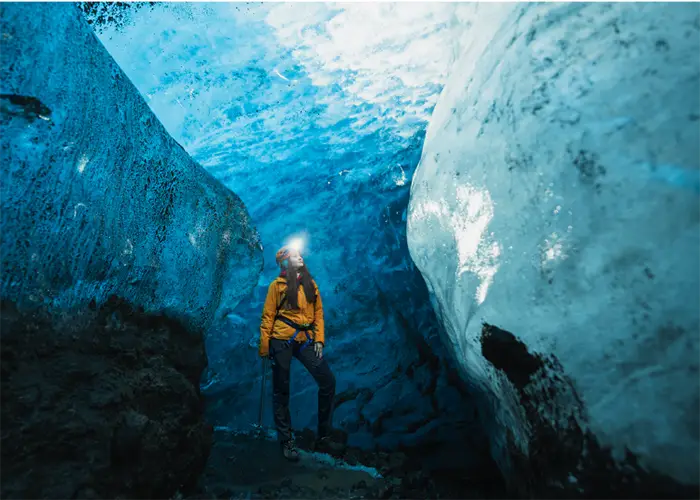
In Skaftafell, Southeast Iceland, the Blue Ice Cave reveals narrow passages surrounded by intensely blue glacier ice. This season’s photographs capture smooth turquoise walls, curved ice formations, and darker layers of volcanic material embedded within the glacier.
Natural light passing through the ice highlights its different shades, from pale blue to deep turquoise. Some passages are narrow enough for visitors to stand between towering ice walls, creating a close-up view of the glacier’s structure.
The cave is located on Falljökull, an outlet glacier of Vatnajökull, Europe’s largest glacier. Visitors reach the formation during a guided glacier hike, crossing icy terrain and passing natural features such as crevasses and ice formations along the way.
The Skaftafell Blue Ice Cave & Glacier Hike Tour lasts approximately 4 hours and welcomes travelers aged 8 and older. Glacier safety equipment is included, and the experience is designed for visitors in fair physical condition. Tours depart from Skaftafell between October and April, depending on conditions.
Crystal Ice Cave: Unusual Formations Near Jökulsárlón Glacier Lagoon
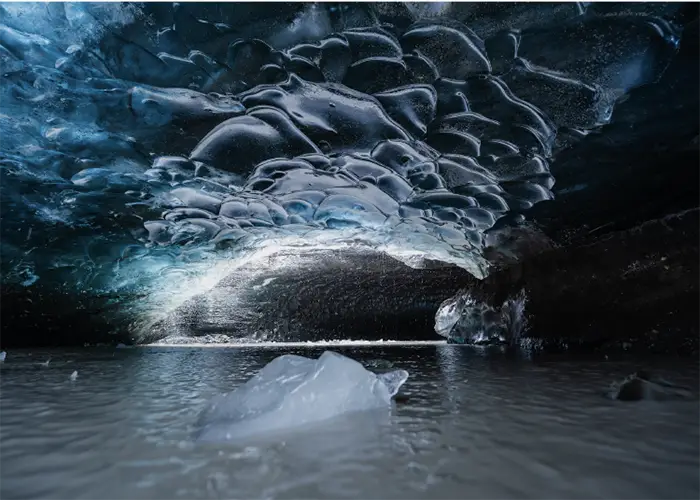
On Breiðamerkurjökull, another outlet of Vatnajökull, this season’s Crystal Ice Cave reveals a different landscape beneath the glacier.
Recent photographs show deep-blue ice ceilings covered in overlapping, rounded formations, resembling layers of scales. Natural arches frame the cave’s openings, while sections of translucent ice allow daylight to illuminate the interior.
The photographs also capture cloudy glacial meltwater beneath the ice formations, showing the presence of water within the changing glacier environment.
The experience begins at Jökulsárlón Glacier Lagoon, one of Southeast Iceland’s most recognizable natural attractions, located just across the road from the famous Diamond Beach. Here, large icebergs break away from the Breiðamerkurjökull glacier and drift across the lagoon before reaching the Atlantic Ocean. The surrounding glaciers, floating icebergs, and nearby black sand beach make this area particularly memorable.
Travelers meet their guide at Jökulsárlón before heading toward the Breiðamerkurjökull glacier in a modified Super Jeep. The Crystal Ice Cave Tour with Super Jeep Ride takes approximately 2 to 3 hours, ages 6+. It includes a certified glacier guide and transportation between the meeting point and the glacier, and essential safety equipment. Tours have operated since October and will continue until mid-April, weather permitting.
Neptune Ice Cave: Turquoise Passages Beneath Langjökull Glacier
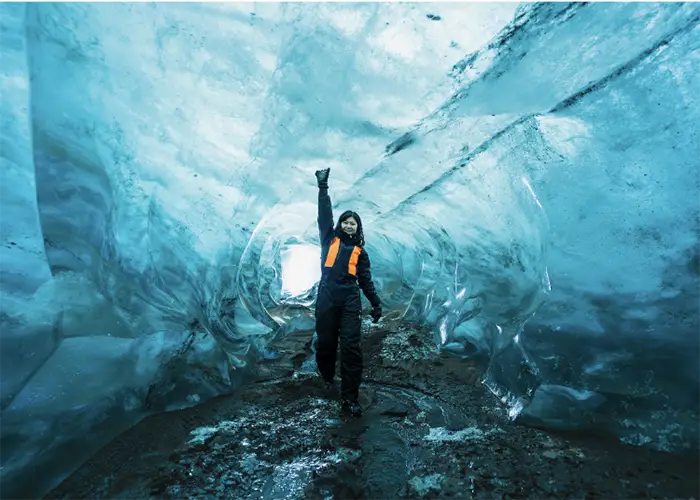
In West Iceland, Neptune Ice Cave reveals a long passage of bright turquoise ice beneath Langjökull, Iceland’s second-largest glacier.
This season’s Neptune Ice Cave was identified in October 2026, in a slightly different location on the Langjökull glacier from last year’s formation. New photographs reveal long, curved corridors with smooth, nearly transparent ice walls and darker sediment layers beneath the surface.
Some sections appear almost glass-like, with daylight illuminating the surrounding ice and creating different shades of blue throughout the passage.
Unlike the two Vatnajökull experiences, the journey to Neptune combines natural ice cave exploration with a guided snowmobile ride across Langjökull glacier.
The Snowmobile & Neptune Ice Cave Tour welcomes travelers aged 8 and older. Departures are available from Reykjavík and Geysir Center on the Golden Circle, and the total experience takes about 4 to 12 hours, depending on the departure point, itinerary, and glacier conditions. Necessary snowmobiling equipment is included. This year, the tour will operate from November through late April or early May, depending on glacier conditions.
No Two Ice Cave Seasons Are the Same
Natural ice caves form as meltwater flows through glaciers, carving tunnels and chambers beneath the surface. As temperatures drop, some of these passages become accessible during winter. However, glaciers are constantly moving. The formations visitors see one season may change shape, disappear, or develop into entirely new passages the following year.
The three caves photographed this season demonstrate how different these natural formations can be, even within the same country. However, photographs capture the caves at a particular moment, and visitors should expect natural differences in lighting, ice formations, and conditions throughout the season.
Glacier conditions also determine which caves can be visited. Arctic Adventures’ qualified glacier guides assess conditions and select accessible routes based on the weather, glacier movement, and other safety considerations.
For travelers planning a winter trip to Iceland, the 2026/27 season provides several ways to experience these formations, from guided glacier hikes to Super Jeep journeys and snowmobile adventures.