
Some hotels provide a comfortable place to sleep. Others become part of the reason for traveling.
Across forests, mountains, lakefronts, and remote coastlines, a growing collection of design-led hotels is changing how travelers experience the natural world. Instead of competing with their surroundings, these properties draw inspiration from local landscapes, architectural traditions, and regional materials.
From a monastery-inspired retreat hidden in Umbria to private bungalows facing Mexico’s Pacific coast, these nine distinctive hotels offer a compelling balance of nature, culture, and thoughtful design.
Eremito: Monastic Stillness in Umbria, Italy
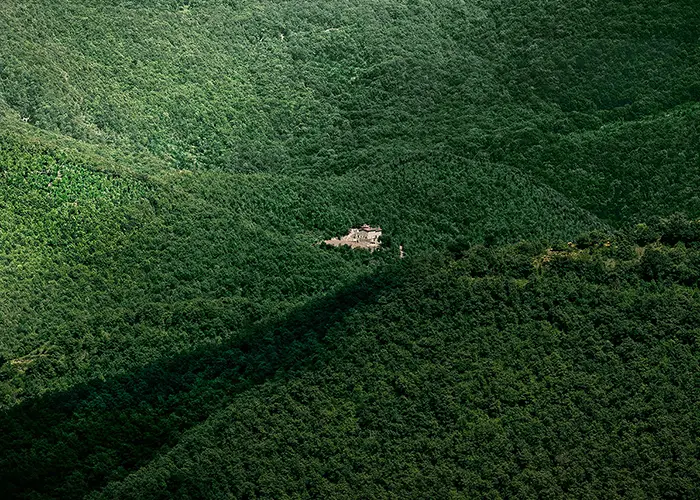
Hidden within a protected natural reserve near Parrano, Eremito is designed for travelers who want to temporarily step away from the noise of modern life.
The hotel takes its inspiration from traditional monasteries. Its 17 simple rooms, known as celluzze, feature restrained interiors, contemplation niches, and an intentional absence of televisions and other distractions. Communal spaces encourage reading, reflection, and quiet conversation, while organic meals draw on Mediterranean monastic cooking traditions.
Eremito is less a conventional resort than a restorative retreat. Forest walks, yoga, meditation, and silent dinners allow guests to experience rural Umbria at an unhurried pace.
The ArcadiaPlace: Lakeside Design and Mosuo Heritage in China
Set deep in the Hengduan Mountains of Sichuan, The ArcadiaPlace, Lugu Lake looks across one of southwestern China’s most striking alpine landscapes.
The hotel stands near two historic Mosuo villages, giving travelers an opportunity to learn about the region’s distinctive matrilineal culture and long-established traditions. The surrounding scenery is equally important: Lugu Lake, Gemu Goddess Mountain, and Houlong Mountain define the view from morning until night.
Inside, shades of blue, soft textures, and understated furnishings echo the colors and movement of the lake. It is a destination for travelers interested in remote landscapes, living cultural traditions, and architecture that responds sensitively to its setting.
Hotel Escondido: Barefoot Luxury on Mexico’s Pacific Coast
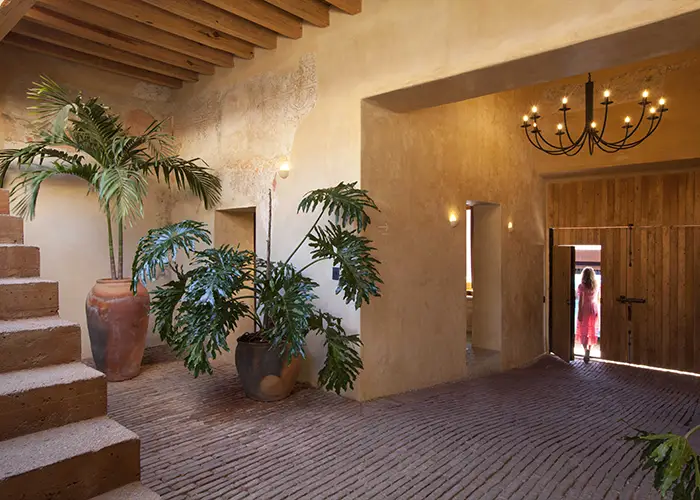
On a secluded stretch of Oaxaca’s shoreline, Hotel Escondido embraces a relaxed, low-key approach to beachfront luxury.
Individual palapa-roofed bungalows face the Pacific, each with a private terrace, hammock, and plunge pool. Natural materials, open-air spaces, and weathered finishes create a strong connection between the hotel and the surrounding coastal environment.
Days can revolve around swimming, surfing, spa treatments, or simply watching the ocean from a private bungalow. The property is part of a broader design movement that has turned the region into one of Mexico’s most interesting hotel destinations. DRIFT’s guide to Puerto Escondido’s boutique luxury scene offers more ideas for exploring the coast.
Elizabeth Country House: A Rural Escape Near Bologna
Elizabeth Country House brings contemporary hospitality to a stately family residence in Minerbio, outside Bologna.
The property sits amid the farmland and medieval villages of Emilia-Romagna, one of Italy’s great culinary regions. Its refined interiors retain the atmosphere of a private country home, while gardens, an outdoor pool, massages, yoga, meditation classes, and wellness facilities invite guests to slow down.
The location also makes it possible to combine a quiet rural stay with day trips to Bologna and other historic communities across the region. For food-focused travelers, the surrounding countryside offers another reason to linger, with handmade pasta, cured meats, cheeses, and regional wines all playing an important role in the experience.
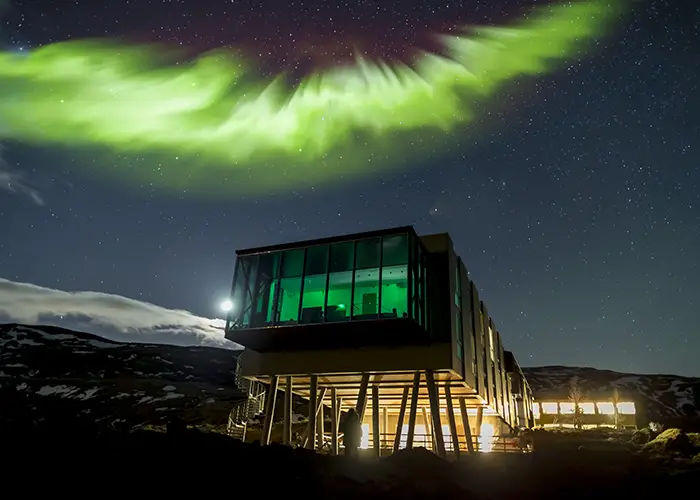
ION Adventure Hotel: Fire, Ice, and Icelandic Wilderness
Surrounded by lava fields and mountainous terrain near Selfoss, ION Adventure Hotel provides a dramatically positioned base for exploring southern Iceland.
Its contemporary architecture sits in deliberate contrast to the rugged landscape. Large windows frame the countryside, while the hotel’s Lava Spa and outdoor pool allow guests to unwind while looking across seemingly endless expanses of rock and sky.
Depending on the season, excursions can include hiking, horseback riding, caving, snorkeling, snowmobiling, and visits to geothermal areas. Dark skies may also bring opportunities to see the northern lights. Travelers interested in the forces that continue to shape the country can read more about Iceland’s volcanic landscapes and responsible viewing experiences.
Schgaguler Hotel: Minimalist Design in the Dolomites
In the South Tyrolean village of Castelrotto, Schgaguler Hotel offers a minimalist interpretation of the traditional Alpine retreat.
The hotel’s clean lines and pale materials draw attention toward the surrounding Dolomites, particularly the nearby Sciliar massif. Its position near Alpe di Siusi provides access to hiking, cycling, skiing, botanical walks, and other year-round mountain activities.
After a day outdoors, guests can return for spa treatments, swimming, and seasonal dining. The property works particularly well for travelers who appreciate mountain scenery but prefer uncluttered contemporary interiors to conventional chalet style.
The region’s hotel scene continues to evolve, as explored in DRIFT’s look at new luxury hotels in the Dolomites and Northern Italy.
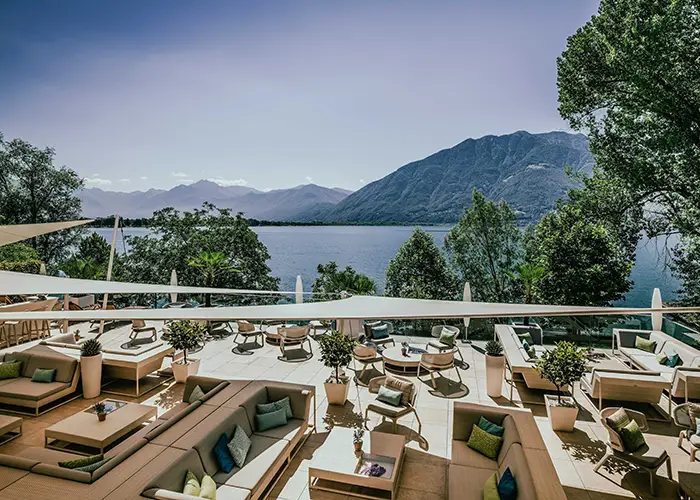
Giardino Lago: Mediterranean Style on Lake Maggiore
Although it is located in Switzerland, Giardino Lago captures much of the warmth and color associated with the Mediterranean.
The boutique hotel occupies a historic palazzo in Minusio-Locarno, directly beside Lake Maggiore. With only 14 rooms and one suite, it provides a more intimate alternative to the region’s larger lakeside resorts.
Contemporary interiors keep the mood relaxed, but the lake remains the principal attraction. Guests can dine overlooking the water, enjoy cocktails on the roof terrace, cycle along the shoreline, or explore Locarno and the surrounding Ticino region. It is especially appealing during the warmer months, when the lake and nearby gardens become central to daily life.
Altis Belém Hotel & Spa: Waterfront Lisbon
Positioned beside the Tagus River, Altis Belém Hotel & Spa combines contemporary design with one of Lisbon’s most historically significant neighborhoods.
Belém is home to major monuments and cultural institutions, including the Jerónimos Monastery, Belém Tower, and several prominent museums. The hotel’s waterfront location gives guests easy access to these landmarks while providing a calmer atmosphere than accommodations in Lisbon’s busiest central districts.
The 50-room property includes indoor and outdoor pools, a spa, river-facing spaces, and dining shaped by Portugal’s maritime history. Its location is also particularly convenient for museum-focused travelers. DRIFT’s guide to Lisbon’s art exhibitions and museums includes additional cultural stops and identifies Altis Belém as a well-positioned place to stay.
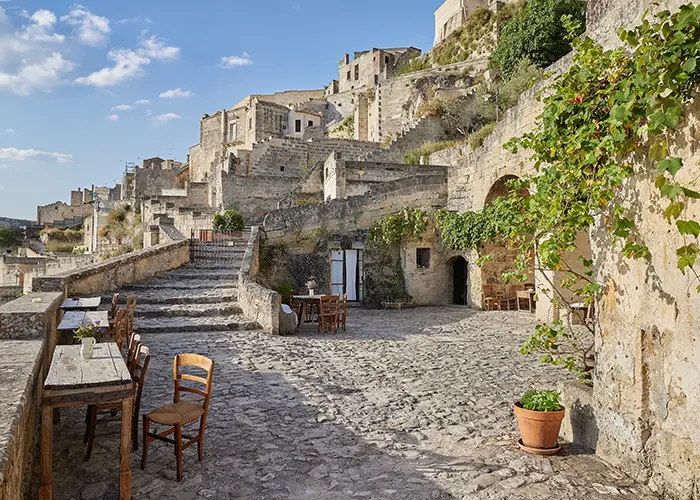
Sextantio Le Grotte della Civita: Sleeping in the Sassi of Matera
Few hotels are as closely connected to their destination as Sextantio Le Grotte della Civita.
Located in the oldest part of Matera’s Sassi district, the property incorporates 18 rooms and an ancient rock-hewn church. The caves and historic structures were restored using traditional materials and techniques, preserving their original character while introducing discreet modern comforts.
Rather than placing conventional hotel rooms inside old caves, the designers allowed rough stone walls, generous spaces, and irregular architectural forms to remain central to the experience. Many rooms overlook Murgia Materana Park and its rock-cut churches.
Staying here offers an unusually immersive way to experience Matera, a city where human settlement, geology, and architecture have been intertwined for thousands of years.
Hotels That Belong to Their Landscapes
What connects these nine hotels is not a single architectural style or definition of luxury. Each property responds differently to its surroundings.
At Eremito, nature encourages silence. At ION Adventure Hotel, it inspires exploration. Hotel Escondido opens toward the Pacific, while Sextantio Le Grotte della Civita reaches deep into Matera’s ancient stone.
Together, they demonstrate how thoughtful hotel design can deepen a traveler’s relationship with a destination. The most memorable stay may not be the one with the most amenities, but the one that helps guests better understand the landscape, culture, and history around them.