
South America’s Most Underrated City Deserves Your Full Attention
There is a city in South America that has quietly become one of the most exciting destinations on the planet. It has more restaurants per capita than New York. It houses the world’s largest Japanese community outside of Japan, fuelling a sushi culture that rivals Tokyo. Its contemporary art scene is globally recognised. Its nightlife runs until dawn. And its food markets are the kind of sensory experience that travel writers struggle to do justice to in words.
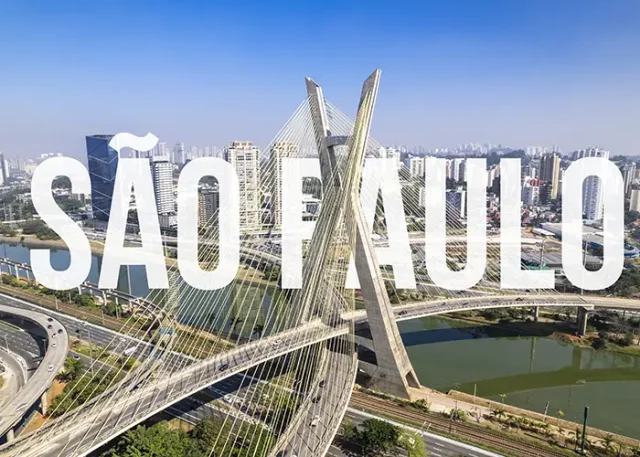
That city is São Paulo, Brazil. And if it isn’t already on your travel list, it should be.
In this guide, we cover everything you need to know to plan a visit to Brazil’s largest city — from touching down at Guarulhos International Airport to the must-see neighbourhoods, dining experiences, and cultural highlights that make São Paulo a genuinely world-class destination.
Arriving in São Paulo: The First Decision That Matters
Your Brazilian adventure begins at Guarulhos International Airport (GRU), the largest airport in Brazil and the main international gateway to the country. Located approximately 25 kilometres from the city centre, GRU is a major hub serving flights from across the Americas, Europe, Asia and beyond.
The first decision every arriving visitor faces is transport. São Paulo is famous for its traffic — during peak hours, what should be a 30-minute drive can easily extend to 90 minutes or more. The options range from public bus (affordable but complex for first-time visitors) to taxi (convenient but with unpredictable meter costs in traffic) and ride-hailing apps (popular but subject to surge pricing and remote pickup zones at the airport).
For most visitors, particularly those arriving after long-haul international flights, the most practical and stress-free option is a pre-booked Guarulhos Airport private transfer. Fixed price confirmed at the time of booking. A driver waiting in the arrivals hall with a personalised name board. Flight tracking in real time, so even a delayed arrival is handled seamlessly.
The peace of mind this provides after twelve or more hours in transit is, quite simply, worth every dollar.
📋 Booking tip: Reserve your airport transfer at least 24 hours before arrival. During Brazilian public holidays and peak travel seasons, availability is limited. Visit gruairporttransfer.com to check pricing and book in advance.
Exploring São Paulo: A City of Neighbourhoods
Avenida Paulista — The Pulse of the City
No visit to São Paulo is complete without time on Avenida Paulista, the city’s iconic 2.8-kilometre boulevard that serves as both its financial spine and its cultural showcase. On weekdays, it thrums with the energy of banks, consulting firms and global corporations. On Sundays, the avenue closes to traffic and transforms into a vast outdoor promenade — one of the most democratic, vibrant and photogenic public spaces in Latin America.
The MASP — Museu de Arte de São Paulo — dominates the avenue with its extraordinary suspended red concrete structure, designed by legendary architect Lina Bo Bardi. The museum’s collection spans centuries and continents, and its design alone is worth the visit. Admission is free on Tuesdays.
Vila Madalena — Art, Energy and the Beco do Batman
If Paulista is São Paulo’s power centre, Vila Madalena is its creative soul. This neighbourhood of sloping streets and colourful buildings is home to the Beco do Batman — an extraordinary open-air street art gallery that has been evolving for decades, with new murals constantly appearing over old ones. It’s Instagram gold, but more than that, it’s a genuine expression of the city’s creative vitality.
Beyond the Beco, Vila Madalena is packed with independent bars, restaurants and coffee shops that attract São Paulo’s creative class. An afternoon and evening here gives you a feel for the city that no amount of guidebook reading can replicate.
Pinheiros — São Paulo’s Culinary Epicentre
Pinheiros, adjacent to Vila Madalena, has emerged as the city’s most exciting dining neighbourhood. Chef-driven restaurants, natural wine bars, craft cocktail lounges and innovative street food vendors compete for attention along streets lined with towering ficus trees. If you’re serious about food — and in São Paulo, you should be — plan to spend at least one evening here.
Liberdade — A Window into Japanese-Brazilian Culture
São Paulo’s Liberdade district is home to the largest Japanese community outside Japan, a legacy of the waves of immigration that shaped the city throughout the 20th century. The neighbourhood’s Japanese-Brazilian food scene is extraordinary — from intimate omakase restaurants to ramen joints that would hold their own in Osaka. The Sunday Feira da Liberdade market is a riot of colour, flavour and cultural fusion that shouldn’t be missed.
The Mercadão: São Paulo’s Cathedral of Food
The Mercado Municipal de São Paulo — universally known as the Mercadão — is one of the great food markets of the world. Built in 1933, the vast covered market in the city centre houses hundreds of vendors selling everything from açaí and passion fruit to artisanal cheeses, imported delicacies and fresh seafood.
The famous mortadella sandwich — a generously filled creation eaten at the market’s upstairs counter — has become something of a São Paulo institution. Simple, abundant, and deeply satisfying, it’s the kind of food experience that defines a city.
🕘 Market tip: Visit the Mercadão on a weekday morning to avoid the largest crowds. Arrive hungry and plan to spend at least two hours exploring.
Parque Ibirapuera: Green Space at Urban Scale
São Paulo is not what most people picture when they think of parks and green spaces. But Parque Ibirapuera, the city’s great urban park, challenges that assumption entirely. At over 1.5 million square metres, it’s an extraordinary oasis in one of the world’s densest cities.
Within the park you’ll find the Museu de Arte Moderna (MAM), the Pavilhão da Bienal, the Afro-Brazilian Museum, a Japanese pavilion, and the Museu de Arte Contemporânea (MAC). The landscape was designed by Roberto Burle Marx, whose work UNESCO recently recognised as a World Heritage landscape. On Sunday mornings, when the surrounding roads close to traffic, the park becomes the communal living room of the city.
Day Trips from São Paulo
São Paulo’s location makes it an excellent base for exploring the surrounding region. The Atlantic coast — with beach towns like Ubatuba, Ilhabela and Guarujá — is accessible within two to three hours. The historic colonial towns of the Circuito das Águas to the northeast offer thermal spas and nineteenth-century architecture. And Santos, the historic port city where Brazil’s coffee economy was built, is a fascinating half-day excursion.
Practical Guide: Planning Your São Paulo Visit
Getting there: Guarulhos International Airport (GRU) serves direct routes from major cities across North America, Europe and beyond. Book your Guarulhos Airport private transfer in advance to ensure a smooth arrival.
Getting around the city: São Paulo’s metro system is clean, efficient and covers the main tourist areas. Ride-hailing apps are widely used for shorter journeys. Taxis are available but always opt for credentialed vehicles.
Where to stay: Jardins, Pinheiros and Consolação are the most convenient base areas for visitors. For business travel, Faria Lima and Itaim Bibi offer proximity to São Paulo’s financial district.
Language: Portuguese. Apps like Duolingo can give you a useful foundation. Most hotels and many restaurants in tourist areas have English-speaking staff.
Safety: São Paulo is a large city with varying levels of security across different areas. Stay in well-known neighbourhoods, use vetted transport services, and apply the same common sense you would in any major global city.
Best time to visit: June to September offers the most stable weather and lowest rainfall. The city’s cultural calendar is year-round, but the June festival season is particularly vibrant.
Final Word: São Paulo Rewards the Prepared Traveller
São Paulo is not a city that gives itself up easily to the unprepared visitor. It’s large, complex and — on first impression — can feel overwhelming. But the travellers who come with a plan, who choose their neighbourhoods thoughtfully, book their Guarulhos Airport private transfer in advance, and give the city the time it deserves — those travellers consistently leave transformed.
This is one of the great cities of the world. It simply hasn’t been recognised as such by the international travel media to the degree it deserves. That, for the discerning traveller, is an opportunity.