

Sustainable travel is becoming an increasingly important part of vacation planning. Booking.com’s 2026 Travel & Sustainability Report found that 85 percent of surveyed travelers consider more sustainable travel important or very important.
Türkiye is responding to this shift with a national tourism framework alongside a growing collection of lower-impact travel experiences. Visitors can cycle between ancient cities, hike coastal trails, stay in rural villages, support traditional craftspeople and discover regional food and wine close to where it is produced.
The country’s Environmental and Cultural Sustainability Program was developed by Türkiye’s Ministry of Culture and Tourism and the Türkiye Tourism Promotion and Development Agency in cooperation with the Global Sustainable Tourism Council.
Under the program, accommodation providers are audited by GSTC-accredited certification bodies. Türkiye surpassed 2,000 GSTC-certified hotels in 2025 and is working toward having accommodations throughout the country complete the certification process by 2030.
Certification alone does not make a trip sustainable, however. Transportation choices, length of stay, wildlife behavior and where travelers spend their money all matter. The following experiences can help visitors build a more responsible and locally connected journey.
1. Explore Türkiye by Bicycle
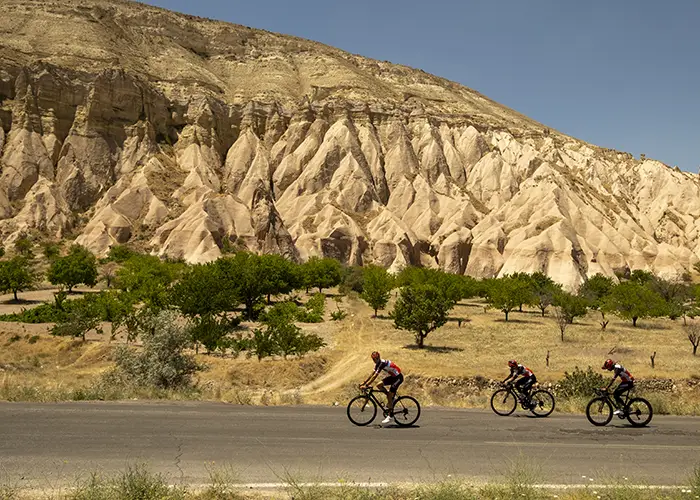
Cycling makes it possible to experience landscapes that are easily missed when traveling by car or plane. Türkiye has routes for recreational riders, mountain bikers and long-distance cyclists, passing through coastal communities, forests, agricultural regions and archaeological sites.
One of the country’s most significant cycling itineraries is the Turkish extension of EuroVelo 8, the Mediterranean Route. The approximately 500-kilometer section travels through İzmir Province, connecting Pergamon in the north with Ephesus in the south.
The route crosses 17 districts and incorporates ancient settlements, Aegean coastal scenery, vineyards, olive-growing areas and small communities. Cyclists can complete an extended journey or select shorter sections around destinations such as Çeşme, Urla, Seferihisar and Selçuk.
Other cycling possibilities include routes through the valleys of Cappadocia, forest and coastal roads near Antalya, and rides along both the European and Asian sides of İstanbul.
Türkiye also has a network of bicycle-friendly accommodations. Depending on the property, services may include secure bicycle storage, repair equipment, laundry facilities, route information and meals designed for active travelers.
Those planning a cycling vacation can find additional inspiration in DRIFT’s guide to Türkiye’s long-distance cycling routes.
2. Follow Historic Walking Trails
Traveling on foot encourages visitors to slow down, spend more time in small communities and develop a better understanding of the landscapes between major attractions.
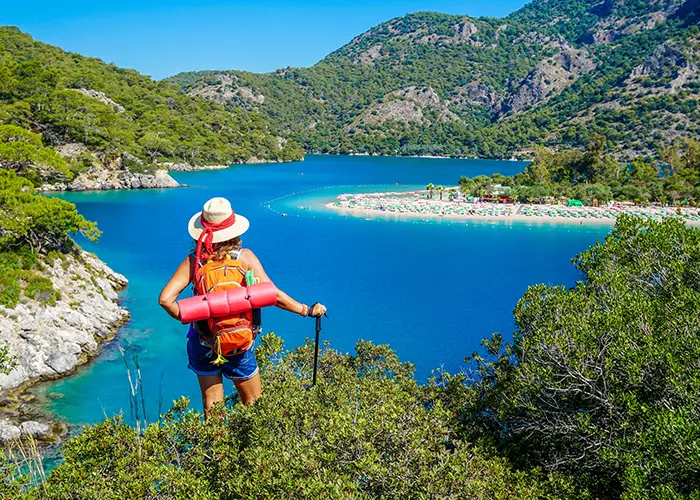
The Lycian Way is Türkiye’s best-known long-distance hiking route. Following the Mediterranean coast between Fethiye and the Antalya region, the trail combines mountain paths, forests, secluded bays, traditional villages and the remains of ancient Lycian communities.
The full route has expanded since it was first established, and current estimates place it at approximately 760 kilometers. Completing the entire trail can take more than a month, but shorter sections allow travelers to experience highlights without committing to a full thru-hike.
Popular areas include the paths around Ölüdeniz, Kabak, Kaş, Kalkan, Patara, Çıralı and Mount Olympos. Accommodation ranges from small pensions and village guesthouses to campsites and boutique hotels, helping direct visitor spending into communities along the route.
In İzmir Province, Efeler Yolu follows historic paths through mountain passes, plateaus and traditional villages. The cultural route was included among Green Destinations’ Top 100 Stories in 2023 for its approach to responsible tourism and rural development.
Mount Uludağ near Bursa provides another alternative. Best known as a winter destination, the national park also contains forests, mountain meadows and hiking routes that can be explored during the warmer months.
Hikers should stay on marked trails, carry out all waste and avoid lighting fires outside designated areas. Hiring a local guide can provide cultural and historical context while directly supporting the regional tourism economy.
3. Observe Wildlife Responsibly
Türkiye lies at the meeting point of several ecosystems and major bird-migration corridors. Its wetlands, mountains, forests and coastlines support a remarkable variety of plant and animal life.
Birdwatching opportunities can be found around Lake Manyas, the Kızılırmak Delta, Sultan Marshes and wetlands near İzmir. During migration periods, visitors may see raptors, storks, pelicans, flamingos and numerous smaller species.
In Cappadocia, horses can sometimes be observed roaming through the region’s valleys and open landscapes. Travelers should maintain a respectful distance and avoid feeding or approaching free-roaming animals.
Along the Mediterranean and Aegean coasts, loggerhead sea turtles, known locally as Caretta caretta, nest on beaches including İztuzu and Patara. Conservation measures may restrict access to nesting areas or prohibit nighttime beach use during the breeding season.
Visitors can help by following posted regulations, keeping beaches free of litter, avoiding bright lights after dark and never touching turtles, hatchlings, nests or protective markers. Wildlife encounters should always take place at a distance and without altering an animal’s natural behavior.
When booking wildlife activities, choose guides and operators that prioritize observation rather than guaranteed close encounters. Avoid attractions that allow touching, feeding or posing with wild animals.
4. Spend Time in Heritage Communities
Responsible cultural travel is about more than visiting monuments. It also means supporting the people who preserve local architecture, food traditions, farming practices and craftsmanship.
In the Taurus Mountains of Antalya Province, Ormana was recognized as one of UN Tourism’s Best Tourism Villages in 2024. The village is known for its distinctive “button houses,” constructed with stone and timber using traditional building techniques.
Staying in a locally operated guesthouse, hiring a community guide or purchasing crafts directly from their makers helps keep more tourism revenue within the destination.
Safranbolu provides another example of heritage preservation. The UNESCO World Heritage-listed city developed as an important caravan-trading center and retains an extensive collection of Ottoman houses, streets, baths and religious buildings.
Travelers can also seek out Türkiye’s Cittaslow communities and other villages recognized by UN Tourism. These destinations encourage a slower approach centered on local food, cultural traditions and the character of individual communities.
Traditional crafts offer another way to connect with regional heritage. İznik is celebrated for its ceramics and tiles, while other regions specialize in weaving, woodwork, copperware, felt making and decorative arts. Look for workshops where visitors can meet artisans, learn about the production process and purchase work directly from its creator.
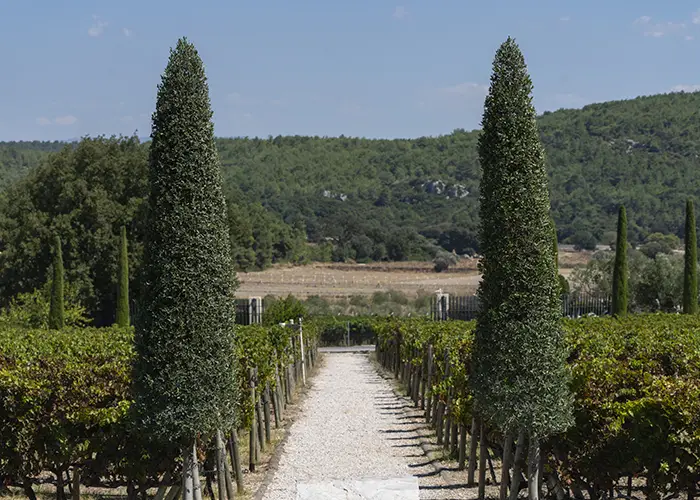
5. Taste Regional Food and Indigenous Wines
Choosing locally grown food can support farmers, preserve regional culinary traditions and reduce the distance ingredients travel before reaching the plate.
Local markets are found throughout Türkiye, offering seasonal produce, cheeses, olives, bread, herbs, honey, nuts and other regional specialties. Shopping at these markets or dining at independently operated restaurants creates opportunities to support local producers.
The country’s cuisine changes significantly from one region to another. Travelers might encounter olive-oil-based dishes along the Aegean coast, seafood near the Mediterranean, pistachios and kebabs in Gaziantep, distinctive cheeses in Kars or vegetable- and herb-focused cooking around İzmir.
Türkiye also has a long history of viticulture. The country contains hundreds of genetically distinct indigenous grape varieties, although only a portion are used commercially.
The Urla Vineyard Route near İzmir introduces visitors to Aegean wineries, olive groves and farm-to-table restaurants. In Cappadocia, volcanic soils and high-altitude vineyards are associated with Emir, a local white grape generally used to produce fresh, mineral-driven wines.
Other important varieties include Narince from the Tokat region, Kalecik Karası from Central Anatolia, and the red grapes Öküzgözü and Boğazkere from eastern Türkiye.
When visiting wineries, choose small-group tastings, combine several stops into one route and consider hiring a local driver or guide. Purchasing directly from vineyards and food producers can help sustain agricultural traditions while giving travelers a clearer understanding of the region.
How to Make a Türkiye Trip More Sustainable
No vacation is entirely without impact, but a few practical decisions can make a meaningful difference:
- Stay longer in fewer destinations instead of taking several short domestic flights.
- Use trains, buses, ferries, bicycles and walking routes where practical.
- Look for accommodations certified by a GSTC-accredited body.
- Carry a reusable water bottle and shopping bag.
- Respect trail closures, protected areas and wildlife regulations.
- Choose locally owned restaurants, guides, guesthouses and workshops.
- Visit popular destinations outside peak hours or travel during the shoulder seasons.
- Ask permission before photographing residents, artisans or private homes.
Türkiye’s size and diversity make it tempting to rush from one famous attraction to another. Slowing down often creates a more rewarding experience. A village meal, a day on a bicycle or a conversation with an artisan can reveal as much about the country as its best-known monuments.
For more planning ideas, visit the sustainable travel section of GoTürkiye.