We had spent nearly six weeks trekking through Patagonia on both the Chilean and Argentinian sides. In Argentina, our journey began at the bottom of the world, diving among Tierra del Fuego’s towering kelp forests where sea lions darted like torpedoes through the fronds and sei whales trailed our sailing vessel on all sides.
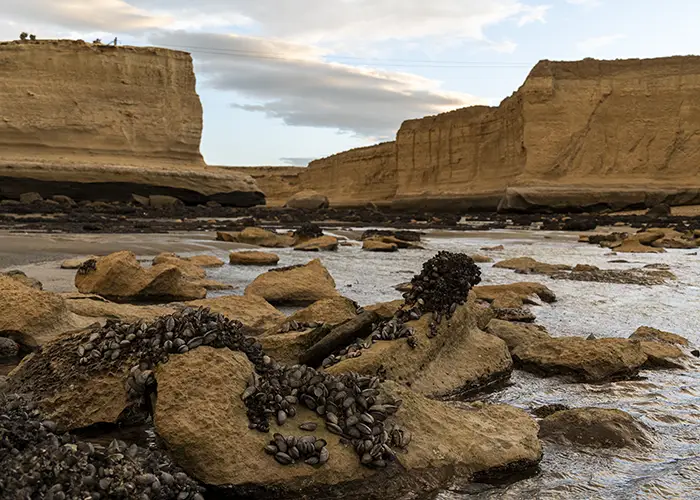
We trekked north on the Atlantic coast, tracing the raw edge of Santa Cruz province, known for its windswept beaches and cliffs scoured by salt. We encountered pockets of wildlife, so rarely visited, it felt like we had stumbled into secret worlds. Eventually, we made our way inland to Buenos Aires before flying west, crossing the Andes to Punta Arenas on the Chilean side.
By the time we arrived, the steppe felt eerily familiar—the ochre plains and jagged ridgelines that define so much of southern Chile and Argentina. Guanacos grazed in the distance while rheas vanished into the grass, and condors traced above us inspiring us to look up, always and often. We even had the occasional glimpse of a puma, a formerly rare sighting now less so thanks to conservation efforts. Patagonia had sharpened our senses to a world most only can witness in fleeting fragments.
Our aim was to follow the Route of Parks, a well-known conservation corridor spanning more than 2,800 kilometers and linking 17 national parks into one of the most ambitious rewilding projects in South America. We were making a south-to-north pilgrimage through some of the wildest places left on the continent in collaboration with Rewilding Chile, the NGO that had a heavy hand in building the corridor.
Our trek began at the southernmost tip of the continental Americas, Cape Froward, where two oceans collide in a swirl of currents and storms. Slated to become Chile’s 47th national park, we were among the few foreigners to see it still in its unmarked state.
The journey carried us north to Torres del Paine, where we made it to the famed summit, and then we detoured to a nearby stay called Estancia Cerro Guido. Once a sprawling cattle ranch, the estancia is now a conservation stronghold, where gaucho traditions and forward-thinking ecological research coexist on the same harsh steppe. Here, puma conservation is unfolding alongside the daily rhythms of ranching life, offering a textured understanding of Patagonia that’s hard to come by.
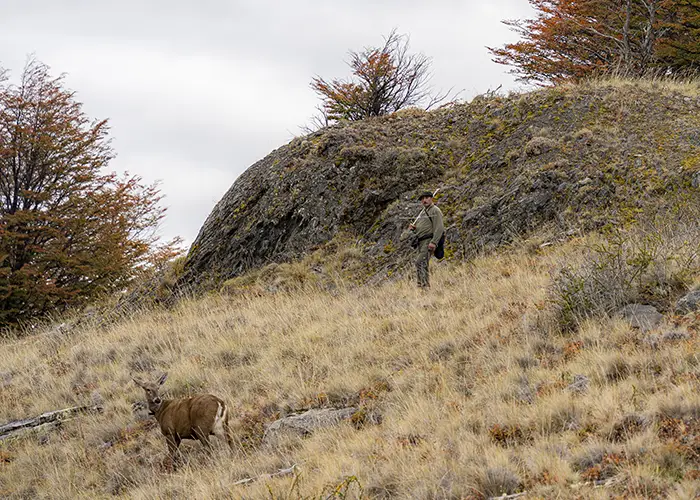
From there, we made our way to Patagonia National Park, where the steppe continued, and glacier-fed rivers stretched between jagged peaks. We witnessed the fragile comeback of the huemul deer, a national emblem, and arrived just in time to join Rewilding Chile’s release of wild rheas. These flightless birds that resemble small ostriches are finally returning to a landscape they had nearly vanished from thanks to these painstakingly challenging rewilding efforts.
A short drive later, we reached the San Rafael Glacier, where turquoise waters glittered with drifting icebergs, and rainbows arced overhead as if guiding us into the lagoon. We peacefully watched elephant seals lazing on the shores by boat, and suddenly, without warning, a thunderous crack split the silence. A slab of ice collapsed into the water sending shockwaves that rocked our small boat. We could feel the pangs of a change all around us here.
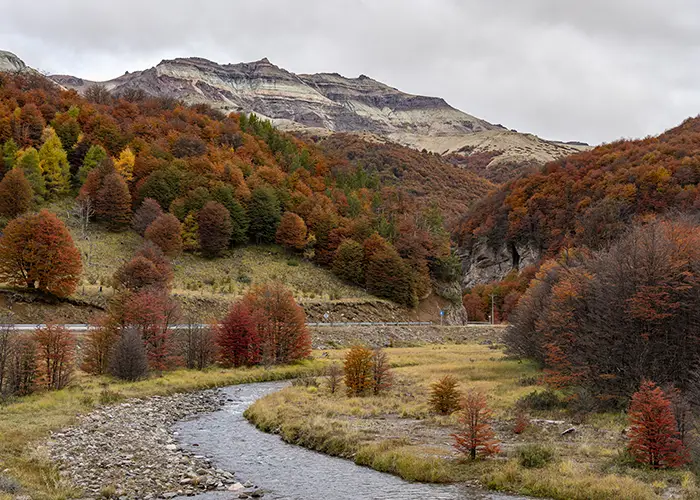
Next, we hit a cathedral of jagged granite spires rising above lenga forests lit in the fiery palette of autumn—orange, red, and yellow cascading down the slopes of Cerro Castillo National Park. Here, huemuls still cling to survival, thanks in part to Rewilding Chile’s newest rehabilitation center dedicated to giving the species a fighting chance.
When we arrived in Puerto Varas, also known as the unofficial gateway to the Pacific Ring of Fire, we were surrounded by snowcapped volcanoes and deep-blue lakes. This place was also home to Rewilding Chile’s headquarters where the next generation of conservation leaders are carrying forward Doug and Kris Tompkins’ legacy—the visionaries behind the route we had just experienced. Our last stop was Pumalín National Park, most accessible by Puerto Varas.
Originally not even on our itinerary, this place had become one of the most talked about destinations of them all. Rangers in the south to families operating roadside cafés to most people met on the conservation trail we were exploring had the same thing to say: “If you really want to understand the breath of Chilean Patagonia, you must see Pumalín.”
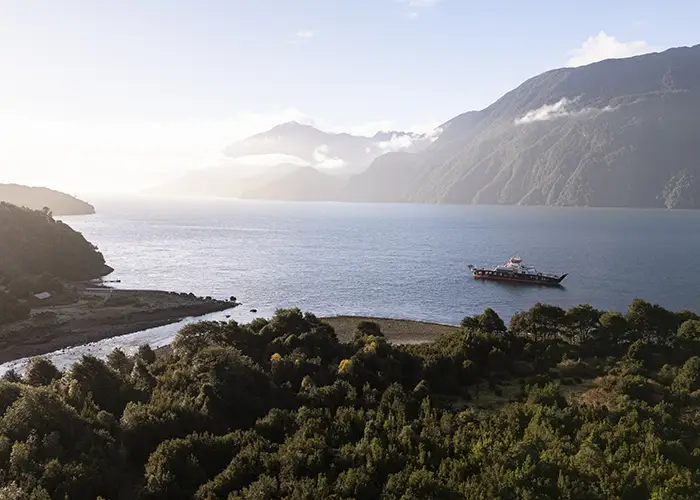
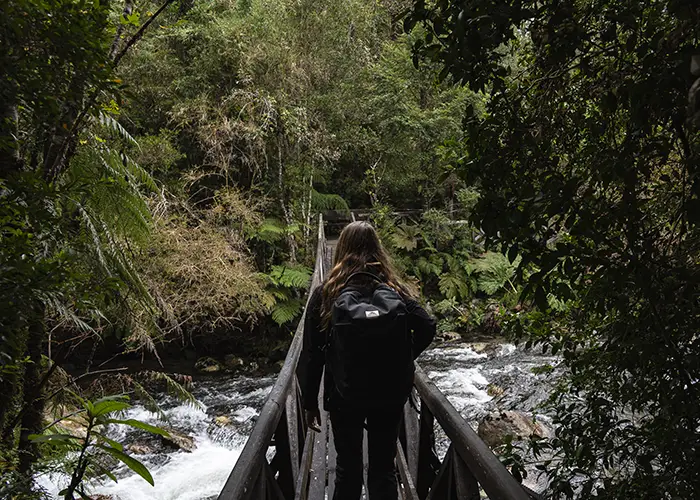
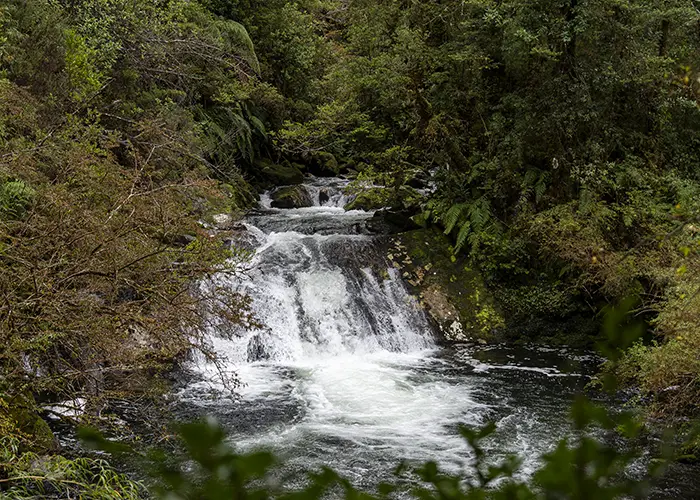
After weeks of vast and dry steppe that was turning into a harsher landscape as winter crept nearer, Pumalín felt like another world entirely. Yes, this was still Patagonia, but not the version in most minds. Here, the land is carved by fjords, cloaked in temperate rainforest, alive with waterfalls, rivers, and ancient trees. The threatened alerce trees on the “Los Alerces Trail” are towering giants, some more than a thousand years old, rising like sentinels over trails thick with moss and dripping with water.
According to the Rewilding Chile team, 25% of Chile’s alerce are left and can be found here. In the forest, impressive ferns reached shoulder height. Lichens draped from branches like tattered flags. The air itself felt heavy, as if the forest was forever exhaling. Above them, Michinmahuida and Chaitén Volcanoes could be seen through the mist, with waterfalls dropping in every direction.
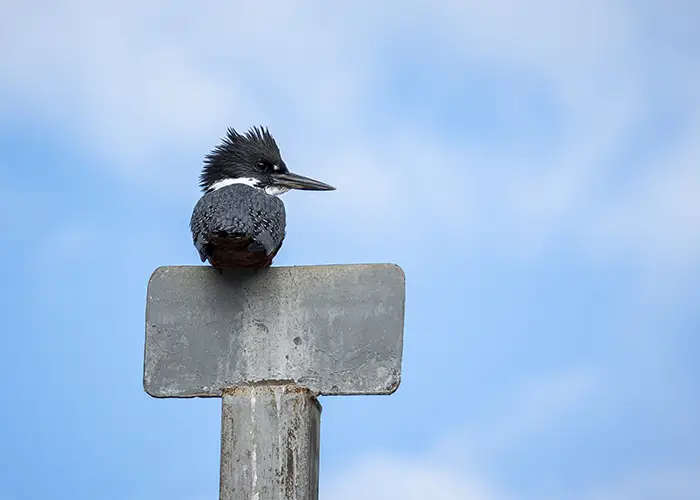
Gone were the guanacos, rheas, and pumas of the steppe. Here, in the Reñihué and Comau Fjords, Commerson’s dolphins rode our wake, and penguins patrolled the rocky shores. Massive kingfisher birds flashed across the dark water, posing for us longer than we anticipated. Within minutes of arriving, we were soaked, dodging downpours that seemed less like interruptions and more like the forest announcing its presence.
This was the other side Patagonia—994,332 acres of green instead of gold. 235 inches of annual rainfall instead of the former dry. Labyrinthine of green instead of vast expanses. To locals, it was the missing half of the picture to contextualized Patagonia. Pumalín was the place that completed the region’s story. To exclude this temperate rainforest was to misunderstand this place.
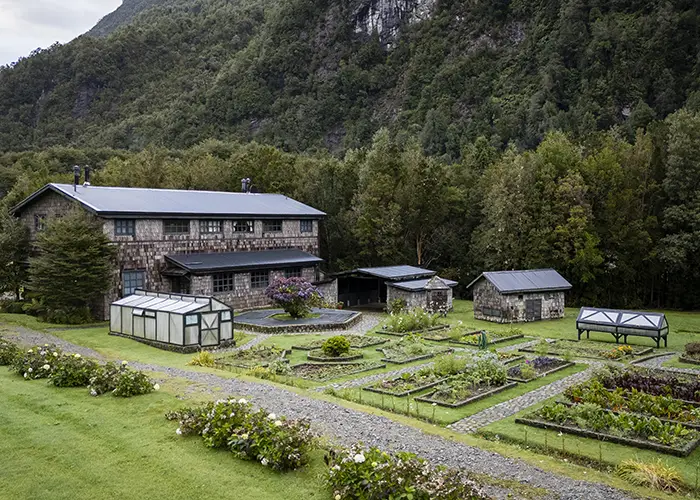
At the center of it all was Caleta Gonzalo Lodge, tucked along the fjord like something out of a dream. The lodge itself is unlike anywhere else in Patagonia. It’s not grandiose or ostentatious, but thoughtful and personal, designed by Doug and Kris Tompkins as the literal and symbolic gateway into the park. The wood-beamed cabins, the garden-fed kitchen, the trails spilling out from its doorstep all spoke to the conservation philosophy that this family embodied, and the work of Rewilding Chile total picture.
That’s where we met Nalani “Nala” Ivelic, a Chilean biologist, scientific diver, and the lodge’s steward in many ways. She oversees most around here, but her perspective stretches far beyond Pumalín. For Nala, this place is her living laboratory, and a rare chance to show that Patagonia is so much more than what meets the eye. As Nala took us on her beloved trails, she talked to us about this cooler jungle, stating “this is a place where everywhere you look, there’s life. And hardly any research has been done right here on our doorstep.” She was constantly urging us to look closer here.
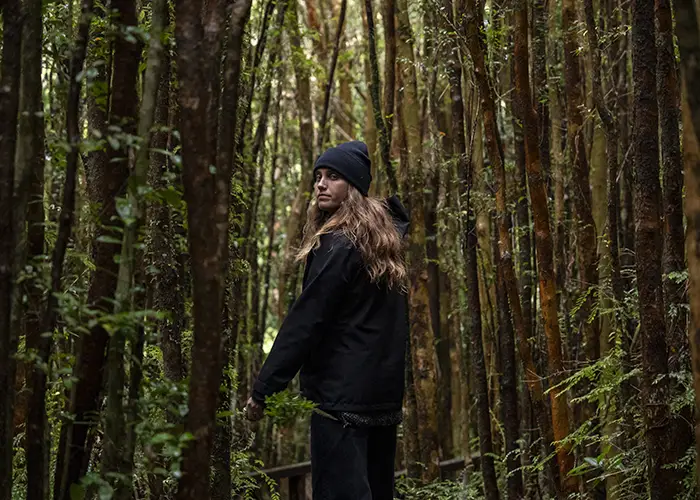
With her, we noticed what we might have missed otherwise: the spongy, rain-soaked soils designed to hold water like a living reservoir, the orchids and fungi thriving on the trunks of other plants, the biomass so dense that hundreds of species are stacked vertically in one small patch of forest. Even the rain itself felt different. So far from a nuisance, but rather the heartbeat of the ecosystem. “It rains almost every day,” Nala laughed, “but that’s what keeps this place so alive.”
Pumalín veins run with this outpour of water. Glacial rivers lead to hidden lagoons through fjords that go so deep, divers still know little about them. Nala, who has logged dives in the Comau fjord, described vertical walls encrusted with cold-water corals, sponges, and unusual mollusks. Sea lions swirl around divers like curious torpedoes, and, if a diver is lucky, the seven-gill shark might pass by. “It’s crazy that so few people dive here,” she said. “These fjords could be models for how the ocean responds to climate change.” Because of their unique chemistry—acidic waters from glacial melt, sharp salinity changes and heavy tidal swings—species here are already adapted to extremes. To Nala, the fjords are a blueprint for resilience.
Carved by glaciers, the Comau and Reñihué fjords are home to coral Desmophyllum dianthus, found five meters below the surface that create “animal forests” that shelter species. In other oceans, it thrives thousands of meters deep. Scientists have only recently unlocked its reproductive secrets, yet the very ecosystem that makes such research possible is under severe threat. Salmon farming, nutrient runoff, and climate change have already triggered massive coral die-offs, with researchers warning that without urgent protections, these fjords could shift from models of resilience to cautionary tales.
Nala’s dream is to host scientific expeditions that use Pumalín’s fjords as natural laboratories. These waters already show the fingerprints of climate change, and she believes the species surviving here could reveal how entire oceans might adapt. By blending field science with highly controlled eco-tourism, Nala imagines a place where visitors can admire the landscape, as well as leave understanding how these ecosystems help us fight back against the climate crisis. Those tourism dollars could help fund further research in these waters where currently there’s little.
After exploring 45 countries across three years it’s safe to say that what we witnessed in Chile was among the most extraordinary we’ve seen. Perhaps it was the landscapes that took your breath away. Or maybe it was the wildlife that appears when you least expect it. It might have been the tradition and culture still clinging on, thanks to those determined to preserve it. Or the conservation story that rivals most. One does not trump the other. Chile has it all. And when we left Patagonia, we left a piece of our heart there.
The hardest part of a global expedition like ours is the constant state of transience. The fact that every one of our isolated adventures must come to an end. We never know if, or when, we’ll return—and if the wild we just witnessed will still be there as we remembered it if we are to return. We lingered in Chile longer than anticipated, unable to let go, adding week after week as if extra time could somehow hold the feeling of this place. And still, it felt like we’d barely scratched the surface.
Ending our route in Pumalín felt like the only proper sendoff. To walk among thousand-year-old alerces, to get soaked in its rain, to stand at the edge of fjords that may hold answers for our planet’s future—we felt confident we’d find our way back here someday. As we left, we decided to carry the Tompkins conviction with us too. Chile is writing one of the greatest conservation stories of our time. And for anyone who cares about the future of wild places, the lesson is everywhere you go on the Route of Parks. It is no longer enough to admire these exceptional strongholds. The task now is to protect them fiercely, and indefinitely. Go to Chile for its marvels, and leave endlessly inspired.