Few journeys capture the imagination quite like the Trans-Siberian Railway. Stretching across Russia from Moscow to the Pacific port of Vladivostok, this legendary rail route passes through historic cities, seemingly endless forests, open steppes and some of the most remote inhabited landscapes on Earth.
The classic line covers approximately 9,289 kilometers, or 5,772 miles. Traveling from one end to the other takes nearly a week without extended stopovers, but rushing would miss the point. The Trans-Siberian is not simply a way to reach a destination. It is an opportunity to experience the scale of a continent, watch landscapes change outside the window and share everyday life with passengers traveling between distant communities.
For travelers who dream about slow, immersive journeys, it remains one of the world’s great rail adventures.
More Than a Single Train
Despite its familiar name, the Trans-Siberian Railway is not one sightseeing train with one fixed itinerary. It is an enormous rail network used by regular passenger services, local trains and freight traffic.
Three routes are most closely associated with the experience:
The Classic Trans-Siberian Route
The original route runs between Moscow and Vladivostok, remaining entirely within Russia. Along the way, trains pass through cities such as Yekaterinburg, Novosibirsk, Irkutsk, Ulan-Ude and Khabarovsk before reaching the Sea of Japan.
Travelers can complete the journey aboard a through service or divide it into several segments. The second approach allows time to explore the cities and landscapes that make the route so memorable.
The Trans-Mongolian Route
For many international travelers, the Trans-Mongolian has traditionally been the most appealing variation. It follows the Trans-Siberian line through much of Russia before turning south, crossing Mongolia and continuing toward Beijing.
This route combines Russian cities and Siberian forests with the grasslands of Mongolia, the Gobi Desert and the urban energy of the Chinese capital. It also introduces additional border formalities and entry requirements.
The Trans-Manchurian Route
The Trans-Manchurian also connects Russia with China but bypasses Mongolia. After traveling through Siberia, it turns southeast through northeastern China before reaching Beijing.
Although historically important, international services on this route have been disrupted in recent years. Travelers should never assume that a route shown in an older guidebook is currently operating.
A Railway Built Across a Continent
Construction of the Trans-Siberian Railway began in 1891, during the reign of Alexander III. Creating a continuous railway across such an immense and often inhospitable territory required decades of labor. The final section of the route, including the bridge across the Amur River near Khabarovsk, was completed in 1916.
The railway transformed transportation across Russia. Journeys that had once taken months could be completed in days, while remote settlements gained more reliable access to people, supplies and markets.
More than a century later, the line remains a working railway rather than a preserved tourist attraction. That is an important part of its appeal. Visitors share the train with families, students, workers and other passengers traveling for practical reasons. The experience offers a glimpse of daily life across a country of extraordinary size.
Where to Stop Along the Way
Although it is possible to remain aboard for most of the journey, travelers should consider allowing at least two or three weeks for a more rewarding itinerary.
Moscow
Moscow provides a dramatic beginning or conclusion. Red Square, the Kremlin, St. Basil’s Cathedral and the city’s elaborate metro stations can easily fill several days.
Beginning the journey here also gives travelers time to purchase supplies, adjust to the time zone and become familiar with local transportation before boarding a long-distance train.
Kazan
Located on the Volga River, Kazan is known for its blend of Russian and Tatar culture. Its UNESCO-listed Kremlin contains both the Annunciation Cathedral and the striking Kul Sharif Mosque, reflecting the city’s diverse religious and architectural heritage.
Kazan is not on every direct Moscow–Vladivostok service, so travelers must select their trains carefully if they want to include it.
Yekaterinburg
Yekaterinburg sits near the geographical boundary traditionally used to divide Europe and Asia. The city played a major role in Russian industrial development and is closely connected with the final days of the Romanov family.
Visitors can explore the city’s museums, constructivist architecture and monuments marking the transition between the two continents.
Novosibirsk
The largest city in Siberia, Novosibirsk grew around the railway and remains an important transportation and cultural center. Highlights include the grand Novosibirsk Opera and Ballet Theatre, local museums and the broad Ob River.
The city also provides a useful place to break up the long stretch between the Ural Mountains and Lake Baikal.
Irkutsk and Lake Baikal
Irkutsk is the primary gateway to Lake Baikal and one of the most worthwhile stops on the entire journey. Its historic center contains decorative wooden houses, churches and architecture reflecting its past as a prosperous Siberian trading city.
From Irkutsk, travelers can continue to communities such as Listvyanka or plan a longer visit to Olkhon Island. Recognized as a UNESCO World Heritage Site, Lake Baikal is the world’s oldest and deepest lake and contains approximately 20 percent of the planet’s unfrozen freshwater reserve.
Summer brings hiking, boat trips and long daylight hours. Winter transforms the lake into an immense frozen landscape, although extreme temperatures and changing ice conditions demand careful preparation and knowledgeable local guidance.
Ulan-Ude
East of Lake Baikal, Ulan-Ude offers an introduction to Buryat culture and the Buddhist traditions of the region. The city’s combination of Russian and Asian influences makes it noticeably different from the destinations farther west.
Nearby Ivolginsky Datsan is an important center of Buddhism in Russia and can be visited on a day trip from the city.
Vladivostok
The classic journey ends in Vladivostok, a hilly Pacific port overlooking Golden Horn Bay. Its naval history, bridges, waterfront and seafood restaurants create a fitting finale after days of forests and inland landscapes.
Arriving here carries a remarkable sense of accomplishment: Moscow is thousands of miles away, yet a continuous railway connects the two cities.
What Life Is Like on Board
Life aboard a regular Trans-Siberian train is generally simple and communal. Depending on the service, accommodation may include two-berth sleeping compartments, four-berth compartments or open-plan sleeping cars.
A carriage attendant oversees each sleeping car, checks tickets, distributes bedding and helps maintain order. Most carriages have a hot-water dispenser traditionally known as a samovar, allowing passengers to prepare tea, coffee, soup or instant meals.
Dining cars may be available on longer services, but offerings and operating hours vary. Bringing snacks is sensible, particularly for travelers with dietary restrictions. At longer station stops, passengers may have enough time to step onto the platform, stretch and purchase food, but they must confirm the departure time and remain close to the train.
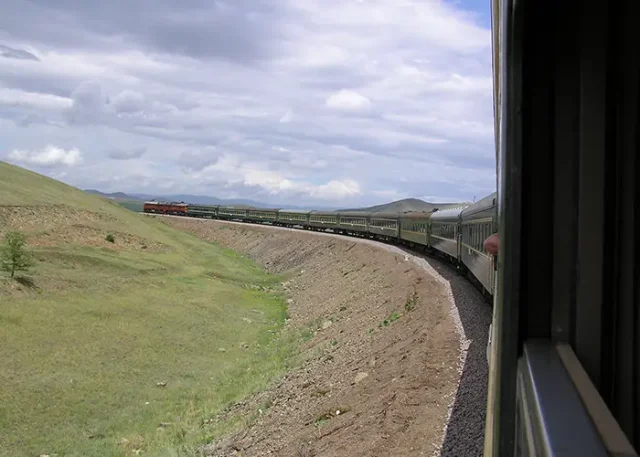
The route’s most meaningful moments are often quiet ones: drinking tea while birch forests pass the window, exchanging snacks with compartment companions or waking to discover that the landscape has changed overnight.
Comfort and amenities vary considerably by train. Travelers should not assume that every carriage will have showers, reliable Wi-Fi, air conditioning or conveniently placed electrical outlets.
Choosing the Best Time to Travel
Each season creates a very different experience.
Summer offers longer days, greener scenery and easier conditions for sightseeing. It is generally the most accessible season for first-time visitors, although popular trains and accommodations may be in greater demand.
Early fall can bring cooler temperatures and colorful foliage without the deepest winter cold. Spring is quieter, but melting snow can leave some destinations muddy and less visually appealing.
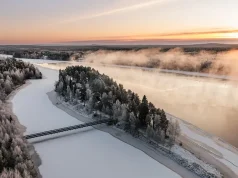
Winter is the most dramatic option. Snow-covered forests and frozen Lake Baikal create unforgettable scenery, but temperatures can be severe. Proper insulated clothing, dependable footwear and flexible plans are essential.
Planning the Journey
A Trans-Siberian itinerary requires more preparation than a typical European rail vacation. Travelers may need multiple train reservations, visas or other entry authorizations, accommodation at each stop and a plan for crossing international borders.
Tickets for regular trains generally correspond to a particular service and berth. The route does not operate like a hop-on, hop-off sightseeing railway. Travelers who leave the train for several days must normally hold a separate reservation for the next segment.
Before making nonrefundable arrangements, confirm:
- Current train schedules and border connections
- Entry and visa requirements for every country
- Passport-validity rules
- Travel insurance coverage and exclusions
- Accepted payment methods
- Access to cash and banking services
- Mobile phone and internet restrictions
- Availability of consular assistance
- Rules governing medications and prescription documents
A specialist rail-travel company may simplify the process, but its current credentials, financial protection and cancellation terms should be checked carefully.
An Important Current Travel Advisory
As of August 2026, the Government of Canada advises Canadians to avoid all travel to Russia because of the continuing effects of the war in Ukraine, the risk of terrorism, drone strikes and other serious security concerns. The United States and several other governments maintain similarly strong warnings.
These advisories can affect insurance coverage and consular assistance as well as personal safety. Foreign-issued bank cards may not function in Russia, international transportation remains limited, and laws can be applied in ways unfamiliar to visitors.
The classic domestic railway between Moscow and Vladivostok continues to operate, but the historic international routes cannot necessarily be traveled as a single direct journey. Direct Moscow–Beijing passenger trains remain suspended, although separate rail connections between parts of Russia, Mongolia and China have resumed.
Conditions can change quickly. Prospective travelers should consult the latest Government of Canada travel advice for Russia, official entry information and current railway schedules before considering a booking. Given the present advisory, many travelers may prefer to keep the full Trans-Siberian journey on their future wish list.
Those eager for a similar style of adventure can consider currently accessible rail journeys through Mongolia and China that avoid Russia, subject to the latest entry requirements and travel advisories.
Why the Trans-Siberian Still Inspires Travelers
The Trans-Siberian Railway has never been solely about speed, comfort or ticking landmarks off a list. Its enduring fascination comes from distance—the gradual realization that the forests, cities and rivers passing outside the window are all part of one immense overland journey.
It asks travelers to slow down. Days are shaped by station stops, shared meals, changing light and conversations with strangers. The landscape is not viewed for a few moments from an airplane window; it unfolds hour after hour until the scale of the continent becomes tangible.
When conditions once again make the complete journey advisable for international visitors, the Trans-Siberian Railway will still be waiting. For those prepared to approach it with patience, curiosity and careful planning, it may truly become the trip of a lifetime.