
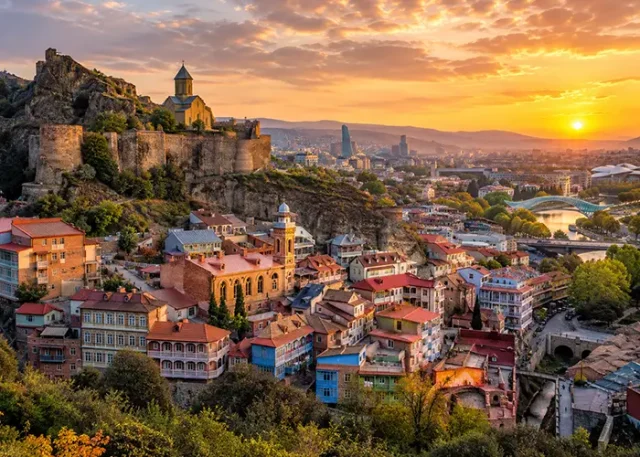
Georgia rewards travelers who make room for more than one kind of experience. In the morning, you might be navigating Tbilisi’s hillside streets; a day later, looking across a valley toward the snow-covered Caucasus. Farther west, forests meet the Black Sea.
The challenge is choosing what fits together and allowing time between stops. Here’s where to go and how to plan the journey.
Begin in Tbilisi, Georgia’s Lively Capital
Give Tbilisi at least two days rather than treating it as somewhere to sleep between excursions. The Old Town is best explored on foot, following lanes lined with carved wooden balconies and climbing stairways to unexpected viewpoints. Cross the Mtkvari River to see the modern Bridge of Peace, then head toward the domed bathhouses of Abanotubani. A soak in one of the sulfur baths is an experience worth booking ahead, especially if you want a private room.
Narikala Fortress overlooks the old neighborhoods, although access to the fortress itself has been restricted during restoration. Check current access arrangements; you can still appreciate its setting and explore other hillside viewpoints without entering closed areas.
Allow time for food, too. Try khinkali, pleated dumplings traditionally eaten by hand, and khachapuri, Georgia’s much-loved cheese-filled bread. An evening at a local restaurant can be as memorable as a museum visit.
Tbilisi also makes a useful base for Mtskheta and Kakheti.
Head North to Kazbegi and the Caucasus Mountains
The journey from Tbilisi to Stepantsminda, commonly called Kazbegi, is one of Georgia’s most memorable road trips. The distance is roughly 150 kilometers (93 miles), but expect around three hours of driving in good conditions, and longer if you stop to explore.
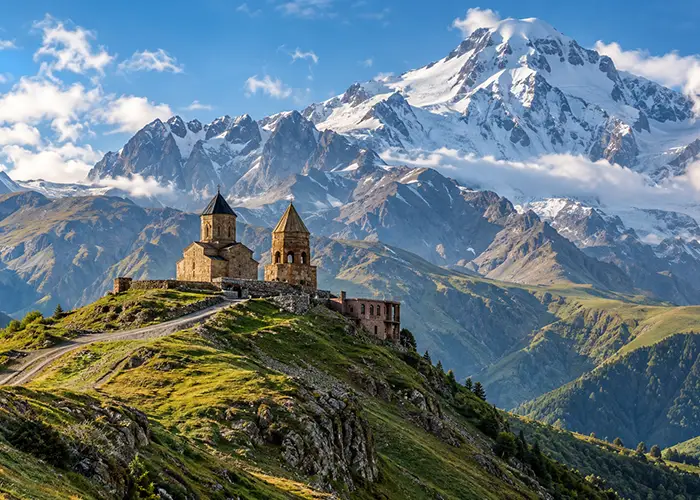
The Georgian Military Highway passes Zhinvali Reservoir and Ananuri Fortress before climbing into the mountains around Gudauri. Higher up, the views open into steep valleys and broad alpine landscapes. Allow time for viewpoints.
Stepantsminda sits beneath Mount Kazbek. Its best-known sight is Gergeti Trinity Church, a 14th-century church standing high above the town. You can reach it by vehicle or on foot, depending on conditions and your fitness. Remember that it’s an active place of worship.
Budget travelers can take a marshrutka, or shared minibus, from Tbilisi. It’s economical, but the journey follows the driver’s timetable, with little opportunity for sightseeing. Renting a car offers independence, although mountain driving demands confidence. Travelers who would rather leave the driving to someone else can arrange a private transfer from Tbilisi to Kazbegi through SafeTrip and discuss stops along the route in advance.
Kazbegi can be visited as a long day trip, but staying overnight is a better choice if you want time to walk, watch the changing light, or explore a nearby valley. Check mountain road updates before traveling.
Explore Kakheti, Georgia’s Wine Country
East of Tbilisi, Kakheti offers a different pace. The region is known for vineyards, family cellars, and qvevri: large clay vessels traditionally buried in the ground for fermenting and storing wine. A small winery visit reveals more than an afternoon tasting.
Sighnaghi is a popular first stop, with cobbled streets, old defensive walls, and views over the Alazani Valley. Telavi makes another useful base, particularly if you want to visit wineries spread across the countryside.
A day trip from Tbilisi is possible, but an overnight stay gives you space for an unhurried meal and more than one village. Arrange a driver or other transport if you plan to sample wine; rural wineries are not always convenient to reach by public transport.
Make Time for Georgia’s Other Sides
Mtskheta, a short journey from Tbilisi, was once Georgia’s capital and remains one of its most important religious centers. Svetitskhoveli Cathedral and Jvari Monastery help explain its historical importance. It works as a half-day trip.
Kutaisi, in western Georgia, is a useful stop on the way toward the Black Sea or the mountains of Svaneti. Its historic center has a slower rhythm than Tbilisi, while nearby Prometheus Cave and other natural attractions make the surrounding region worth exploring. Gelati Monastery is another significant historical site, although visitors should check access and restoration information.
Batumi presents yet another landscape: a coastal city with a long seafront boulevard, contemporary architecture, and a subtropical feel. It’s attractive for a seaside break, especially in warmer months, but note that many local beaches are pebbly rather than sandy.
With a week or less, choose a direction instead of cramming in every destination.
Consider Continuing from Georgia to Armenia
If you have several extra days, Georgia can be the starting point for a wider South Caucasus itinerary. Armenia is a separate country with its own history, cuisine, and travel requirements, and its capital, Yerevan, makes a rewarding next stop.
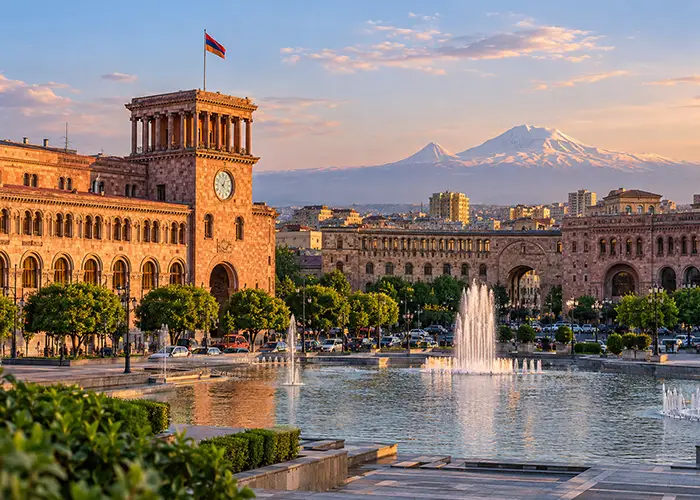
Yerevan’s Republic Square, Cascade stairways and art installations reward unhurried exploration. You can also explore Armenian dishes such as lavash and dolma, or use the city as a base for nearby monasteries and landscapes.
From Tbilisi, travelers can reach Yerevan by shared road transport, an overnight train on scheduled operating days, or a pre-booked car. The road journey is roughly 275 kilometers (170 miles) and commonly takes five hours or more; traffic and border formalities can lengthen it. For travelers carrying luggage or coordinating a family trip, a Tbilisi to Yerevan transfer with private driver can simplify the door-to-door portion, though everyone still needs to complete immigration checks.
Don’t treat Yerevan as a quick excursion from Tbilisi. Plan at least two nights if possible, and check Armenian entry rules for your nationality before booking transport. Check current train schedules, too.
How to Get Around Georgia
Transport choices depend on your route and budget.
Trains are comfortable options on selected major routes, including travel between Tbilisi and Batumi. They won’t, however, take you directly to many mountain towns or countryside attractions. Check timetables and stations.
Marshrutkas and intercity buses connect many towns at relatively low cost. They’re useful for straightforward journeys, although schedules, luggage space, and comfort can vary. Some services depart from bus stations outside tourist districts, so check the departure point rather than assuming you’ll leave from the city center.
City transport is often easier than renting a car. Tbilisi has a metro and buses; ride-hailing apps are helpful when you’re traveling with bags or returning late.
Rental cars make sense for travelers who want to explore remote regions independently. Be realistic about narrow roads, mountain weather, and unfamiliar driving conditions. Check whether your rental agreement permits the exact roads you intend to use and never assume a Georgian rental vehicle can be driven into Armenia without separate authorization.
Private drivers and guided tours cost more than shared transport but may be worthwhile when several people split the fare, or when a scenic route involves places that buses pass without stopping. Confirm what’s included, whether stops are allowed, and whether a driver is also providing guiding services.
When to Visit and How Long to Stay
For city walks and cultural sightseeing, spring and autumn often bring pleasant conditions. Autumn is particularly appealing in Kakheti during the grape harvest. Summer is popular for the Black Sea and highland hiking, although Tbilisi can be hot and mountain trails still depend on weather. Winter suits skiing in places such as Gudauri and Bakuriani, but some mountain roads and hiking routes may be difficult or inaccessible.
With five days, spend two in Tbilisi, then choose either an overnight trip to Kazbegi or a slower visit to Kakheti and Mtskheta. With seven days, you can combine Tbilisi, Kazbegi, and Kakheti without spending every waking hour in transit. A ten-day trip leaves room for western Georgia or, if you prefer a two-country journey, several days in Armenia.
The most enjoyable itinerary isn’t necessarily the one with the most stops. Geography matters: a short distance on a map may still mean a slow mountain drive.
Practical Tips Before You Travel
Georgia uses the Georgian lari (GEL). Cards are widely useful in cities, but keep some cash for markets, small businesses, and rural areas. A local SIM or eSIM helps with navigation and checking transport arrangements, especially once you leave Tbilisi.
Check passport and visa conditions for your nationality rather than relying on another traveler’s experience. Since January 2026, tourists entering Georgia are generally required to carry valid health and accident insurance covering their stay, with at least GEL 30,000 in coverage, subject to official exemptions. Verify the latest requirements before departure, particularly if you’re crossing borders.
Pack layers even when city forecasts look warm. Temperatures in Kazbegi can feel very different from Tbilisi’s, and rain or snow can disrupt plans. At churches and monasteries, dress respectfully and follow any posted rules about photography or entry.
Finally, leave room for unplanned stops: a roadside bakery or an extra hour in a mountain village can become a trip highlight.
A Final Thought
Georgia offers an unusual variety of experiences within one country, but getting the most from a visit takes a little restraint. Start with Tbilisi, choose the landscapes and towns that interest you most, and plan transport around the journey rather than only the destination. Whether your trip ends in the Caucasus Mountains, on the Black Sea, or across the border in Yerevan, leave enough time to enjoy the places between.