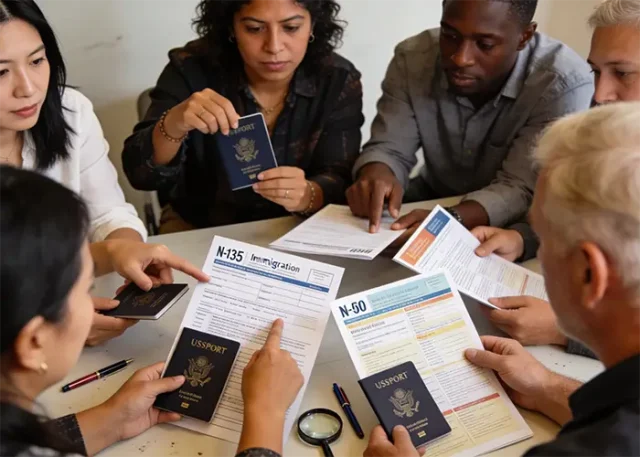
The first thing I thought when I began researching the immigration process in the U.S. was that the difficult part was going to be obtaining the necessary paperwork. But it’s only half the story. The other half – the one that’s catching thousands of applicants by surprise each year – is ensuring that those documents are properly translated, fully, and in a way that USCIS will accept. If your birth certificate is mishandled or lacks a certification statement, it could cause a delay in your case for months or even cause it to be rejected, and force you to go back to the beginning.
Immigration paperwork is not something that is forgiving, as it is not always apparent from the beginning. USCIS officers are not there to read between the lines to allow for a “latent” petition or to be forgiving about missing information. They have strict rules, and those rules have specific requirements for foreign-language documents before filing.
What USCIS Actually Requires, And Why Getting It Wrong Is Costly
The rule itself sounds simple: any document written in a language other than English must be submitted alongside a complete English translation. But when applicants first realize they need to translate official documents to English for their petitions, many assume a straightforward translated copy is sufficient, and that’s precisely where the process starts to unravel. A certified translation must be signed by the translator, who must certify that the translation is accurate and complete and that he or she is competent in both languages. If it is not signed by that attestation, then it does not meet the requirement, even if the words in the document are accurate.
This is a serious legal issue. If you submit a translation that is not properly certified – or that contains a statement that is too vague – USCIS can issue a Request for Evidence that effectively freezes your case until the proper documentation is received. RFEs can add months to your processing time, sometimes significantly more, and they have a way of creating downstream delays in every other step of your immigration journey.
The Certification Statement: What It Needs to Include
The length of the certification is not important, but it must be specific. It should include the translator’s name and contact details, specify their proficiency in the source language and in English, and express their certainty of the accuracy of the translation. Many immigration attorneys also prefer to have the certification date included on the same page as the translated text, so that it is not lost or separated from the text during USCIS processing. It is important to note here that USCIS does not mandate that the translation be performed by a licensed or professionally accredited translator, but that the accuracy and completeness standard applies in full, whether performed by a licensed translator or someone the applicant knows.
The Documents That Come Up Most Frequently
Green card filings, family-based visa petitions, and adjustment of status applications all tend to require a common set of foreign documents:
- birth certificates,
- marriage records,
- divorce decrees,
- national identity cards,
- passports.
These are also the documents that have the greatest formatting complexity. Official government seals, handwritten entries, regional stamps, and official notations vary widely depending on where and by whom the document was issued. Each of these elements must be translated into English accurately and completely, with no exceptions.
One other type that warrants special consideration is criminal records and court documents. These are often required when there is a petition involving background disclosures, and they often include legal jargon that does not readily translate between legal systems. An exact word-for-word translation may reflect the language of the document, but fail to accurately convey the legal meaning, and this discrepancy often becomes evident at the most inopportune time, when the attorney or reviewing officer is looking at the file. Here, there are often repercussions that are greater than the cost of doing things right in the first place.
Choosing a Provider Built for Immigration Requirements
Not every translation service understands what an immigration filing actually demands, and this is where many applicants make a decision they later regret. Some providers offer attractive pricing and fast delivery but produce translations with missing certification language, formatting that doesn’t align with USCIS expectations, or content that fails to fully capture the source document. I’ve come across accounts from applicants in immigration communities who had to redo their entire document package because the original provider’s certification didn’t hold up – paying twice and losing weeks in the process.
Rapid Translate is a service created to fill this void. They provide certified translations in over 60 languages, a feature that is especially useful to applicants whose native language is one in which they may have a difficult time finding a provider of certified translations in English. Everything is done digitally: documents are submitted, translated, and returned with appropriate certification. If applicants need to have documents ready quickly, a 24-hour delivery for shorter document sets is a real benefit.
Reviewing Everything Before It Goes Out
If you are a good professional service, I would strongly recommend that you look at every translation before you put it in your filing package. Verify that your name is written exactly as it is in the passport; that all dates are correct; and that any official stamps and seals on the original passport are included in the translation. Issues identified at this time can be corrected in minutes. Once submitted, any discrepancies found can take months to fix, and that time, most immigration applicants just can’t afford.
The translation component is not the most difficult aspect of dealing with U.S. immigration, but it’s one where a minor mistake can have a significant impact. It’s just the most sensible approach to safeguarding all the rest of your hard work.