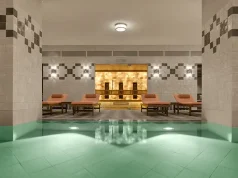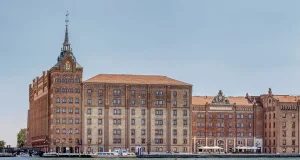

As temperatures drop across Europe, the continent’s historic spa towns offer an inviting alternative to the traditional winter getaway. Imagine slipping into a naturally heated outdoor pool as steam rises into the crisp winter air, surrounded by centuries-old architecture and landscapes shaped by generations of wellness seekers.
For travelers looking to combine relaxation, culture, and history, The Great Spa Towns of Europe offer an experience that goes far beyond a typical spa retreat.
Inscribed on the UNESCO World Heritage List in 2021, The Great Spa Towns of Europe comprise 11 remarkable destinations that represent the European spa tradition from the 18th to the 20th centuries. These towns were once fashionable gathering places for royalty, artists, writers, and travelers seeking the restorative properties of mineral-rich waters.
Today, they continue to welcome visitors, preserving a tradition that combines thermal bathing, architecture, landscaped gardens, and the pleasures of slowing down.
While each destination has its own character, four historic spa towns stand out as particularly appealing places to embrace the warmth of Europe’s thermal waters during the colder months.
Bath, England: Rooftop Thermal Bathing Above a Historic City
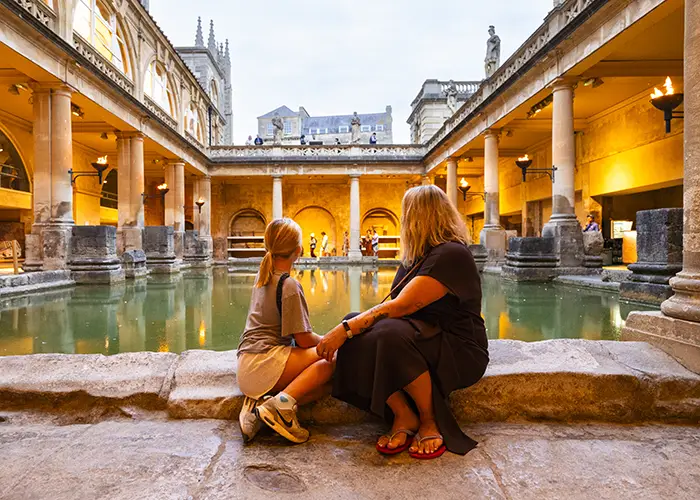
Few destinations capture the romance of European spa culture quite like Bath, England.
Famous for its natural hot springs and centuries of bathing traditions, Bath remains one of Britain’s most atmospheric destinations for a wellness-focused city break.
At Thermae Bath Spa, visitors can experience the city’s celebrated mineral-rich waters in a contemporary setting. The highlight is the spectacular rooftop pool, where bathers can soak in naturally warm water while enjoying views across Bath’s historic skyline.
During winter, the experience becomes particularly memorable. As the air turns chilly, clouds of steam rise from the rooftop pool, creating an almost dreamlike atmosphere.
For travelers seeking a more intimate luxury spa experience, The Gainsborough Bath Spa offers another opportunity to enjoy the city’s natural thermal waters. Its Spa Village provides a sophisticated setting for bathing and relaxation, connecting contemporary wellness with Bath’s historic spa heritage.
Beyond the thermal waters, Bath’s historic streets and architectural character make it an ideal destination for travelers who enjoy combining cultural exploration with time dedicated to relaxation.
Bad Ems, Germany: Thermal Pools and Traditional Wellness Rituals
Tucked into Germany’s historic spa landscape, Bad Ems offers a quieter, more traditional approach to European wellness travel.
The town’s thermal waters have long played an important role in its identity, and its historic spa culture continues to influence the visitor experience today.
At Emser Therme, guests can choose from seven pools maintained at different temperatures, allowing them to move between different bathing environments throughout their visit.
The spa also celebrates local wellness traditions through experiences such as the Sidroga herbal steam bath and Emser salt inhalation rooms.
These treatments reflect Bad Ems’ longstanding relationship with mineral waters, steam, and traditional spa practices.
For winter visitors, the combination of warm pools, atmospheric steam rooms, and the town’s historic character makes Bad Ems an appealing destination for a restorative European escape.
Rather than rushing between attractions, visitors are encouraged to embrace a slower rhythm, spending time bathing, exploring the surrounding spa landscape, and enjoying the cultural traditions that have defined the town for generations.
Karlovy Vary, Czech Republic: Dramatic Hot Springs and Historic Spa Architecture
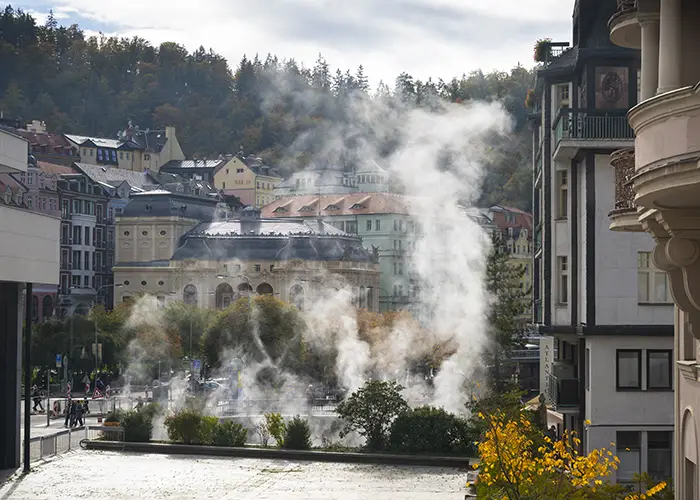
Few European spa destinations offer the visual spectacle of Karlovy Vary, one of the Czech Republic’s most celebrated thermal towns.
Known for its naturally heated mineral springs, Karlovy Vary is home to dramatic geothermal features, including powerful hot-water geysers that can shoot up to 12 meters into the air.
The town’s relationship with thermal water is woven into its architecture and identity, making it an intriguing destination for travelers interested in both wellness and European history.
One of its historic landmarks is Elizabeth Bath, built in 1906 and named in honor of Empress Elisabeth. The building reflects the grandeur of the European spa tradition.
For those eager to experience outdoor bathing during the winter months, Saunia Thermal Resort offers a year-round thermal pool with views across the picturesque town.
There is something especially appealing about soaking in warm water while surrounded by Karlovy Vary’s architecture and cool winter air.
The town also offers an unusual opportunity to explore the natural processes behind its famous mineral springs.
Visitors can discover how thermal waters create crystallized souvenirs, including the distinctive Stone Roses, through tours that explore the underground world of the town’s hot springs.
It is a fascinating reminder that Karlovy Vary’s spa culture is built around a remarkable natural resource.
Spa, Belgium: The Town That Gave Wellness Its Name
It may be one of the most familiar words in the modern wellness vocabulary, but the word spa has its origins in a real European destination.
The Belgian town of Spa has been associated with mineral waters for centuries, and its name has become synonymous with bathing, relaxation, and wellness experiences around the world.
Today, visitors can enjoy the town’s thermal traditions at Thermes de Spa, a contemporary wellness complex situated on a hill overlooking the surrounding landscape.
Part of the experience begins before guests even reach the pools.
A distinctive red funicular carries visitors uphill to the thermal baths, offering an unusual introduction to the town’s celebrated bathing culture.
Once inside, guests can enjoy indoor and outdoor pools supplied by iron-rich thermal waters. The mineral content gives the water distinctive characteristics, including tiny bubbles that can form against the skin.
Surrounded by the green landscapes of the High Fens region, Thermes de Spa offers a combination of natural scenery and relaxation.
During the winter months, the outdoor pools provide an especially atmospheric setting, allowing visitors to enjoy the contrast between the warmth of the water and the freshness of the surrounding air.
More Than a Spa Day: The European Tradition of Taking the Cure
What makes the Great Spa Towns of Europe particularly special is that their appeal extends well beyond swimming pools and wellness treatments.
Historically, visitors traveled to these towns to participate in a tradition known as taking the cure.
Rather than focusing exclusively on bathing, the practice included drinking mineral waters, strolling through landscaped parks and gardens, socializing, and enjoying the cultural life of the spa town.
These activities were once associated with medical treatments and beliefs about the therapeutic qualities of mineral springs.
Today, the tradition is valued as an important part of European cultural heritage, reflecting an approach to travel that places equal emphasis on relaxation, social connection, and the surrounding environment.
The architecture of grand bathhouses, the design of landscaped promenades, and the continued operation of thermal facilities all tell the story of how these destinations influenced European leisure and society.
Importantly, the 11 towns included in the UNESCO World Heritage designation remain functioning spa destinations, ensuring that their historic bathing cultures are not simply preserved as museum exhibits but continue to be experienced by modern travelers.
Why Winter Is an Ideal Time to Discover Europe’s Thermal Spa Towns
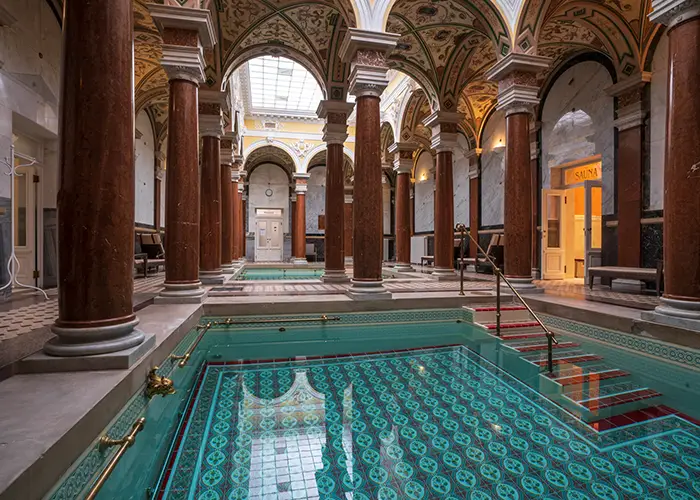
While Europe’s great cities attract visitors throughout the year, the colder months provide a particularly compelling reason to explore the continent’s historic thermal destinations.
There is an undeniable appeal to stepping into naturally warm mineral water while winter settles over the surrounding town.
These destinations also lend themselves to a slower style of travel. Rather than filling every hour with sightseeing, visitors can balance cultural discoveries with long, leisurely spa sessions and time spent exploring historic streets and landscapes.
For couples, solo travelers, and anyone seeking a wellness-focused European escape, these four towns offer an appealing blend of history, relaxation, and distinctive local traditions.
Travelers should check individual spa opening hours, bathing arrangements, and seasonal access before visiting, particularly when planning around winter holidays.
From the rooftop thermal pools of Bath to the geothermal wonders of Karlovy Vary, Europe’s historic spa towns offer a reminder that some of the most memorable travel experiences are those that encourage us to slow down.
For more information about the UNESCO-listed destinations, visit The Great Spa Towns of Europe.