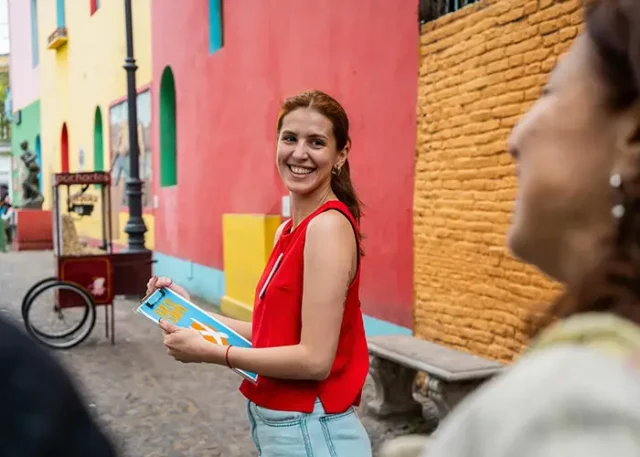
With its broad, tree-lined boulevards, all-night parrillas (steakhouses), and the pull of the tango, Buenos Aires has been drawing travellers from across the world for decades. From the city’s late dining culture to its unique currency landscape, going inwith a bit of studying under your belt can help immensely.
Travel leader Booking.com’s Travel Predictions for 2026* found that, in 2026, vacations are no longer reserved for life’s big milestones. 67% of travellers said that the spontaneity of life is a good enough reason to go on a vacation, and another 75% said they feel they deserve a reward for working hard all year, hence, booking a dream trip to somewhere special, like beautiful, captivating Buenos Aires, Argentina. This travel guide covers everything a first timer needs to know before touching down in the “Paris of South America”.
When to visit Buenos Aires
As Buenos Aires sits in the Southern Hemisphere, summer runs from December to February and winter from June to August, so planning around that shift is the first step to a well-timed trip.
Peak vs. off-peak
Spring (October – November) and fall (March – May) are widely considered the best times for visiting Buenos Aires, Argentina. Temperatures hover between 17°C to 25°C, jacaranda trees line the streets in purple blossom during November, and hotels can be easier to book at more affordable rates.
Summer (December – February) is the peak season. Temperatures regularly climb above 30°C with high humidity, and many porteños (Buenos Aires residents) leave the city for coastal towns, though international visitor numbers peak. Book accommodation well in advance and consider properties with a pool.
Winter (June – August) brings cooler, drier weather, typically between 7°C and 16°C, with fewer tourists. It’s a quieter and lower cost time to explore the city’s museums and grand architecture. August is also home to the Buenos Aires Tango Festival, one of the year’s biggest cultural events.
How long to stay in Buenos Aires
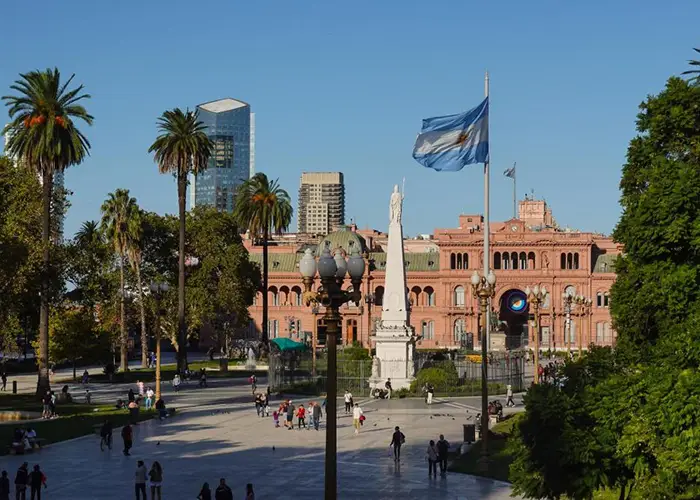
A week is a solid foundation for a first visit, giving enough time to settle into the city’s rhythm and explore its distinct neighborhoods without rushing. Three to four days covers the main sights – Plaza de Mayo, Recoleta Cemetery, San Telmo Market, and a tango show – but leaves less room for wandering.
Those with ten days or more can pair the capital with day trips: The gaucho town of San Antonio de Areco (around 68 miles away), the Tigre Delta wetlands (about an hour by train from Retiro), or a ferry crossing to Colonia del Sacramento in Uruguay.
How to get around Buenos Aires
Buenos Aires has a broad public transportation network that makes getting around straightforward and inexpensive, once you become familiar with the system.
Subte (the subway)
The Subte (short for subterráneo) runs six lines (A to H) and is the fastest way to navigate the city center. It operates from around 5:30 am to 11:30 pm on weekdays, with slightly shorter hours on Sundays. Rush hour runs between 7:30 am and 9:00 am and again between 5:00 pm and 6:30 pm, when carriages get busy.
As of December 2024, the Subte accepts Visa and Mastercard contactless payments, as well as digital wallets including Apple Pay and Google Pay – though a SUBE card remains the most reliable option across the full network.
Colectivos (buses)
Buenos Aires’ colectivo network is vast, covering areas the Subte doesn’t reach. To board, tell the driver your destination so they can calculate your fare and tap a SUBE card on the reader. Buses run 24 hours and are a useful option for getting between neighborhoods like Palermo and San Telmo. Google Maps and the Moovit app both give accurate real-time routing.
EcoBici (public bikes)
Buenos Aires has an extensive network of dedicated cycle lanes and a free public bike-sharing scheme called EcoBici. Registration is required via the BA EcoBici app (by Tembici) for iOS or Android, with a passport and credit card needed to register. It’s a rewarding way to explore Palermo’s parks or ride along the Costanera Norte waterfront.
Taxis and ride shares
Licensed yellow-and-black taxis are readily available throughout the city. For added convenience and a fixed fare before the journey begins, rideshare and taxi apps are widely used and considered safe. When hailing a taxi from the street, confirm the meter is running at the start of the ride.
Where to stay during your trip to Buenos Aires
Buenos Aires is a sprawling city made up of distinct barrios (neighborhoods), each with its own atmosphere. Choosing the right base shapes the whole experience. Maximize your accommodation spend by taking advantage of Booking.com’s Genius loyalty program which offers exclusive discounts, room upgrades, free breakfasts, and more.
Palermo
As the largest and most popular neighborhood for international visitors, Palermo is subdivided into smaller districts – Palermo Soho and Palermo Hollywood being the most visitor friendly. Leafy streets, independent restaurants, craft beer bars, and boutique hotels make it one of the most livable bases in the city. Line D of the Subte runs through it, connecting quickly to the city center. Modern Apartments in Palermo – by BueRentals – by BueRentals are part of Booking.com’s Genius program mentioned above, as well as a Travel Proud property. These modern apartments in a prime downtown area, each with their own balcony or terrace, offers a rooftop swimming pool, sun terrace, and lush garden.
Recoleta
For a quieter, refined stay, Recoleta is an elegant neighborhood. Admire the grand European-style architecture, wide boulevards, and top-tier museums. It’s close to both Palermo and the city center, and well served by buses. High-end hotels sit alongside more accessible mid-range options.
San Telmo
As the oldest neighborhood in Buenos Aires, San Telmo is a bohemian choice. Wander down the cobblestone streets, antique stores, milongas (tango dance halls), and the famous Sunday street market on Calle Defensa. It borders the city center, putting major sights within easy walking distance.
Essential things to know about Buenos Aires
Tipping culture
Tipping is customary but not mandatory in Buenos Aires. In restaurants, around 10% of the bill is the standard gesture for good service, best paid in cash directly to the server. Bills include a cubierto (a cover charge for bread and table settings), which goes to the house rather than the staff, so a separate tip is still appropriate even when this appears.
Late dinner times
Dinner in Buenos Aires starts late: Most restaurants fill up from 9:00 pm onwards, with 10:00 pm a perfectly normal reservation time. Turning up at 7:00 pm may mean eating in an empty room. Lunch, conversely, is a full sit-down meal taken around 1:00 pm. For those attending a tango show with a dinner package, show dinners typically begin at 8:00 pm with performances following around 10:00pm.
Currency
Argentina uses the peso argentino (ARS). In April 2025, the government lifted long-standing currency restrictions, which means the various exchange rates that once tripped up travellers have largely aligned – making things considerably more straightforward.
Foreign credit cards now apply a competitive market rate when paying in pesos, so they’re a reliable option for most purchases. At the payment terminal, always choose to pay in pesos rather than your home currency – selecting your home currency hands the conversion to the merchant, almost always at a worse rate. For cash, licensed exchange stores (casas de cambio) on Calle Florida in the city center tend to offer a slightly better rate than card payments.
One useful detail for accommodation: Paying hotel bills by foreign credit card gives an automatic 21% VAT exemption – no paperwork needed.
Dialect and pronunciation
Spanish is the official language, but Argentine Spanish has its own distinctive character. Locals use vos instead of tú, and pronounce the ll and y sounds as a “sh” sound. Along with pronunciation, learning a few basic Argentine Spanish phrases is appreciated and can go a long way:
● Dónde está…? (Where is…?) – useful for navigating neighborhoods and asking for directions
● La cuenta, por favor (The bill, please) – essential for restaurants, where staff won’t bring it until asked
● Acepta tarjeta? (Do you accept card?) – handy for smaller stores and market stalls where cash is sometimes the only option
● Permiso (Excuse me) – used when moving through crowds, particularly on the Subte
Safety
Buenos Aires is broadly safe for tourists in well-trafficked neighborhoods. Petty theft and pickpocketing can occur in tourist areas and on the Subte during rush hour, so it’s worth keeping bags to the front of the body and limiting phone use on busy carriages. Palermo, Recoleta, and the main San Telmo streets are generally fine to walk at night. To stay on the safe side, avoid wandering into unfamiliar areas after dark and use taxi apps rather than unmarked taxis.
Booking ahead
Buenos Aires’ most popular parrillas fill up quickly, especially at weekends. Reservations are strongly recommended. The same applies to tango shows with dinner, which are best booked a few days in advance. For major attractions such as Teatro Colón, checking the program and buying tickets before arrival saves time.
Top things to do when visiting Buenos Aires
Visiting Buenos Aires offers a cultural range that few cities match. Teatro Colón, one of the world’s great opera houses, is worth visiting for its architecture alone – guided tours run daily. The San Telmo Sunday Market on Calle Defensa brings together antique dealers, street food stalls, and live tango performances every weekend from around 10:00 am to 5:00 pm.
Attending a milonga is among the most authentic cultural experiences in the city. Many venues in Palermo and San Telmo host beginner-friendly events several nights a week, often preceded by a one-hour introductory class.
Top tip: At a milonga, dance invitations are extended through cabeceo – a subtle exchange of eye contact and a nod – rather than by walking up and asking directly.
Buenos Aires travel tips: Hidden gems
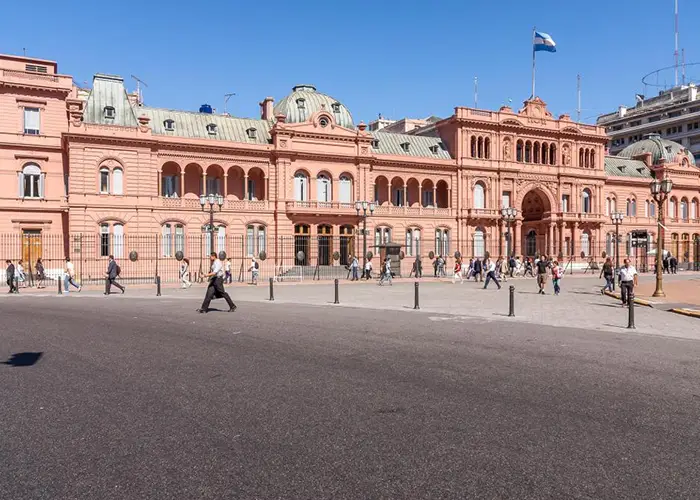
Away from the tourist trail, the Feria de Mataderos is a local way to spend your Sunday in the city. Held in the western Mataderos neighborhood (Sundays from March to December, 11:00 am to 6:00 pm), the fair celebrates gaucho (Argentine cowboy) culture with live folk music, traditional dancing, regional food stalls, and artisan crafts.
Unlike the San Telmo Sunday Market, tourists are rare here – it’s almost entirely a local crowd. Buses 55, 92, and 126 connect it to the city center or allow around 30 minutes in a taxi from downtown.

Ready to experience Buenos Aires?
Buenos Aires rewards those who take the time to understand its rhythms. With the right preparation – particularly around transportation, money, and dinner reservations – the city really opens up. From the grand architecture of Recoleta to the folklore dances of Mataderos, it’s clear to see why a stay here tends to leave travellers wanting to extend their trip.
Methodology
*Travel Predictions 2026 research commissioned by Booking.com and conducted among a sample of adults who plan to travel for business or leisure in the next 12-24 months. In total, 29,733 respondents across 33 countries and territories were polled (including 1,009 from Argentina, 1,005 from Australia, 500 from Austria, 1,013 from Belgium, 1,008 from Brazil, 1,018 from Canada, 1,009 from China, 1,005 from Colombia, 508 from Croatia, 501 from Denmark, 1,010 from France, 1,003 from Germany, 1,004 from Hong Kong, 1,007 from India, 509 from Ireland, 507 from Israel, 1,005 from Italy, 1,003 from Japan, 1,003 from Mexico, 1,019 from The Netherlands, 1,033 from New Zealand, 1,006 from Portugal, 500 from Singapore, 1,003 from South Korea, 1,009 from Spain, 511 from Sweden, 501 from Switzerland, 504 from Taiwan, 1,001 from Thailand, 501 from the UAE, 2,003 from the UK, 2,010 from the US and 505 from Vietnam). Respondents completed an online survey in July-August 2025.
**Travel Predictions 2025 research commissioned by Booking.com and conducted among a sample of adults who plan to travel for business or leisure in the next 12-24 months. In total, 27,713 respondents across 33 countries and territories were polled (including 1,016 from Argentina, 1,002 from Australia, 502 from Austria, 1,003 from Belgium, 1002 from Brazil, 1,006 from Canada, 1,007 from China, 1,005 from Colombia, 501 from Croatia, 501 from Denmark, 1,011 from France, 1,009 from Germany, 1,004 from Hong Kong, 1,002 from India, 506 from Ireland, 501 from Israel, 1,014 from Italy, 1008 from Japan, 1,013 from Mexico, 1011 from The Netherlands, 1003 from New Zealand, 504 from Portugal, 508 from Singapore, 1004 from South Korea, 1,008 from Spain, 509 from Sweden, 500 from Switzerland, 507 from Taiwan, 1,009 from Thailand, 503 from the UAE, 1,012 from the UK, 1,006 from the US and 1,016 from Vietnam). Respondents completed an online survey in July-August 2024.