Paris does not need to reinvent itself to remain compelling. Yet the city visitors encounter today is not quite the one they may remember from an earlier trip. Restored monuments have returned to the skyline, former commercial and government buildings have become cultural destinations, and public spaces are increasingly designed for walking, cycling and lingering rather than simply passing through.
The most rewarding approach is therefore not to abandon the classics, but to revisit them with a wider map. That means pairing the familiar heart of Paris with contemporary art, neighborhood walks and excursions into the surrounding Île-de-France region.
Begin with a renewed Notre-Dame
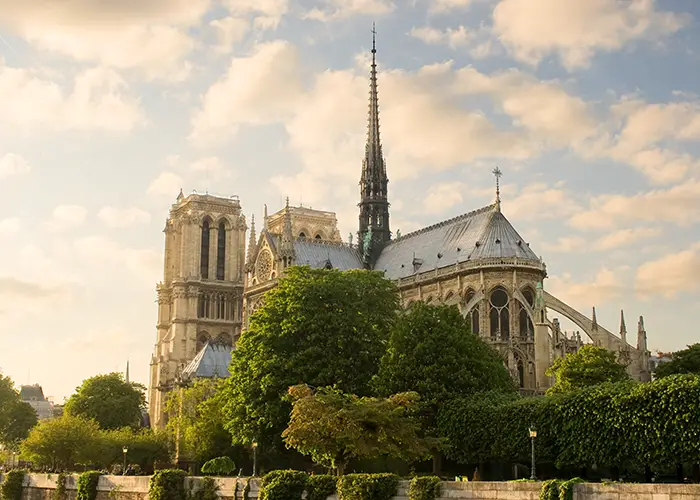
Few changes are as emotionally significant as the return of Notre-Dame de Paris. The cathedral reopened to the public in December 2024 after five years of reconstruction following the 2019 fire. Visitors can once again enter the great Gothic interior, see its restored stonework and stained glass, and experience a building that is simultaneously a place of worship, a work of architecture and a symbol of the city’s resilience.
Rather than treating the cathedral as a quick photo stop, allow time for the surrounding Île de la Cité. Sainte-Chapelle, the Conciergerie and the archaeological remains beneath the cathedral forecourt place Notre-Dame within a much longer story of Paris. Advance planning is wise because access arrangements can change for services, ceremonies and special events.
See the Grand Palais in a new light
The vast glass roof of the Grand Palais has been part of the Paris landscape since the Universal Exhibition of 1900. After an extensive restoration, the building returned in stages for the Paris 2024 Olympic and Paralympic Games and reopened fully in June 2025. Its renewed galleries now support a broader program of art, science, cultural events and large-scale installations.
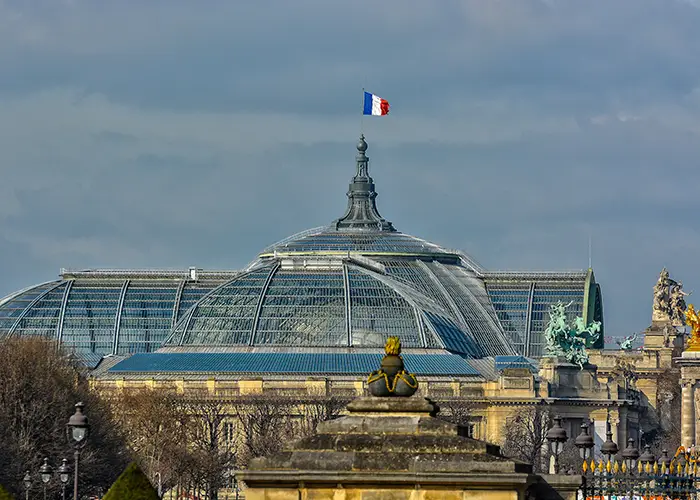
The architecture is part of the attraction. Even travelers who do not normally plan a trip around an exhibition may find the restored Nave reason enough to look at the current program. From here, it is an easy walk across Pont Alexandre III toward Les Invalides or along the Champs-Élysées, making the Grand Palais a natural addition to a central Paris itinerary.
Discover art in unexpected spaces
Some of the most interesting cultural experiences in Paris now occupy buildings that were created for entirely different purposes.
Near Les Halles, the circular Bourse de Commerce – Pinault Collection brings contemporary art into a former commodities exchange. The restoration preserves the historic rotunda and panoramic mural while introducing a concrete cylinder designed by architect Tadao Ando. Exhibitions change, but the conversation between old Paris and contemporary art is permanent.
On Place de la Concorde, the Hôtel de la Marine reveals lavish 18th-century apartments, ceremonial rooms and a loggia overlooking one of the city’s grandest squares. It is particularly appealing to travelers who enjoy decorative arts and architecture but want something more intimate than the Louvre or Versailles.
In the 11th arrondissement, Atelier des Lumières occupies a 19th-century foundry and uses monumental projections, music and movement to reinterpret artists and cultural subjects. It first appeared in the old 2018 article as a new opening; it has since become an established Paris attraction with a changing program.
One important planning note: the main Centre Pompidou building closed in September 2025 for a major renovation scheduled to continue until 2030. Its programming continues through partner venues, but travelers should not build an itinerary around visiting the familiar Beaubourg building.
Trade the checklist for a neighborhood walk
Paris becomes more memorable when the day is not organized entirely around timed tickets. A neighborhood walk creates room for markets, bakeries, independent shops and the small discoveries that rarely appear on a list of headline attractions.
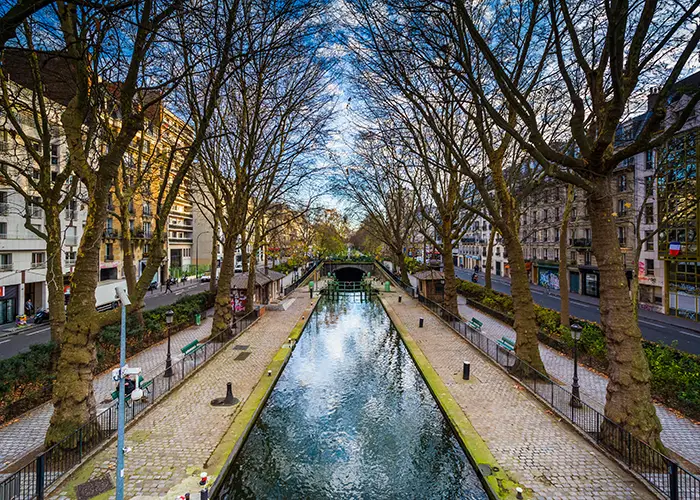
The Canal Saint-Martin offers waterside paths, footbridges and café terraces before continuing northeast toward the Bassin de la Villette. Belleville and Ménilmontant reward curious walkers with street art, multicultural food and elevated views, while the 12th arrondissement’s Coulée Verte René-Dumont follows a former railway line above streets and through planted passages.
These areas are not secret, and they should not be sold as an ‘undiscovered Paris.’ They are living neighborhoods. Visit respectfully, keep noise down on residential streets and choose businesses that contribute to the local character rather than treating the neighborhood as a photo set.
Experience the Seine at a slower pace
Changes accelerated around the 2024 Games, but the most useful legacy for visitors is simple: Paris is easier to experience outdoors. Expanded cycling connections link many major sights, and long stretches beside the Seine encourage walking, sitting and watching the city rather than viewing it through a vehicle window.
A bike can be practical for confident urban riders, though unfamiliar traffic patterns demand attention. Others may prefer a long riverside walk or a cruise. DRIFT’s guide to a Seine river dinner cruise offers another way to see the illuminated riverfront after dark.
Look beyond the Peripherique
Central Paris is only part of the destination. The surrounding region contains royal estates, medieval monuments, forests and communities that can deepen a short city break.
Saint-Denis
The Basilica Cathedral of Saint-Denis is one of the most consequential monuments near Paris. Its royal necropolis contains more than 70 tombs and recumbent effigies associated with the kings and queens of France, while the building is central to the development of Gothic architecture. The ongoing project to rebuild its north tower and spire adds a living conservation story to the visit. Saint-Denis also provides a useful counterpoint to the polished historic center, particularly when combined with the area’s markets and contemporary culture.
Versailles
The Palace of Versailles deserves more than a rushed look at the Hall of Mirrors. The gardens, Grand Trianon, Petit Trianon and Queen’s Hamlet turn the estate into a full-day experience. A timed reservation is strongly recommended, and visitors should check the official calendar because palace, garden and fountain-show access can follow different schedules.
Fontainebleau
Travelers interested in French royal history with fewer crowds should consider the Château de Fontainebleau. The residence was shaped by generations of monarchs, producing interiors that range from Renaissance galleries to Napoleon’s apartments. The neighboring town and vast Fontainebleau forest make it possible to combine culture with walking, cycling or climbing.
Vaux-le-Vicomte
The privately managed Château de Vaux-le-Vicomte brings together the work of architect Louis Le Vau, painter Charles Le Brun and landscape designer André Le Nôtre. Its theatrical symmetry helped inspire Versailles. Reaching it requires more planning than Versailles or Fontainebleau, so travelers should verify seasonal opening dates and transportation before setting out.
Getting around Paris and the region
The Metro remains the easiest option for most journeys within Paris, while the RER and Transilien rail networks open up the wider region. Ticketing has become increasingly digital: visitors can load eligible fares onto a Navigo Easy card or, with a compatible device, purchase and validate tickets by phone.
Do not assume that the ticket you used on a previous visit still exists or works in the same way. Fare products and airport rules have changed, so compare current options through RATP or Île-de-France Mobilités shortly before traveling. For day trips, check the return schedule as well as the outbound train, and allow extra time when a timed attraction reservation is involved.
Where to stay
For Left Bank character: Mandarin Oriental Lutetia, Paris
Mandarin Oriental Lutetia, Paris occupies a storied building in Saint-Germain-des-Prés near Le Bon Marché. Its Left Bank location suits travelers who want literary history, cafés, galleries and convenient access to the Luxembourg Gardens and Musée d’Orsay.
For a central base: Hôtel Madame Rêve
Hôtel Madame Rêve is set within the historic Poste du Louvre in the 1st arrondissement. It places guests close to Les Halles, the Louvre, the Bourse de Commerce and several major Metro and RER connections, with many rooms and terraces looking across the Paris rooftops.
For Greater Paris: MOB House
MOB House in Saint-Ouen offers a different perspective on the capital. The hotel is close to the celebrated flea market and within reach of Metro Line 14, making it a useful choice for travelers interested in design, antiques and neighborhoods beyond the center.
For an overnight at Versailles: Waldorf Astoria Versailles – Trianon Palace
Waldorf Astoria Versailles – Trianon Palace sits beside the palace grounds. Staying overnight makes it easier to experience Versailles before and after the busiest day-trip hours and leaves more time for the gardens, Trianon estate and town.
A city worth seeing again
Paris still delivers the moments first-time visitors hope for: the Eiffel Tower appearing between buildings, the Louvre courtyard at dusk and the Seine reflecting the city lights. But returning travelers have an advantage. With the famous checklist already partly complete, they can devote more time to the restored, repurposed and less hurried parts of the destination.
The best version of a modern Paris trip combines both. Revisit a landmark that has changed, enter a cultural space that did not exist on an earlier journey, spend an afternoon following a canal or neighborhood street, and use the regional rail network to discover the history beyond the city limits. Paris remains timeless, but it never stands still.