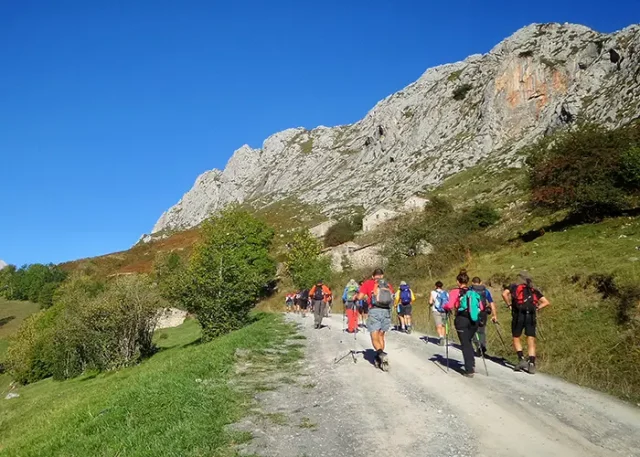
Hiking in Switzerland often feels almost too easy at first. Trails connect cleanly. Trains arrive on time. Signs tell you exactly where you are and how long it will take to get somewhere else. The experience feels polished from the first step. For many hikers, this smoothness is a relief. For others, it eventually raises a quiet question. What do you give up when everything works this well?
Switzerland offers one of the most reliable hiking environments in the world, but that reliability comes with trade-offs that only become visible after a few days on the trail.
The System Solves Problems Before You Feel Them
Swiss hiking infrastructure is designed to anticipate issues before they arise. Route difficulty is clearly labeled. Walking times are accurate. Alternative paths are marked in advance. Transport connections are built into the trail logic.
This removes uncertainty almost entirely. You rarely feel lost, rushed, or exposed. The system absorbs friction so efficiently that you barely notice it happening. At first, this feels liberating. You can focus on walking instead of managing logistics.
Ease Shifts Responsibility Away From the Walker
Because the system handles so much, decision-making becomes lighter. You don’t need to assess terrain deeply or think far ahead. The trail tells you what to expect. The signs tell you how long you have left.
Over time, this can subtly reduce engagement. You are executing a plan rather than shaping one. Hiking becomes something you follow rather than something you negotiate. For some hikers, this is ideal. For others, it creates a sense of detachment that is hard to name.
Scenery Is Powerful but Carefully Framed
Switzerland’s landscapes are striking, but they are rarely encountered by accident. Viewpoints are positioned. Panoramas appear where trails lead you to them. Cable cars deliver you to places designed for looking outward.
This framing guarantees reward, but it also limits discovery. You don’t often stumble into unexpected terrain. You arrive where the system intends you to arrive. The scenery feels curated rather than found.
Villages Support Movement, Not Exploration
Swiss mountain villages function as precise support nodes. You pass through them efficiently. You resupply, rest, and continue. They are clean, quiet, and rarely chaotic.
What they don’t do is interrupt momentum. You rarely feel tempted to linger without reason. Villages are part of the system, not deviations from it. This keeps hiking days efficient, but it also narrows the experience to movement rather than immersion.
Precision Makes Small Mistakes More Visible
When everything runs smoothly, small errors stand out. A late start compresses options. A missed train matters. Poor pacing shows up quickly because the structure assumes accuracy.
In looser hiking environments, imprecision can be absorbed. In Switzerland, it is simply exposed. This is not punishing, but it is noticeable. The system rewards attentiveness and quietly highlights lapses.
Mental Fatigue Replaces Navigation Stress
Because navigation is rarely demanding, fatigue shows up elsewhere. Long climbs, repetitive descents, and cumulative elevation gain become the dominant challenges.
This can surprise hikers who associate difficulty with confusion or danger. Switzerland removes those elements, leaving only sustained physical effort. The hiking feels controlled, but not necessarily easy.
Spontaneity Becomes Less Natural Over Time
Early in a trip, the system feels flexible. Later, it can feel rigid. Routes, transport schedules, and accommodation plans interlock tightly. Changing plans mid-day requires mental effort.
Wandering off-route rarely adds value because the best options are already labeled. Improvisation feels inefficient rather than curious. The system does not prevent spontaneity, but it does not reward it either.
The Landscape Feels Safe but Not Empty
Switzerland rarely feels wild in the psychological sense. Even remote areas feel connected. You are always aware that infrastructure exists nearby.
This safety is real and valuable. It also shapes perception. Vastness feels contained. Exposure feels managed. The environment never fully withdraws its support.
Why This Works for So Many Hikers
For hikers who value clarity, Switzerland is close to ideal. You can plan confidently. You can trust the information you’re given. You can walk long days without worrying about unexpected complications.
This is why Switzerland hiking tours integrate so smoothly. The environment already assumes coordination. Guidance fits naturally on top of an experience built around predictability.
Why Some Hikers Feel Restless Without Knowing Why
Not everyone leaves Switzerland satisfied, even if everything went well. Some hikers struggle to articulate what felt missing. Often, it is not challenge, scenery, or comfort. It is involvement.
When the system carries too much of the experience, personal judgment matters less. For hikers who enjoy shaping each day actively, this can create a subtle sense of distance from the walk itself.
Understanding Switzerland on Its Own Terms
Switzerland does not aim to test, surprise, or unsettle hikers. It aims to support them. It replaces uncertainty with clarity and risk with reliability.
When you accept that goal, the experience makes sense. Switzerland offers smooth movement through big terrain. It minimizes friction and maximizes continuity. The cost of that smoothness is a reduction in improvisation and discovery.
Hiking in Switzerland feels smooth because it is designed to be. What you gain is confidence and control. What you give up is a certain kind of looseness. Whether that trade feels worth it depends less on the mountains and more on how you like to walk through them.