
Executing a turn across active lanes of traffic requires a high degree of focus and situational awareness. Drivers must calculate the speed of oncoming vehicles while simultaneously monitoring the path ahead for any sudden obstructions or pedestrians entering the roadway during the maneuver.
Turning maneuvers are fundamentally more dangerous than traveling straight because they force a vehicle to cross the flow of traffic. This creates multiple conflict points where the margin for error is significantly reduced for even the most experienced and cautious motorists currently involved.
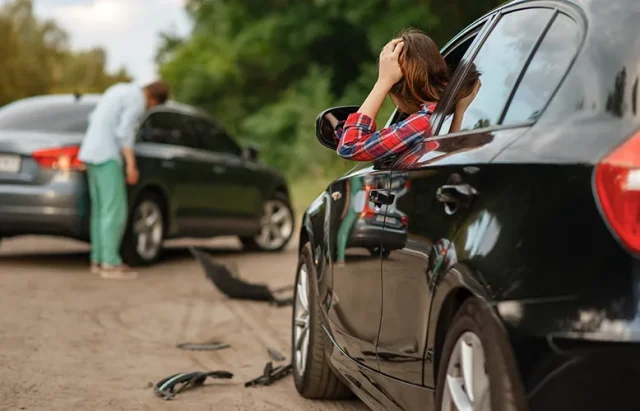
Many local intersection crashes are the direct result of poor judgment or illegal maneuvers performed under pressure. Investigating u-turn accidents reveals how a single decision to reverse direction in a busy area can lead to catastrophic consequences for everyone sharing the public road network.
Identifying Blind Spots and Yielding Errors
Identifying the blind spots that lead to collisions during a wide turn is a critical skill for every driver. Large vehicles or pillars inside the cabin can obscure the view of smaller cars or motorcycles that are currently moving into the turning path.
The danger of failing to yield to oncoming traffic with the right of way remains a primary cause of high impact crashes. Drivers often misjudge the distance of approaching vehicles, assuming they have enough time to clear the intersection before a conflict occurs.
Respecting the right of way is not just a legal requirement but a fundamental part of maintaining order. When a motorist forces a turn without a clear gap, they endanger themselves and others. Patience is essential for ensuring that every maneuver is performed safely.
Legal Parameters and Prohibited Maneuvers
Breaking down the specific rules for when and where a legal U-turn can be performed is essential for every driver. These maneuvers are typically allowed at intersections with green lights unless a sign explicitly prohibits the action to protect the flow of traffic.
Many turning incidents occur in areas where the maneuver is strictly prohibited due to limited visibility or high traffic volume. Business districts and busy urban corridors often feature “No U-Turn” signs to prevent the chaotic movements that lead to predictable and violent collisions.
Following these local regulations is a simple way to reduce the risk of a serious traffic event. When a driver ignores a sign to save time, they are prioritizing convenience over safety. Understanding the local laws ensures a much smoother experience for every single person.
Lane Choice and Pedestrian Vulnerability
The risk of side-swipe incidents increases significantly when drivers attempt to turn from the wrong lane. This behavior often happens when a motorist realizes they are about to miss their exit and makes a sudden, uncoordinated move across several lanes of active traffic.
These unexpected maneuvers leave very little time for others to react, often resulting in damage that spans the entire side of both vehicles. Staying in the correct lane and planning the route ahead of time is the best defense against these avoidable errors.
Impact on pedestrians who may be in the crosswalk during the turn is another grave concern for city planners. A driver focused on a gap in traffic might fail to notice a person stepping off the curb. Protecting vulnerable users is a shared responsibility.
Forensic Evidence and Signal Integrity
Utilizing forensic reconstruction is a necessary part of determining the speed and position of both vehicles after a crash. These experts use physics and tire marks to show exactly how a collision occurred and which driver failed to follow the rules of travel.
The role of signal timing is also a critical factor in determining who had the right of way during a complex intersection incident. Maintenance logs can show if a light was malfunctioning or if a transition was too short to allow for exit.
Having this technical evidence provides a clear foundation for any legal claim or insurance dispute. It removes much of the guesswork from the investigation, allowing for a resolution that is based on facts. Accurate data is essential for holding the negligent party fully accountable.
Conclusion
Patience and visibility are the most important tools for safe intersection maneuvering in any busy metropolitan environment. Taking the time to double check the path and wait for a clear gap prevents the split second errors that lead to life altering physical trauma.
Opting for a safer route rather than a risky mid-road turn is a smart strategy for every cautious motorist. Sometimes driving a few extra blocks to find a protected signal is much better than attempting a dangerous maneuver in a crowd.
Final advice for travelers is to remain calm and focused regardless of the pressure from other drivers behind. Safety is a personal commitment that requires constant attention to the details. A careful driver ensures that every trip ends safely at the intended destination always.